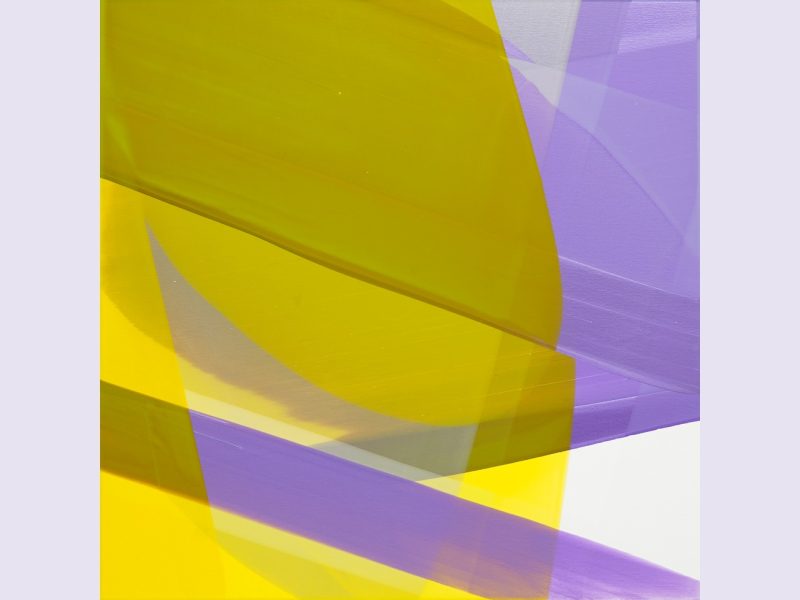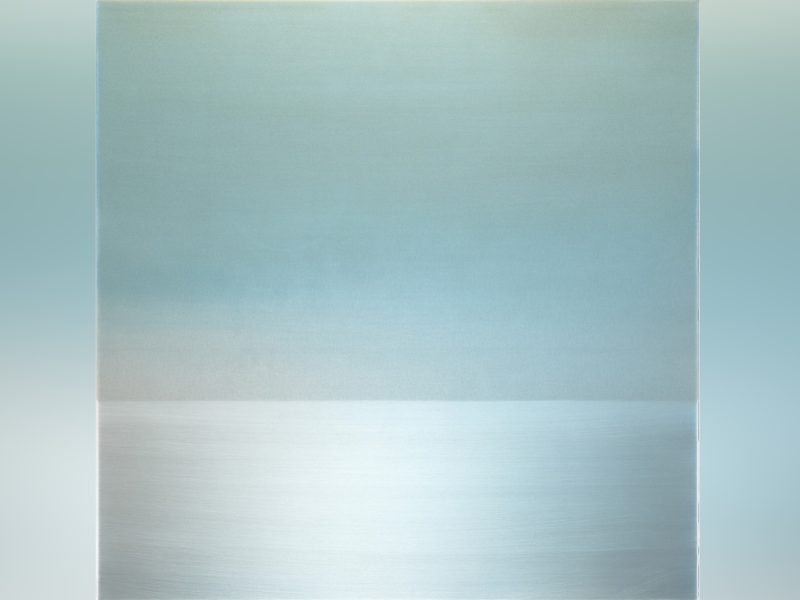

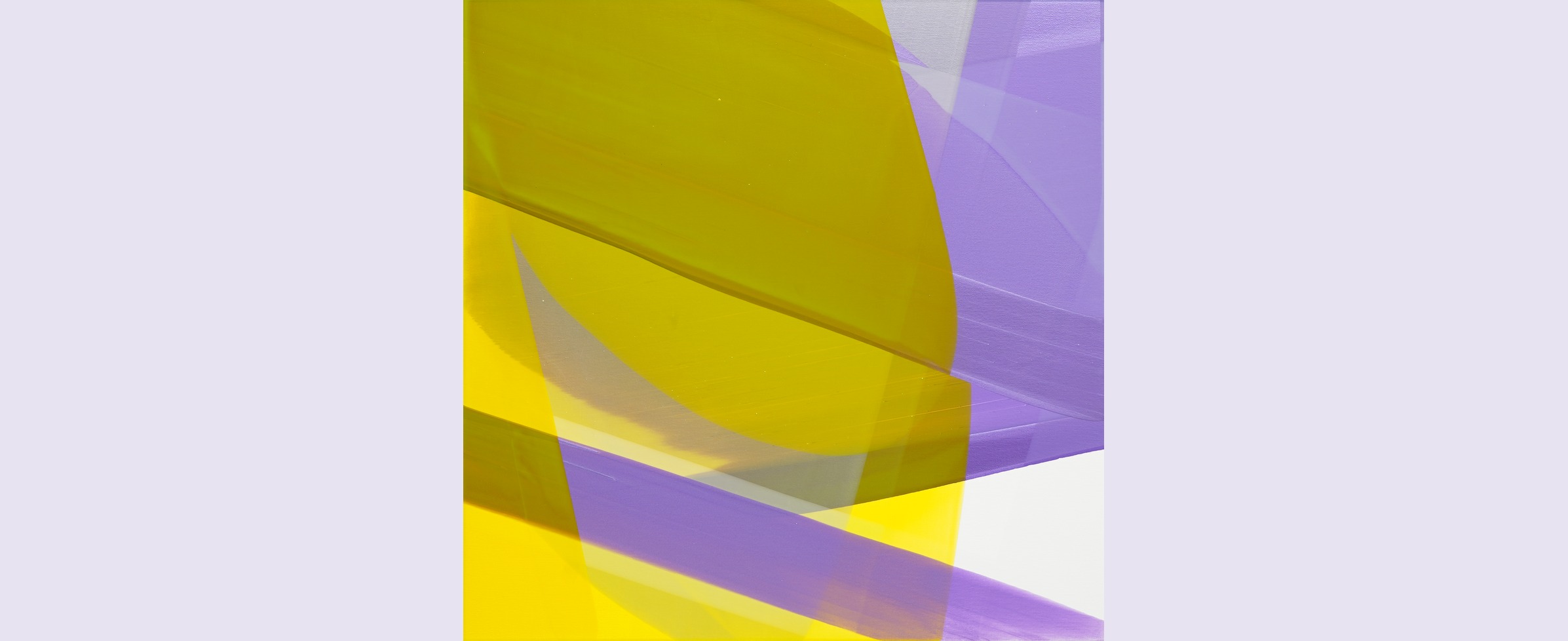
Paint flows as though surrendering itself to gravity. Layers of color accumulate, gradually revealing a quiet sense of depth. Mugi Nakajima’s paintings are created not with a brush, but through the interplay of color, time, and the natural forces we all share. In an age saturated with digital images and endless streams of information, Nakajima invites us to return to a more fundamental experience: simply seeing color as it exists before us.
In this interview, he discusses the ideas behind his distinctive painting process, the thinking that informs his DIVING series, and the creative experience of immersing himself in a sea of color. After reading his words, you may find that the works reveal themselves in an entirely new way.
For those encountering your work for the first time, how would you describe your artistic practice?
My practice is centered on abstract painting, while embracing the many experiences and encounters that naturally extend from it. Through this process, I aspire to be a medium—something free from fixed definitions, yet capable of connecting disparate things. Above all, my paintings are an ongoing exploration of the expressive possibilities and beauty of color.
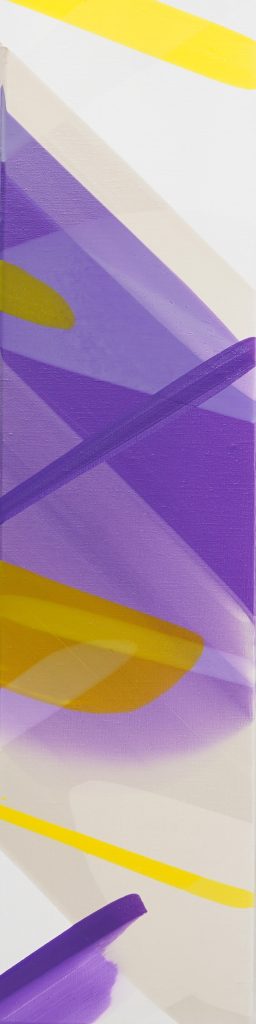
For the past decade, I have worked with a technique in which acrylic paint is poured from a spouted container rather than applied with a brush.
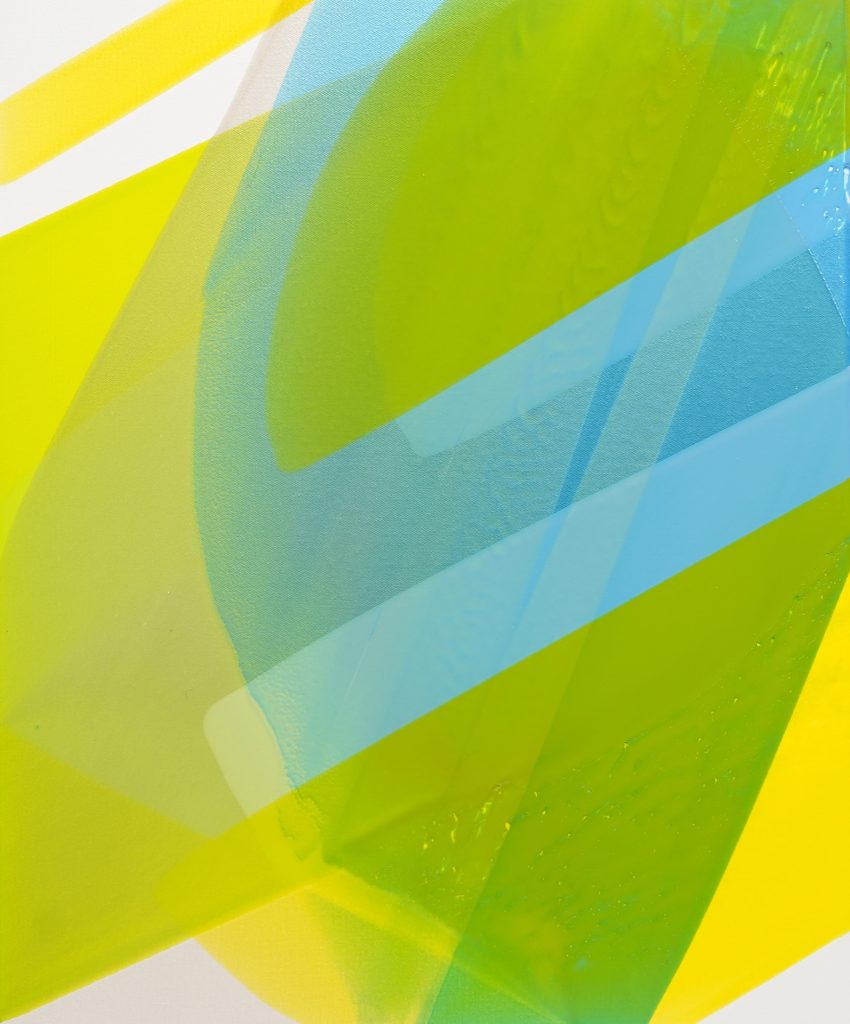
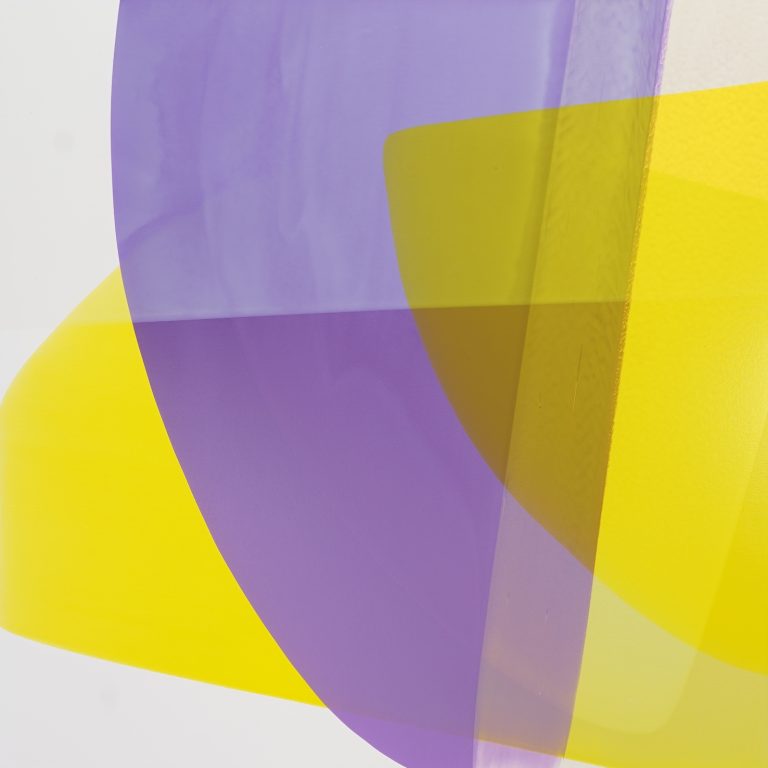
I slowly pour highly fluid paint onto a canvas that has been tilted and fixed at an angle. The pigments glide across the surface, sometimes moving almost imperceptibly, at other times cascading quickly over the edge and beyond the frame. Over time, these traces of color gradually settle into place. Once the paint has dried, I rotate the canvas, creating multiple gravitational directions and layered structures that generate a chromatic space seemingly liberated from conventional physical laws.
I do not use brushes. Instead, I work with paint as a material devoted entirely to color, together with gravity—a force that every one of us experiences. By allowing these universal elements to shape the work, I believe I can reveal the inherent beauty of color in its purest and most universal form.
You recently relocated your studio from central Osaka to a place surrounded by nature, and you’ve described the journey itself as becoming part of your “painting time.” How has this new environment influenced the colors and sense of depth in your work?
In the summer of 2025, after spending nearly fifteen years in a studio tucked away in the backstreets of downtown Osaka, I moved my practice to a place with expansive skies and constant, flowing wind.
My daily commute changed dramatically. Instead of cycling from my suburban home to the train and heading into the city, I now drive across the mountains to my studio. Along the way, there’s a particular tunnel; the moment I emerge from it, the atmosphere changes completely.
The landscape transforms each day with the seasons and the weather, but what fascinates me most is the dramatic quality of light unique to this basin, often called the “Valley of Mist.” It’s moving to imagine that the people traveling to the ancient capital a thousand years ago witnessed much the same scenery. That thought fills each drive with a renewed sense of wonder.
Making art doesn’t begin and end inside the studio. Everyday life with my family, the slightly extraordinary experiences of travel and exhibitions, and even the journey to the studio all become part of the accumulated time that feeds my paintings. Since moving here, I feel that the range of colors I notice—and the colors I experience internally—has expanded significantly.
As I continue to settle into this environment, I’m curious to see how those changes will become increasingly visible in the work itself.
The title of your series, DIVING, suggests a dual act of immersion—for both the artist and the viewer. When you yourself are immersed in this “sea of color” during the act of painting, what is happening on the canvas?
Perhaps it’s an encounter with the unknown, guided by the fundamental laws of the Earth.
When do you feel most inspired in your practice?
I rarely experience those dramatic moments when people say, “Inspiration suddenly struck.”
Of course, as I mentioned earlier, inspiration often comes during my daily commute. But it also appears in quieter moments: when the setting sun seems more beautiful than usual; when I discover an oddly shaped stone while searching for insects with my sons; when the weathered surface of an old wall in an unfamiliar town suddenly resembles an abstract painting; when the arrangement of seeds inside a vegetable I’ve absentmindedly cut reveals a perfect composition; or when, standing before the work of a great master, I sense the artist’s unmistakable presence not only on the painted surface but also in the sides or back of the canvas.
I sometimes think of it as collecting points. Every time I notice one of these small, almost imperceptible moments, I earn another point. Then, once enough points have accumulated, a painting suddenly begins to emerge. (Laughs.) Perhaps inspiration is the moment when I’m able to recognize something that has quietly accumulated within me, below the level of consciousness, and finally rises to the surface.
At Tokyo Gendai, what kind of fundamental experience do you hope audiences—living in a world saturated with digital experiences—will have through your work?
I hope they will rediscover what it means to truly look, through the beauty of color itself.
My paintings don’t emit light or move. They don’t tell stories, nor do they contain symbols waiting to be deciphered. What exists on the canvas are simply events of color.
When I first began painting seriously, I encountered the great pioneers of abstract art who forever transformed the history of painting, and I deeply admired them. They are no longer with us. Compared to the world they inhabited, today’s visual culture has become unimaginably rich and immersive. We live surrounded by technologies that constantly stimulate our senses and offer increasingly sophisticated experiences of immersion.
In that context, I continue to ask myself why I make paintings today—especially abstract paintings—in the 2020s.
Yet I believe there is something fundamental that remains unchanged, regardless of how technology evolves: the reality of making with one’s own body. Human beings are creatures who need to look, to touch, and to feel. My exploration of seeing and of the beauty of color is rooted in that belief. I hope that the very existence of a painting—made with nothing more than pigment—can become a profound, elemental experience through the viewer’s own direct encounter with it.
Thank you very much! We look forward to seeing your work in September.
Step into Nakamura Mugi’s World of Color
Dates:
11-13 September 2026 (Fri-Sun) *Vernissage: 10 September (Thu)
Venue:
Pacifico Yokohama
Booth:
YUMEKOUBOU GALLERY
Ticket Purchase:
Mugi Nakajima
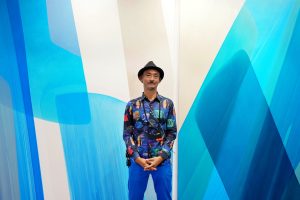
Mugi Nakajima’s practice centers on abstract painting while embracing the events and encounters that emerge from and expand beyond the act of painting itself. Through this ongoing practice, Nakajima seeks to exist as a medium—free from constraints and capable of connecting with all things.
Exploring the fundamental elements of painting—movement, depth, and light—through color, Nakajima’s recent works incorporate the passage of time as expressed through the gravity-driven flow of materials.
Nakajima has presented work extensively in solo and group exhibitions, art fairs, collaborative projects, and other exhibitions.
Born in Nagano Prefecture and raised in Osaka, Nakajima is currently based in Osaka and Kyoto.
B.F.A. in Oil Painting, Kyoto City University of Arts.
HP : https://nakajimamugi.com/
Instagram :@nakajimamugi2025neo