
Based in Hsinchu, Taiwan, UP Gallery has long championed artists who push the boundaries of photography as a medium. At Tokyo Gendai this year, the gallery presents Beyond the Image: Memory, Material, and Migration, featuring artists including Mia Liu, whose sculptural works transform photographs into three-dimensional objects, and Arthur Ou, who reinterprets the history of photography through themes of migration, memory, and cultural inheritance.
From photographs experienced as sculpture to contemporary works rooted in historical techniques, each artist offers a distinct perspective on one fundamental question: What is photography today?
Photography is no longer simply a means of recording the world. It has become a medium through which we can experience space, materiality, and memory itself. UP Gallery invites us to rethink the very definition of the photographic image, revealing new possibilities that extend far beyond the picture plane.
Experience this evolving vision of photography at Tokyo Gendai.

UP Gallery has been a long-standing champion of artists who extend photography beyond mere “documentation” into spatial and material expression. Could you tell us about the vision behind the gallery’s founding, and what led you to support artists with such experimental approaches — including Arthur Ou and Mia Liu, whom you are presenting at Tokyo Gendai this year?
From the very beginning, UP Gallery has maintained a strong focus on ultra-contemporary practices. We have always been interested in contributing to a more cohesive and critically engaged discourse by connecting regional artistic practices with global narratives. The gallery represents artists working across photography and image-based media whose practices are often shaped by transnational experiences, exploring themes of identity, displacement, memory, and the construction of selfhood through visual culture.
Over the years, we have come to realize that the definition of photography within contemporary art is far more multifaceted than the traditional understanding of the medium. Rather than viewing photography as a fixed discipline, we see it as an evolving language that continues to expand through the practices of artists themselves. As a gallery, we want to champion this diversity and support artists who are pushing the boundaries of what photography can become.
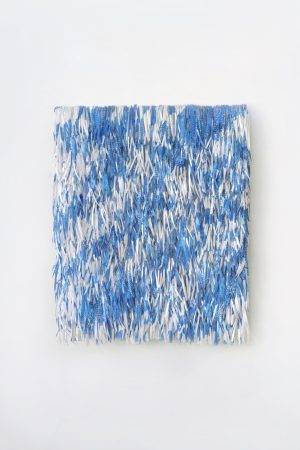
ILFORD Smooth Gloss Photographic Paper on Aluminium Dibond
That is precisely what drew us to artists such as Mia Liu and Arthur Ou. Mia creates remarkable photographic sculptures that challenge the notion of the photograph as a single flat surface. By introducing volume, materiality, and multiple viewpoints, her works encourage audiences to experience images as physical objects rather than simply visual representations. Arthur, on the other hand, draws deeply from the history of photography while reinterpreting its processes and philosophies through a distinctly contemporary lens. Although their approaches are very different, both artists demonstrate how photography can continuously reinvent itself while remaining deeply connected to its origins.
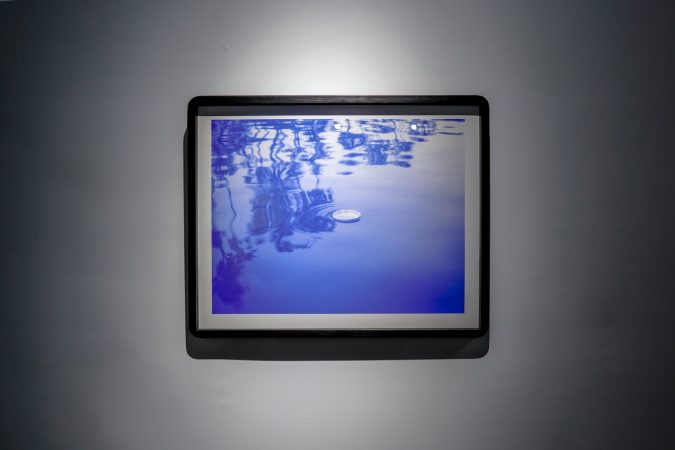
Archival Pigment Print on Rag Paper
The exhibition theme Beyond the Image: Memory, Material, and Migration poses richly layered and deeply contemporary questions. As photography transforms into three-dimensional sculpture and mixed-media forms, what experience do you hope visitors will have when encountering these works — and how do you want them to feel the boundaries of the image being crossed?
At first glance, Mia Liu’s works are perhaps the most immediately striking because of their sculptural form and physical presence. In many ways, they also represent one of the most exciting directions in contemporary photography today, as they move beyond the traditional flat image and challenge the formal boundaries of the medium. By transforming photographs into three-dimensional objects, her works invite viewers to reconsider what a photograph can be.
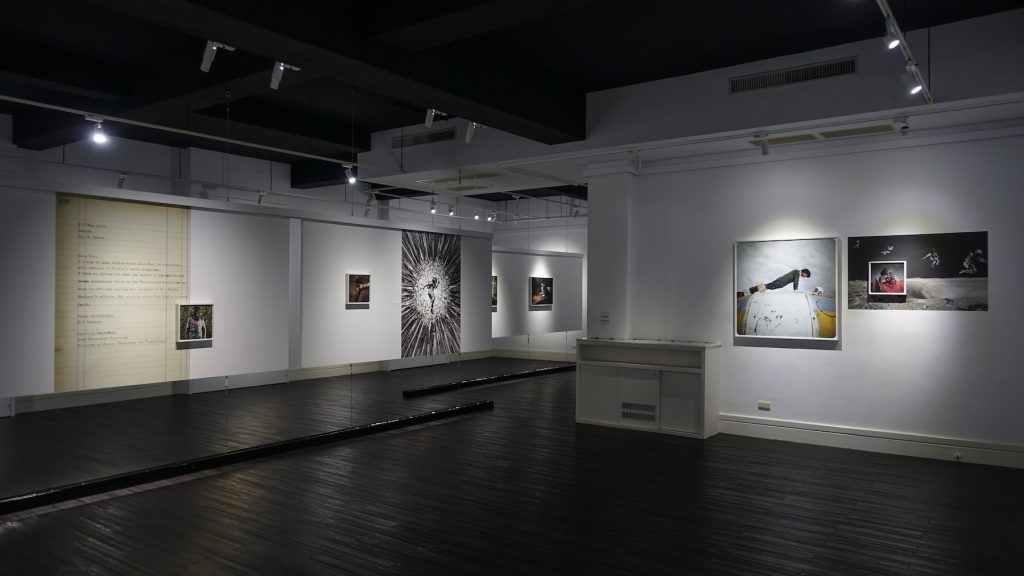
However, the booth is not only about expanding photography into sculpture. We have also brought together artists whose practices reflect different moments and techniques throughout the history of photography. For example, Mona Kuhn’s solarized prints revisit a process famously embraced by artists such as Man Ray, while Cristina de Middel’s work explores the constructed and staged nature of photographic storytelling. Arthur Ou’s practice occupies yet another position, existing somewhere between documentary, staged imagery, and archival investigation as he reflects on migration, cultural inheritance, and the complexities of belonging. Even the handcrafted circular wooden frames pay homage to traditional Eastern framing aesthetics, extending the narrative beyond the image itself.Ultimately, the exhibition is structured around photography’s evolving language rather than a single visual style. By presenting works that reference historical techniques while simultaneously reinterpreting them through contemporary perspectives, we hope visitors will recognize that photography is not a fixed medium but one that is constantly being reinvented. Contemporary artists are free to move fluidly across the history of photography, borrowing, questioning, and transforming its traditions to express the subjects that matter most to them today.
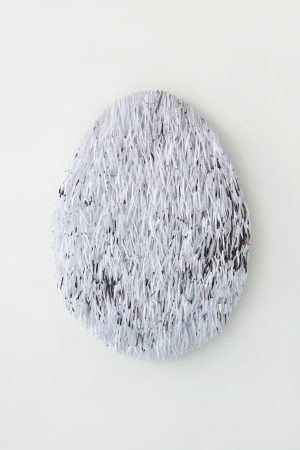
Premium Semigloss Photographic Paper on Aluminium Dibond
Mia Liu’s sustained engagement with Taipei’s industrial landscape, and Arthur Ou’s exploration of migration, are rooted in specific places and yet speak to universal experiences. What does it mean to UP Gallery — based in Hsinchu — to bring works so grounded in local context to an international art fair stage in Tokyo?
Hsinchu is a city driven by curiosity and innovation. With the rapid growth of the semiconductor industry and the AI boom, it has become one of the world’s most important centres for technological development. UP Gallery was founded here in 2009, and we have witnessed the city’s transformation over the years.
Initially, one might expect Hsinchu’s identity to be defined almost entirely by technology. However, in recent years, we have also seen a growing commitment to culture. Initiatives such as artist residencies at Hsinchu Railway Art Village, together with the programmes of Hsinchu Image Museum and the Hsinchu Art Museum, have played an important role in fostering the city’s cultural landscape. We believe this coexistence of technological innovation and artistic experimentation makes Hsinchu a particularly exciting place to be based.
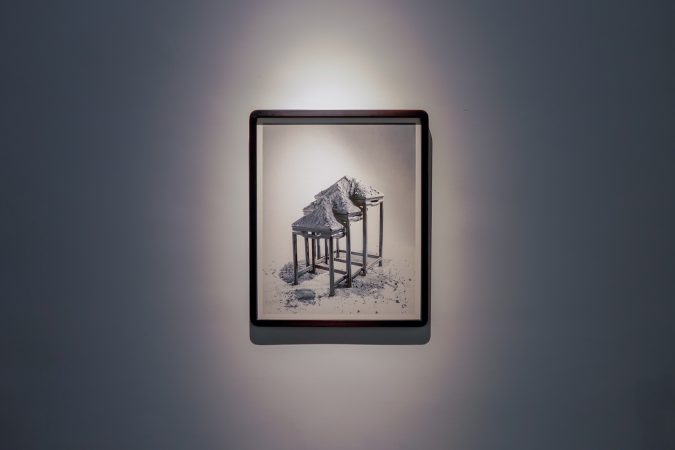
Archival Pigment Print on Rag Paper
From the beginning, UP Gallery has maintained an international outlook despite being rooted in Hsinchu. Beyond participating in art fairs abroad, we have developed projects with our artists across the United States, France, India, Hong Kong, and many other regions. Presenting artists such as Mia Liu and Arthur Ou at Tokyo Gendai reflects our belief that works grounded in specific local experiences can resonate far beyond their place of origin. Themes such as migration, industrial transformation, identity, and cultural memory may begin in a particular context, but they ultimately speak to universal human experiences.
What kind of dialogue do you hope to spark with the Japanese collectors and art lovers who visit your booth at Tokyo Gendai? And looking ahead, what connections would you like to build with Japan’s contemporary art scene?
This is our second year participating in Tokyo Gendai, and we are very excited to reconnect with Japanese audiences. As a gallery based in Taiwan, we have always felt a close affinity with Japan’s rich photographic history and culture. Japan has long been one of the world’s most influential centres for photography, and many of the artists, publications, and institutions there have shaped the medium on an international level.
The Miki sector, which is new this year and one of the fair’s highlights, felt like the perfect platform for UP Gallery. As one of the few galleries dedicated exclusively to lens-based practices, we wanted to present a booth that challenges conventional understandings of photography and demonstrates how the medium continues to evolve beyond the image itself.
More importantly, we hope to foster meaningful dialogue with Japanese collectors, curators, and art lovers. Japan has an incredibly knowledgeable audience for photography, and we look forward not only to sharing the practices of our artists but also to exchanging ideas about the future of image-making. We hope this will lead to deeper collaborations with Japanese institutions, artists, and collectors in the years to come.
Thank you very much! We look forward to seeing your work in September.
Beyond the Image, with UP Gallery.
Dates:
11-13 September 2026 (Fri-Sun) *Vernissage: 10 September (Thu)
Venue:
Pacifico Yokohama
Booth:
UP Gallery
Ticket Purchase: