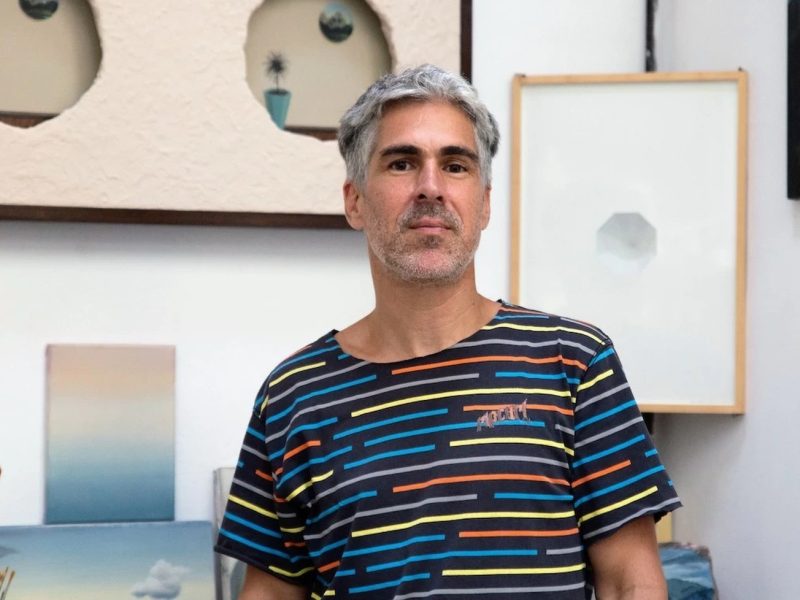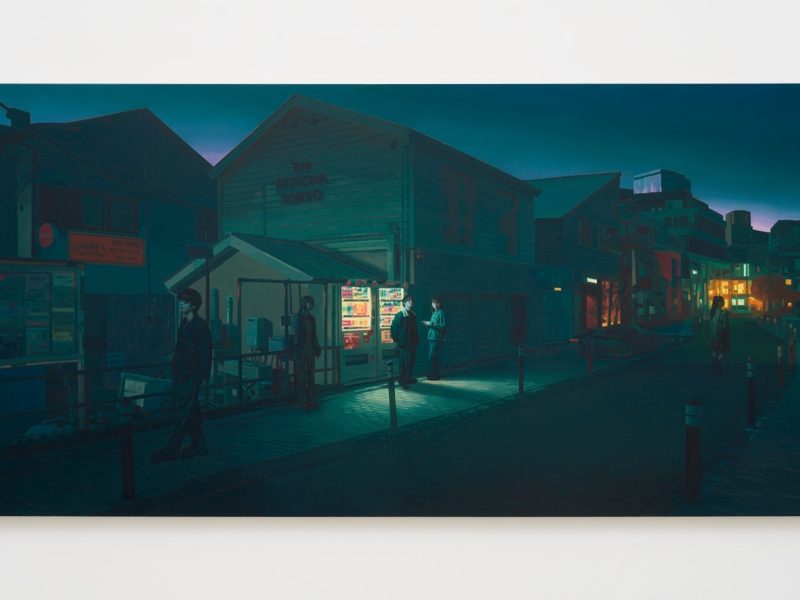

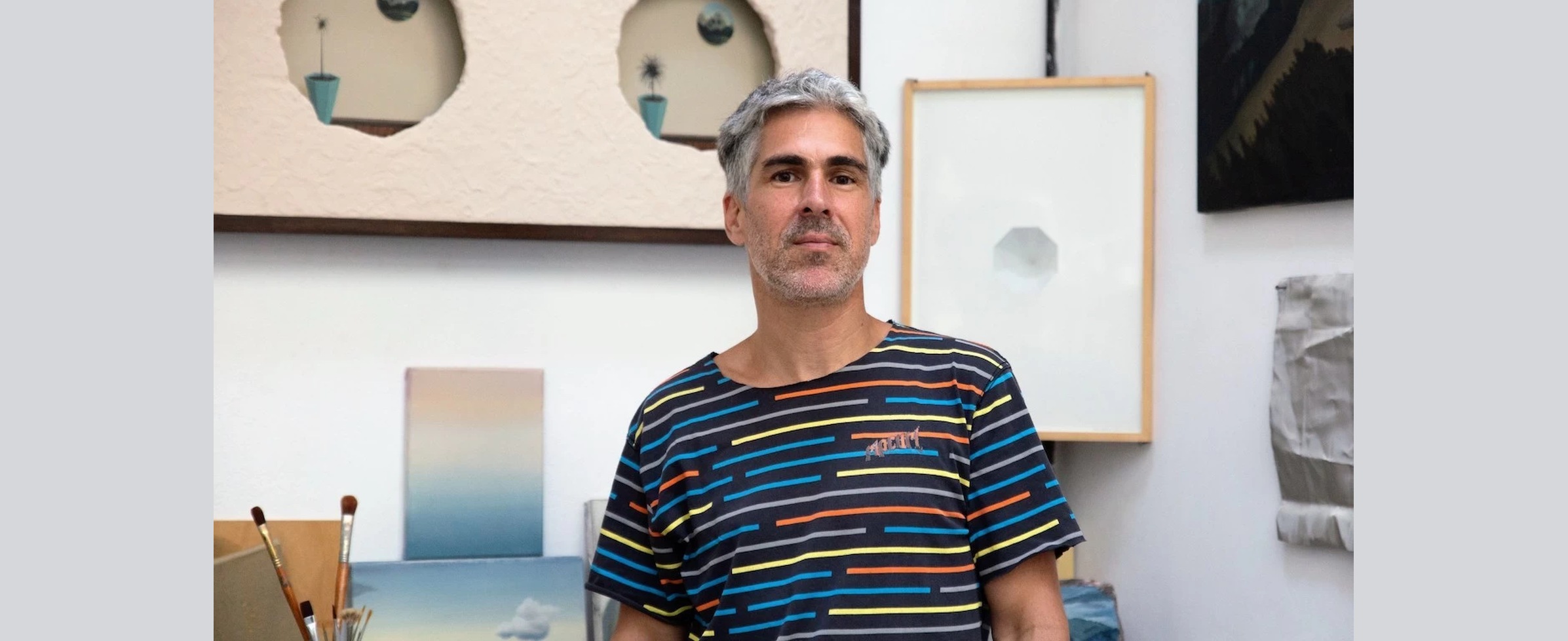
There is an artist who says he let go of the very idea of originality long ago. Argentine artist Max Gómez Canle creates richly layered paintings that bring together imagery from vastly different times and cultures—from Renaissance masters and the frescoes of Pompeii to Latin American geometric abstraction, video games, and even emojis.
The true power of his work lies in the extraordinary presence of the painting itself. Built up through countless layers of pigment and incorporating materials such as granite and gold leaf, each surface carries a depth of light, texture, and time that simply cannot be captured in a photograph. These unexpected combinations of historical references and contemporary visual language come fully alive only when experienced in person.
In this interview, Gómez Canle reflects on why he abandoned the pursuit of originality, how time becomes embedded within his creative process, and what it means to present his work in Japan. Together, these conversations reveal a practice that invites us to reconsider not only the history of painting, but also the way we see the world today.
How would you describe your artistic practice to someone encountering your work for the first time?
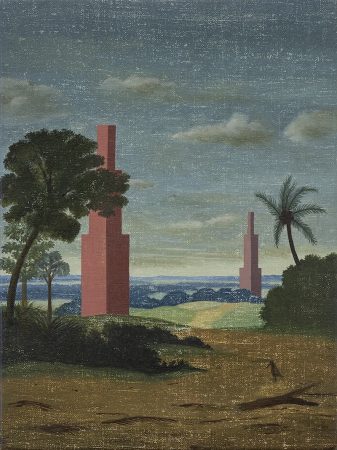
I like to think of my practice as a system, or as a search engine. It stems from having long since abandoned the idea of originality as something that begins from scratch. Instead, I work through accumulation and recombination.
I draw on canonical works from the tradition of Latin American geometric abstraction, while also incorporating references to contemporary visual culture, such as video games and emojis. I am interested in exchanging historical references, constructing landscapes inhabited by—or brought into dialogue with—cut-out forms, and creating situations in which paintings from the past can be desacralised and reconsidered from a different perspective. My work seeks to establish unexpected connections between times, images and materials that, at first glance, might appear not to belong to the same universe.
Your work often features a fascinating blend of classical art history and botanical precision.Could you discuss how you utilize “layered compositions” to allow different eras and temporalities to coexist within a single frame?
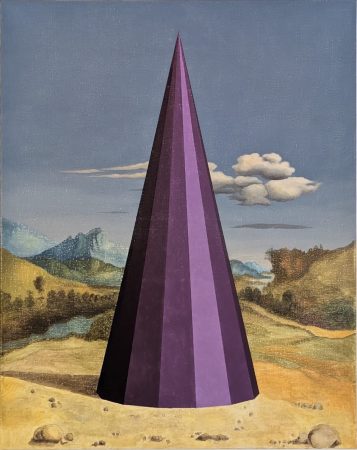
I investigate the history of art as an archive of humanity’s way of seeing. My practice is in constant dialogue with Renaissance artists, Greek and Pompeian painting, and the twentieth-century avant-gardes. It is an ongoing process of influence, displacement and recombination.
I bring together the subjects that have long fascinated me—painting and its history. Moving through this archive, I draw on images, techniques, crafts and artistic movements, recombining them to create new relationships. I see art as a collective way of thinking: open, shared and capable of helping us better understand the world.
What fascinates me most about painting is its ability to absorb and reconcile seemingly disparate materials and references. I often bring together elements that appear incompatible, trusting in painting’s capacity to make those encounters possible.
My studio is driven by curiosity and experimentation. I collect materials, images and ideas without predetermined outcomes, allowing them to find unexpected connections over time. The same process extends to the photographs I take, the films I watch and the books I read. Some references shape the work conceptually, while others become embedded in its materiality. For me, painting is not only an image or an object, but a technology that has accumulated knowledge over centuries and continues to offer a way of thinking about the world.
What moments or experiences tend to inspire you most during your creative process?
I am naturally curious and observant. I have always been interested in how things are made, the tools behind them and the techniques involved. I think and work through painting as a surface, understanding that surface as the result of how its support has been treated. Technique is therefore central to my practice.
I also think of painting as a technology: what it is made of, how its materials vary, and the different recipes behind them. I am fascinated by the material life of painting and by the process of making a work from the very substance that will eventually stand between the viewer and the image. My aim is to transform those materials into something alive. In that sense, I see painting as a way of animating objects.
In the studio, I try to cultivate moments of discovery and enjoyment. It is my place of work, an extension of my mind, where my ideas and lines of enquiry already exist in visual form. The most rewarding moments come when I arrive at ideas I could not have reached in any other way—those moments when I think, ‘This is my work.’ Giving those ideas material form is the essence of what I do as a painter.
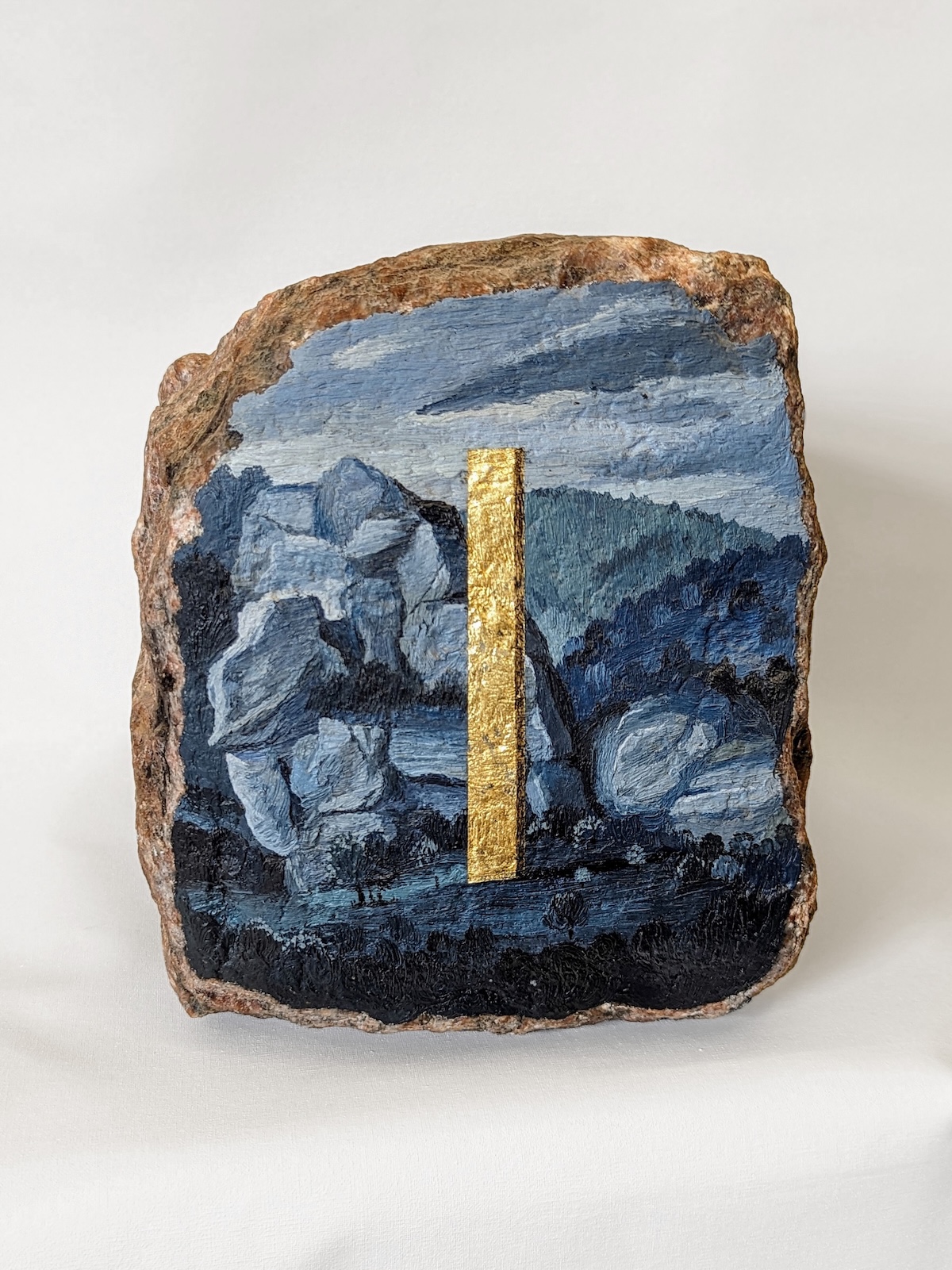
Many of your works, such as Sin título (2024), transition from two-dimensional linen to three-dimensional granite and gold. What does the physical weight and permanence of stone add to your exploration of “imagined landscapes” and “cultural memory”?
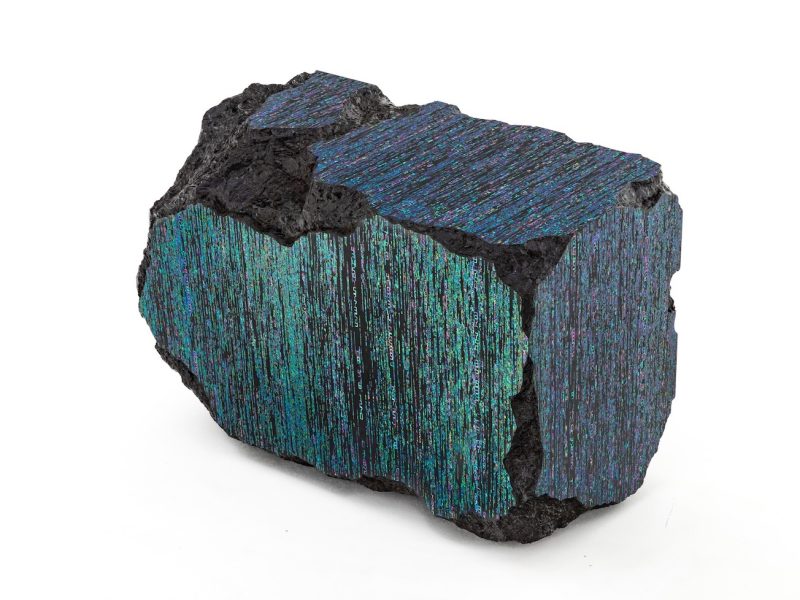
The incorporation of stone emerged as a natural extension of questions already present in my painting. I am interested in stone as a carrier of memory, place and symbolic meaning. I often use granite setts quarried in Tandil—the same stone historically transported to pave much of Buenos Aires—creating a connection between two territories and transforming the material into a witness to movement, labour and landscape.
The weight and permanence of granite also alter the physical relationship with the work. Rather than simply representing a landscape, I seek to construct a fragment of the world that shares the material reality of the place it evokes.
More broadly, these works function as studies of new ways of inhabiting and relating to our surroundings, proposing possible relationships between nature, culture and history.
What are your thoughts on exhibiting in Japan, and what would you like visitors to Tokyo Gendai to experience through your work?
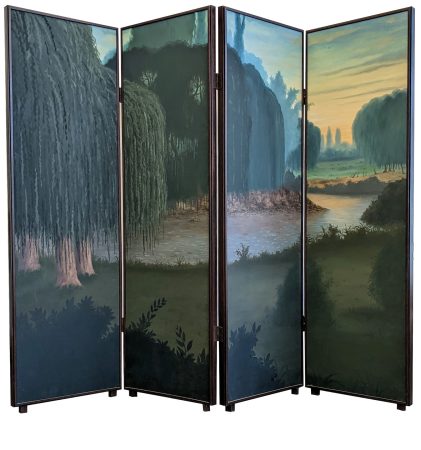
Returning to exhibit in Japan, following the collaboration with the TURN + BIENALSUR programme in 2023 that led to the exhibition Beachcombing at the Udagawa Family Residence in Urayasu, offers an opportunity to deepen a dialogue with a cultural context that has developed a distinctive relationship with landscape, time and materiality. I am particularly interested in Japan’s historical engagement with the tradition of Western painting, and how this differs from the experience of South America. Both contexts have drawn from the same visual heritage, yet from very different historical and cultural positions. This contrast is especially meaningful to my practice, which works with inherited images to explore how landscapes are continually constructed, transformed and reimagined.
I understand landscape as something in constant flux. What we see is never fixed, but the result of processes of sedimentation, displacement, erosion, wear and use. This idea also shapes the way I work. I want time to exist not only as a subject but as a material condition of the work itself. I spend long periods painting, sanding, observing and reworking the same surface until the work seems to acquire a life of its own, as though it had always existed. That transformation can only emerge through the time embedded in the object. When a painting or sculpture succeeds in holding that accumulation of labour and waiting, it becomes, for me, a reservoir of time and tension. I hope visitors to the fair will sense, even intuitively, that temporal dimension contained within each work.
Thank you very much! We look forward to seeing your work in September.
Experience Time, Layer by Layer — Encounter Max Gómez Canle’s Paintings at Tokyo Gendai.
Dates:
11-13 September 2026 (Fri-Sun) *Vernissage: 10 September (Thu)
Venue:
Pacifico Yokohama
Booth:
W-Galería
Ticket Purchase:
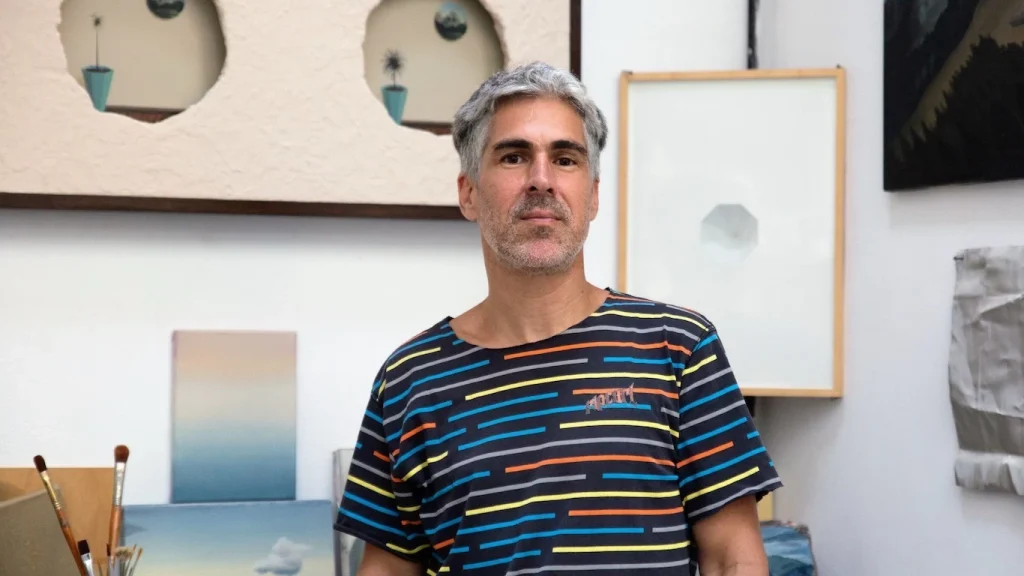
Max Gómez Canle (Buenos Aires, Argentina, 1972) is one of the leading figures in contemporary Argentine painting. Educated at the Escuela Nacional de Bellas Artes Prilidiano Pueyrredón, his practice engages critically with the history of painting, reinterpreting motifs from Western art history, landscape, and visual culture through a distinctive contemporary lens. His work has been presented in solo exhibitions at the Museo de Arte Moderno de Buenos Aires (MAMBA), Ruth Benzacar Galería de Arte, Fundación Klemm, FLORA ars+natura (Bogotá), and Casa Triângulo (São Paulo), among others. In 2022, he received the Konex Platinum Award for Painting, recognizing him as one of Argentina’s most significant artists of the decade. His work is held in prominent public and private collections and has been exhibited internationally throughout Latin America and beyond