
How do sensations that exist before language take on form?
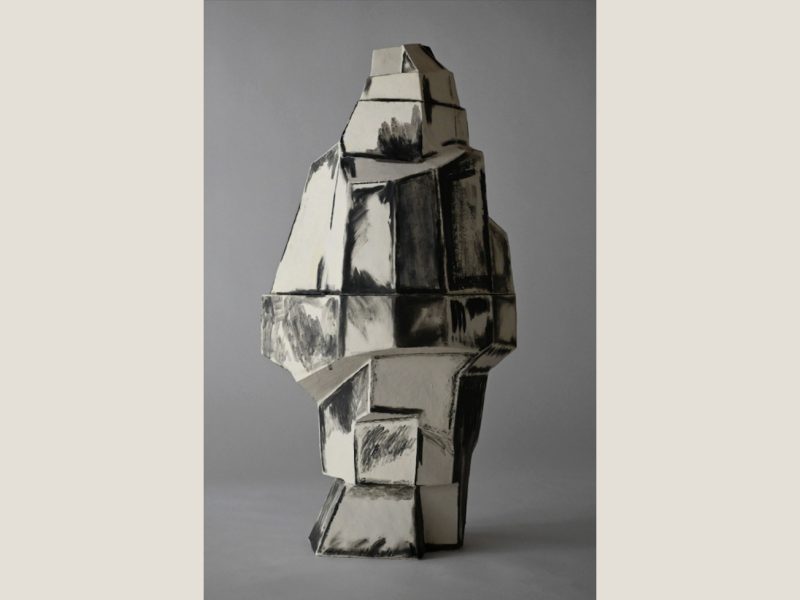
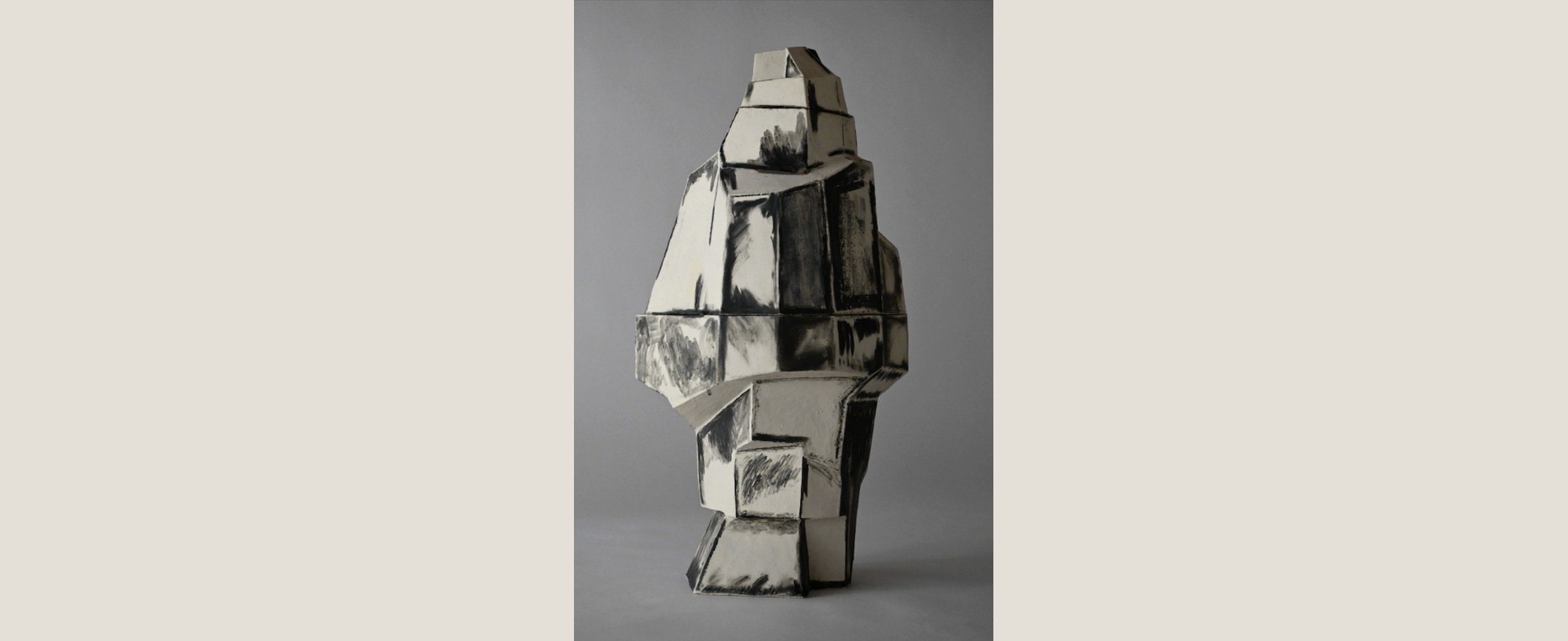
Working with clay, Chisato Yasui creates works that inhabit a space between vessel and sculpture, resisting easy categorisation while possessing a quiet yet unmistakable presence. Their undulating, layered forms enclose hollow interiors, projecting a subtle, contemplative energy that invites sustained looking.
In an increasingly accelerated world, we often feel compelled to explain, define, and translate every experience into words. Yasui’s work, however, draws us instead toward the liminal space that precedes language—a place where perception and feeling remain open and unresolved. Ahead of Tokyo Gendai, we spoke with the artist about the origins of her practice and how, through clay, she continues to give form to lived sensation.
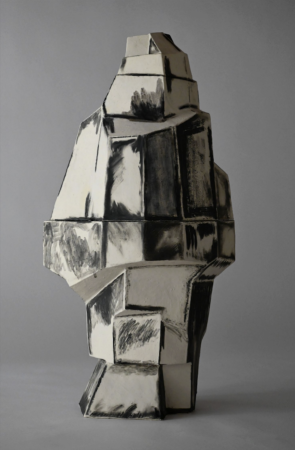
For readers encountering your work for the first time, could you tell us about your practice? In particular, what draws you to create sculptural forms in clay that move beyond the conventional idea of the vessel?
I found myself wondering where to begin so that viewers might feel they can enter into a dialogue with my work. Perhaps the best place is to speak about my relationship with ceramics.
To begin with, I live with a desire to stay closely engaged with things I don’t yet understand—to sit with the feeling of “What is this?” or “I don’t know.” Through that process, I feel I can more fully experience both my own existence and the world around me.
For me, ceramics is the practice that allows this to happen in the most direct and uncomplicated way.
When I begin making a work, I rarely have a fixed image of the finished piece. There is simply myself, and there is the clay. That alone is enough for a meaningful dialogue to begin.
Of course, it can feel reassuring to approach something with a clear vision, knowing the destination before setting out. But I find that when I don’t know where the process will lead, my senses become more alive. In that uncertainty, I discover an experience that is uniquely my own—one that gives rise to a genuine feeling of being present. In many ways, that process itself becomes my experience of living.
It’s not always easy to embrace that kind of uncertainty in everyday life, but within the space of ceramics, it comes naturally.
Remaining with the feeling of “I wonder…”, I simply allow my senses to respond. My hands begin to move, a dialogue unfolds between myself and the material, and gradually a form emerges. That form becomes the work.
I’ve also reflected on what leads me toward sculptural forms rather than vessels. I think the work is simply the outcome of that dialogue. It just so happens that the conversation with the material arrives at a three-dimensional form. Beyond that, I don’t feel the need to assign it a fixed meaning. Each viewer may discover something different within the work, and I’d rather leave that space open. To preserve the multiple layers of meaning—and the many dimensions the work can hold—I prefer not to explain it too much.
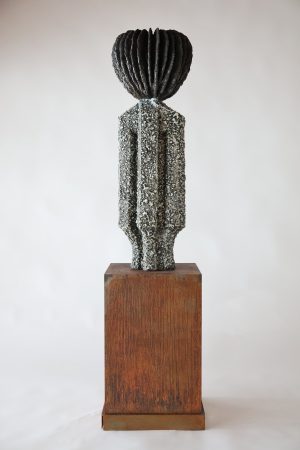
Your work places great importance on the awai—the liminal space where interior and exterior meet. As you open up a painterly dimension through glaze and surface decoration within these sculptural forms, what kind of sensibility guides that process?
It’s a difficult question to answer because the process is almost entirely intuitive. Even when I’m forming a piece, I don’t make preparatory drawings or work from a fixed plan. Instead, I try to remain open to whatever is in front of me—the form itself and the material.
The same is true of colour. Rather than deciding on colour intellectually, I wait until I can feel it. While I’m shaping the clay, I’m hardly thinking about colour at all. It’s only after the bisque firing, when I touch the surface of the piece, that I begin to sense colour emerging—from within the work itself, from the thickness of the clay and the hollow space it encloses.
In that sense, I don’t feel that I possess the colour; rather, the clay and the work already do.
Sometimes, when a piece comes out of the kiln, I feel that something isn’t quite right. But I don’t think of that as a failure. Instead, I accept that the work somehow needed to wear that colour once. I step back from it again and wait until the next colour gradually reveals itself.
There’s a great deal of improvisation in the forming process, but I’m extremely careful when it comes to colour. I feel an intimate closeness in my dialogue with the clay, whereas with colour I maintain a certain distance. When colour finally appears, it evokes something close to reverence.
When do you feel most inspired in your practice? Is there a particular moment in your dialogue with clay when you sense a form beginning to emerge?
For me, the greatest source of inspiration always lies at the very beginning of the making process.
A work never begins from the top or the bottom. It always starts somewhere around its middle. I first make a small ring from a coil of clay, and from that midpoint I begin to explore where the form wants to go. I never begin with a predetermined image of the finished work.
Instead, I treasure the feeling that something is about to begin—the sense that I don’t know what will happen, and that’s precisely why I want to continue.
Making, for me, is a continuous process of discovery. If I already knew what the finished work would look like, I would simply be moving toward something I already understand. There’s nothing particularly exciting about that. I’m not very interested in arriving at what I already know.
That’s why the beginning of each work needs to remain like an open window—a threshold leading toward something I haven’t yet encountered. Through that small opening, each new discovery gradually reveals the next, and little by little, the form begins to take shape.
Looking back, I think the very way I begin a conversation with the clay is itself the moment when the work first starts to emerge.
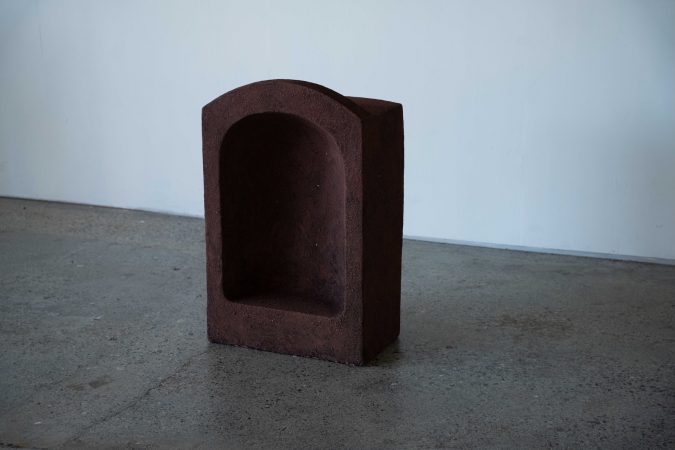
One of this year’s themes at Tokyo Gendai is the meaning of creating distance. In the context of an ever-accelerating society and a city like Tokyo, what kind of ma—a sense of space, pause, or breathing room—do you hope visitors will experience through your work?
I don’t think viewers need to bring themselves closer to the work, or feel that they have to understand it or empathise with it.
Perhaps, while looking at a piece, there will be a fleeting moment when something simply clicks—an instinctive “Ah.” But I don’t think that feeling needs to be put into words straight away, or shared with someone else. I’d much rather people stay with that moment and quietly experience it for themselves.
If your response is, “I don’t understand,” I think it’s equally meaningful to remain with that uncertainty. There can be something deeply rewarding in simply observing not knowing. It’s like discovering an open space within yourself—a reminder that there is still room inside us for things we have yet to understand.
Both in my practice and in life, I place great value on sensations that arise before they become language. Words may come eventually, but I believe what comes before them is just as important, if not more so.
So when standing before my work, I hope people might step away, even briefly, from the need to understand, and instead listen closely to what they themselves are feeling.
Thank you very much! We look forward to seeing your work in September.
Toward What Comes Before Words — Experience Chisato Yasui’s Work at Tokyo Gendai.
Dates:
11-13 September 2026 (Fri-Sun) *Vernissage: 10 September (Thu)
Venue:
Pacifico Yokohama
Booth:
Gallery Common
Ticket Purchase:
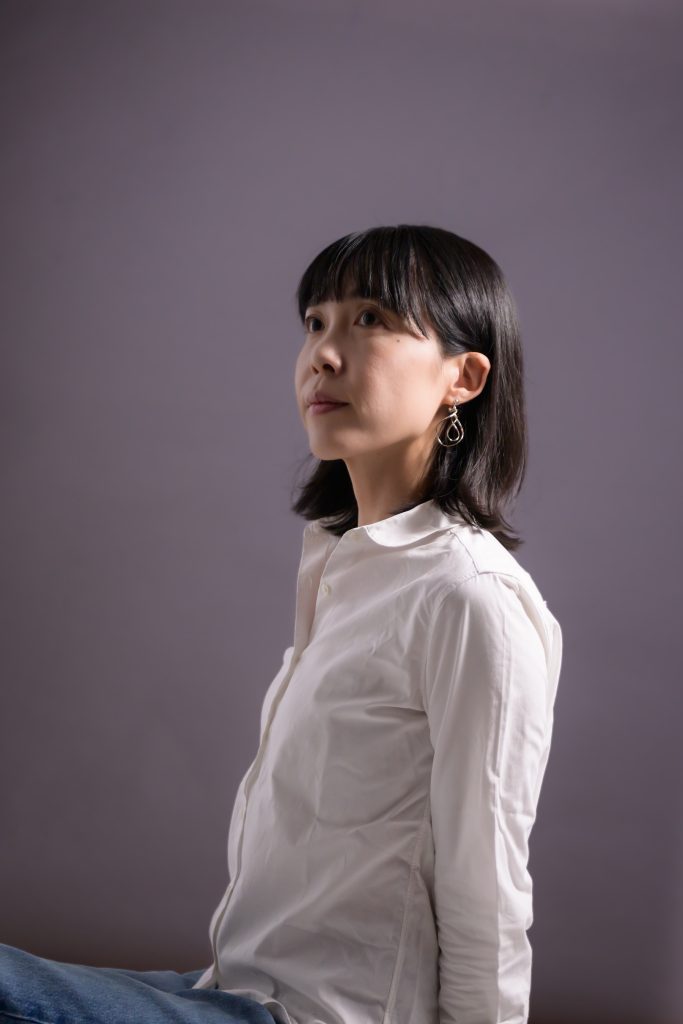
Chisato Yasui (b. 1984, Nagoya, Japan) is a ceramic artist based in Ibaraki. She graduated from the Ceramics Program in the School of Art and Design at the University of Tsukuba and completed an MFA in Design at the same institution. While in graduate school, she gave birth to her first daughter, followed by the birth of her son and second daughter. The presence of her three children has had a profound influence on her artistic practice.
Yasui has been working as a full-time artist since 2015 and began exhibiting internationally in 2018. Recent solo exhibitions include Whereabouts – In the Midst of Form (CALM & PUNK, Tokyo, 2025) and Quest[ion] (DIGINNER GALLERY, Tokyo, 2025). Her international presentations include PAD Paris 2026, Collect Art Fair 2025 (London), and What Cannot Be Said, a two-person exhibition at AIFA (South Korea, 2023).
Her work has received international recognition, including the Jury’s Special Prize at the 16th International Biennial of Artistic Ceramics of Aveiro (Portugal, 2024) and the Jury’s Special Prize at the 30th International Competition of Contemporary Ceramic Art in Grottaglie (Italy, 2023).