
As part of “Eri Asks,” a series of interviews conducted by Tokyo Gendai Fair Director Eri Takane, we speak with Yuka Kasai, a young nihonga artist based in Hokkaido who has garnered increasing attention at art fairs and exhibitions both in Japan and abroad. In this interview, Kasai discusses the background to her practice, the perspective she brings to her work, and the new works she will present at Tokyo Gendai.
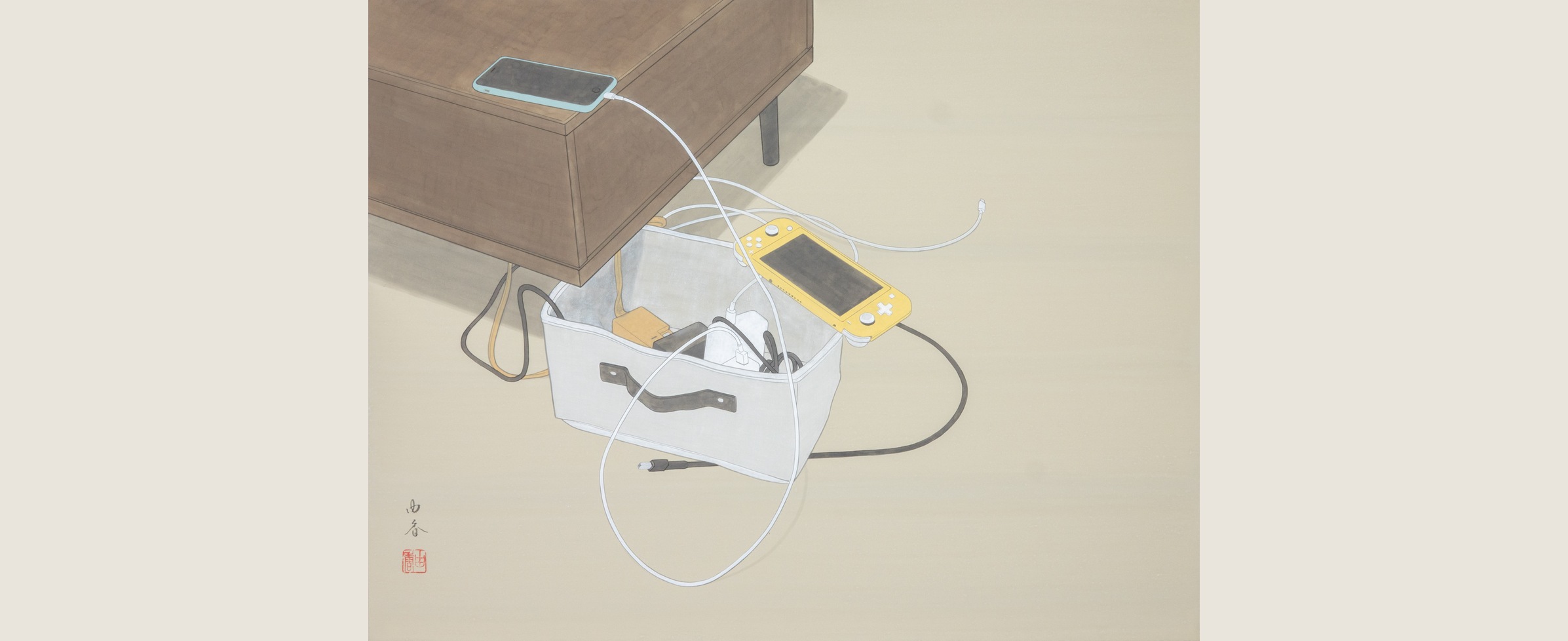
When we hear the term “nihonga,” many of us may picture traditional works depicting history or nature. Kasai, however, turns her attention to the scenes of everyday life that we encounter without a second thought. Through the quiet colors and delicate textures characteristic of nihonga, she transforms familiar scenes into something fresh and unexpected. Standing before her works, viewers may find themselves looking at their own everyday lives from a slightly different perspective.
Eri Takane (Eri): There has been a great deal of anticipation for your work from galleries overseas, and I am very much looking forward to seeing it myself. You depict scenes from everyday life using the techniques of nihonga. To begin, could you tell us about your artistic practice for those encountering your work for the first time?
Yuka Kasai (Yuka): The reason I paint everyday life is quite simple: I really love the act of living. I find the ways in which people go about their lives deeply endearing.
History often records major events and defining moments. But I believe that the small, everyday things that never make it into the historical record are actually the foundation of human life. As these seemingly insignificant moments accumulate, they can come to possess a tremendous force.
That is why I cherish these everyday moments and choose to paint them.
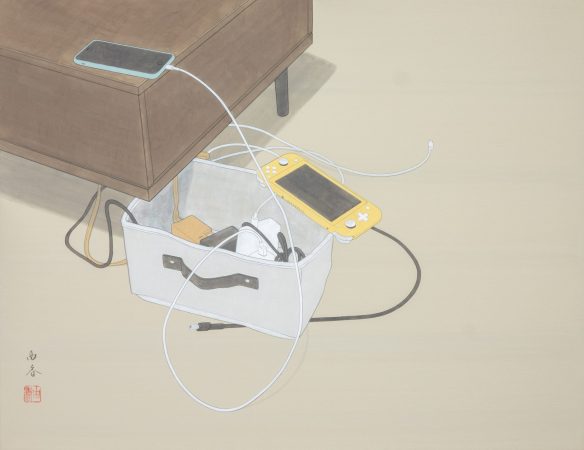
Eri: Digital devices that symbolize contemporary life, such as smartphones, also appear frequently in your work. While they have become indispensable to our daily lives, they can also be viewed in many different ways. What draws you to these motifs?
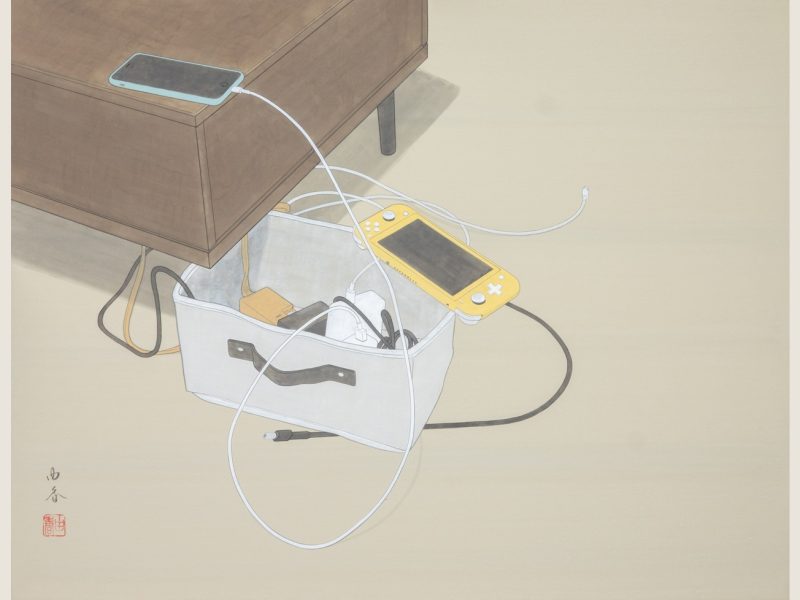
Yuka: It is not so much that I find beauty in digital devices themselves. Rather, when I set out to depict people’s lives, they naturally appear in my paintings as something that has become inseparable from everyday life.
Smartphones in particular are among the things people spend the most time touching. I feel that the more something is touched, the more it might come to hold traces of human emotion and intention. In that sense, smartphones have naturally begun to appear more frequently in my work in recent years.
Eri: That’s fascinating. Why did you choose nihonga as your medium?
Yuka: I first learned about nihonga in the winter of my final year of high school. Until then, I had been considering a different career path, but I realized that I really wanted to study painting, so I suddenly began looking for an art university.
That was when I discovered that nihonga pigments are made from materials such as stone and earth. I had loved collecting stones and playing with mud since I was a child, so I was fascinated by the idea that “you can paint with stones and mud.” That experience led me to decide to study nihonga.
Once I actually began painting, I found that the slightly muted, gentle colors derived from natural materials—so characteristic of nihonga—perfectly resonated with the world I wanted to depict. I have continued to work in nihonga ever since. I also feel that there is something meaningful about depicting Japanese life through the medium of nihonga.
Eri: Has growing up in Hokkaido influenced your work as well?
Yuka: Yes, I think it has. I grew up in the eastern part of Hokkaido, known as Doto. There is a somewhat distinctive atmosphere there. To me, the entire landscape has always seemed slightly hazy, as though viewed through a thin veil. There is a certain sense of solitude to it, and the scenery feels as if it has a soft filter over it. That landscape has remained deeply rooted in my memory. I also feel that the colors of nihonga pigments are remarkably close to the landscapes I remember from that time.
Eri: So rather than Sapporo, where you live now, it is the landscapes and environment of Doto, where you spent your childhood, that have had a stronger influence on your work.
Yuka: Yes. I think the landscapes and experiences that are rooted deep within me come through particularly strongly when I paint.
Eri: When you are deciding on a motif, what kinds of moments in everyday life inspire you and eventually become works of art?
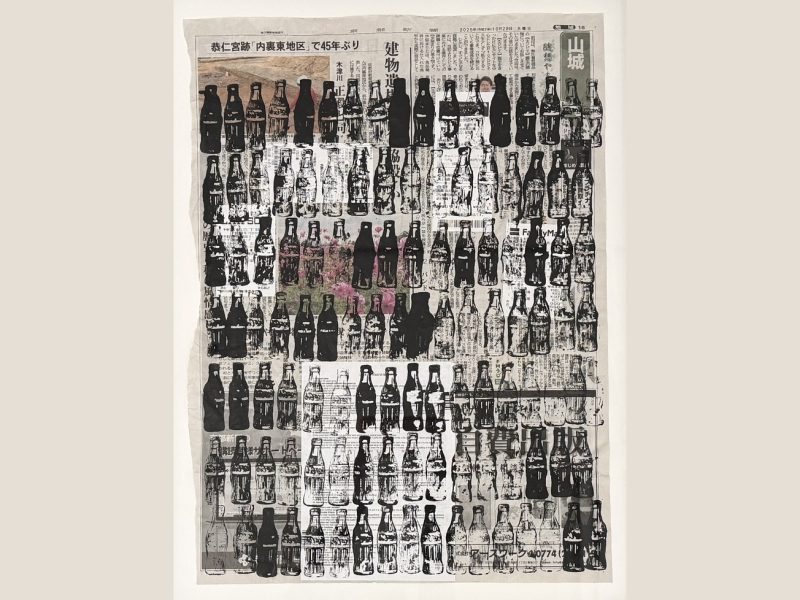
Yuka: I think the things that are close at hand and that we see over and over again tend to stay in our memories. When I feel like painting something, there are often things that come back to me, like, “Come to think of it, I’ve been thinking about that for a long time.” Everyday objects, people’s actions, and things that are part of my own daily life or that of those close to me naturally tend to become motifs.
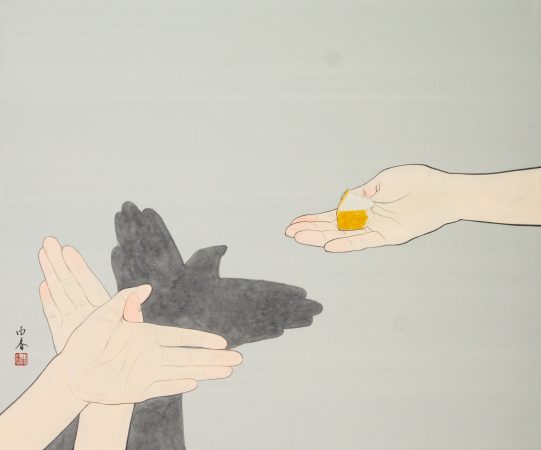
Eri: I find your Composition series particularly fascinating. How do you decide on the arrangement of the objects?
Yuka: For that series, I paint things under the title Composition when I encounter a scene that already feels “complete as a composition” without me having altered anything. I’m interested in the curious beauty of how, as a result of various people’s actions, objects happen to come together in a particular place, creating a remarkably beautiful balance.
Eri: I see. That’s very interesting. The soft colors throughout your work are also striking. I imagine the materials used in nihonga play a role, of course, but how do you determine your colors?
Yuka: The colors of the slightly hazy landscapes I remember from Doto, particularly around Abashiri, have remained deeply ingrained in me since childhood. So when I paint something, rather than reproducing its actual colors, they naturally become filtered through that memory, taking on a similar quality.
Eri: Have you had the opportunity to travel abroad?
Yuka: Not yet. I was once planning to travel to Taiwan to make work there, but it never happened due to the pandemic and other circumstances. I do have a passport that’s valid for ten years, but I haven’t used it even once! (laughs) If I get the chance to travel abroad, I’m really curious to see how differences in sunlight and atmosphere might influence my work.
Eri: Tokyo Gendai attracts many collectors and art enthusiasts from both Japan and abroad. This year, international galleries account for around 60 percent of the exhibitors. What kinds of encounters are you hoping for by presenting your work in such an international setting?
Yuka: I imagine that many people from a wide range of cultural backgrounds will visit Tokyo Gendai, both from Japan and overseas. Many of my titles incorporate wordplay that only really works in Japanese, and the motifs I depict are also very rooted in ordinary Japanese life. So I’m very curious to see how people from other countries will respond to my work.
Eri: Thank you. Listening to you, I feel that while you depict motifs that are distinctly Japanese, the act of living our everyday lives itself has something universal that transcends national and cultural boundaries. The food and dishes may be different, but there are surely many similarities in the ways people live. I’m also very much looking forward to seeing how people from overseas respond to your work.
Yuka: That makes me very happy. I once made a painting of a refrigerator so packed with condiments that there was no room for drinks. When I posted the work on social media, it was seen by a great many people, and I received many comments from people overseas saying, “That’s my refrigerator!” It made me very happy to realize that, despite our cultural differences, there are aspects of everyday life that we all share. I would be delighted if my work could create that same sense of recognition and shared feeling across languages and borders.
Eri: Could you tell us about the works you will be presenting at Tokyo Gendai this year?
Yuka: Some of the works aren’t finished yet, but I’m working hard on them now. In addition to motifs such as everyday household objects, I’ll be presenting works featuring utility poles and crows, the skyline of Sapporo, and hand games. I’m also planning to exhibit a horizontally oriented scroll painting measuring about two meters in length.
Eri: Two meters is quite a large work. What will it depict?
Yuka: A sushi conveyor belt.
Eri: A conveyor-belt sushi restaurant? How interesting.
Yuka: These days, the sushi itself barely goes around on conveyor belts, does it? Instead, you see an endless stream of images of sushi presented as colorful pop-ups or advertisements. If you look closely, you’ll find all kinds of warning messages, such as “Please be careful, the tea is hot” or “We do not accept takeout orders for raw food.” I sometimes feel that this is such a distinctly contemporary scene, and that’s what I’m currently working on.
Eri: Thank you very much for speaking with us today. I’m very much looking forward to seeing your work at Tokyo Gendai.
Yuka: Thank you. It was a pleasure.
Do you have a message for visitors who will encounter your work at Tokyo Gendai?
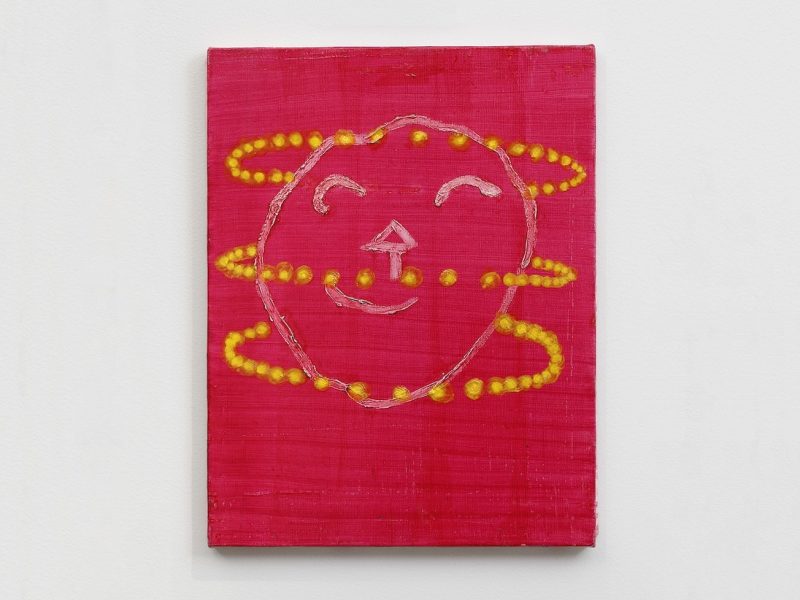
At Tokyo Gendai, I will be presenting part of the astral shadow series. I hope visitors will enjoy imagining what the complete work might one day become.
Thank you very much! We look forward to seeing your work in September.
Encounter the beauty in everyday life. Experience Yuka Kasai’s nihonga paintings in person.
Dates:
11-13 September 2026 (Fri-Sun) *Vernissage: 10 September (Thu)
Venue:
Pacifico Yokohama
Booth:
GALLERY MONMA
Ticket Purchase:
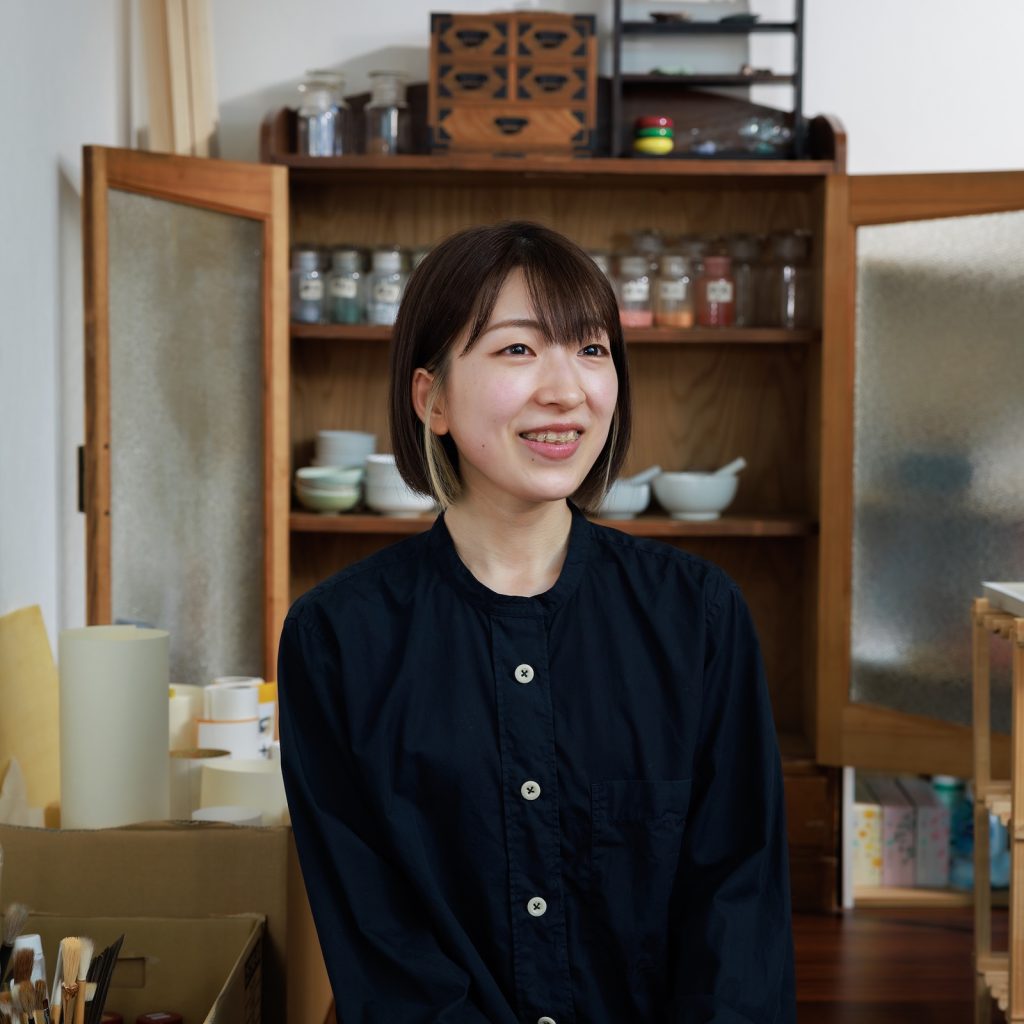
Yuka Kasai
Born in Hokkaido in 1993, Yuka Kasai lives and works in Sapporo. She graduated from the Faculty of Art at Sapporo Otani University in 2016.
Kasai creates nihonga paintings that explore life through depictions of everyday existence and the ordinary things that surround us, at once celebrating and gently satirizing the act of living. Working primarily with familiar motifs such as household objects and food, she creates compositions in which the arrangement and relationships between these objects suggest particular situations, emotions, or subtle traces of human presence.
In recent years, Kasai has also worked on book and publication covers, as well as commissioned artworks for companies.
Her major exhibitions and projects include ART FAIR TOKYO 2026 (Tokyo International Forum); Sapporo Art Museum Exhibition: My Home (tentative title) (Sapporo Art Museum, 2025); Through the Eyes of Hokkaido Artists (Zettaikuukan, 2022); Stones from Beyond the Mist (Gallery Muryō, 2022); and Dosanko Recollections: A Selection of Masterpieces from the Hokkaido Museum of Modern Art Collection — New Faces of Hokkaido Nihonga: The World of Yuka Kasai (Hakodate Museum of Art, Hokkaido, 2020).