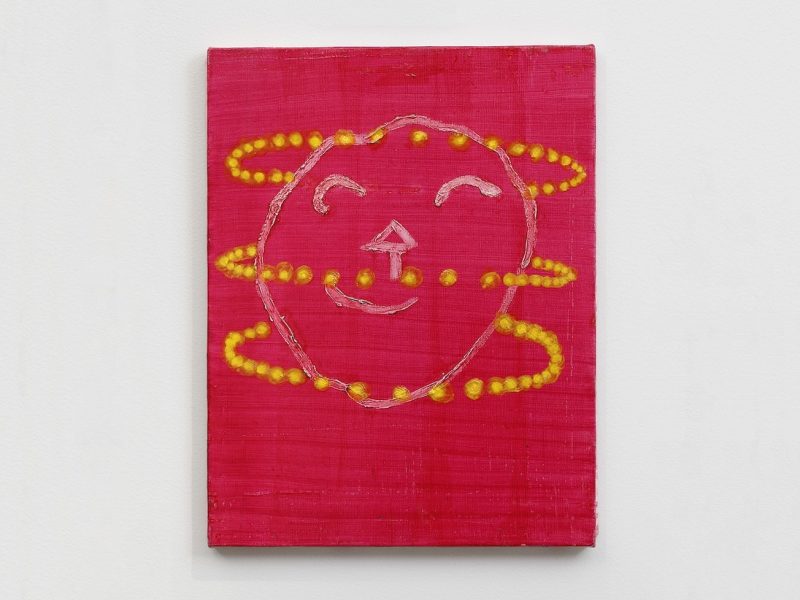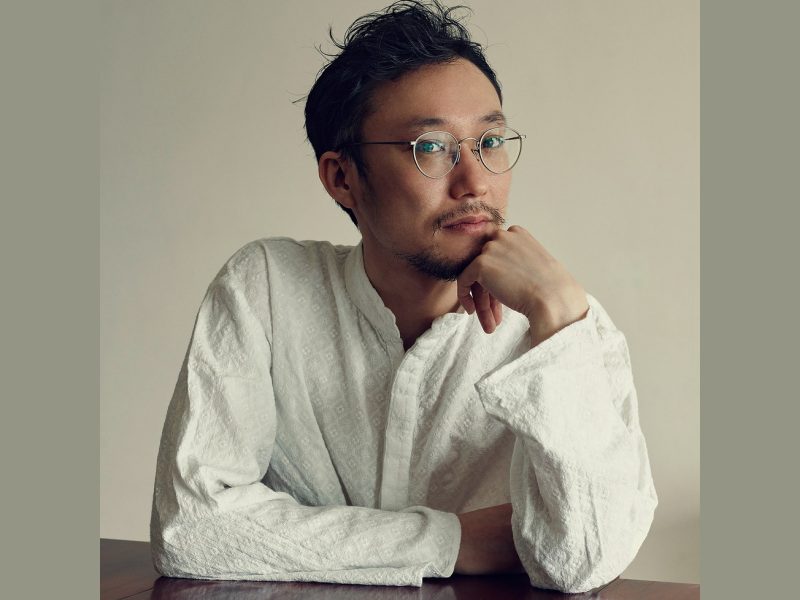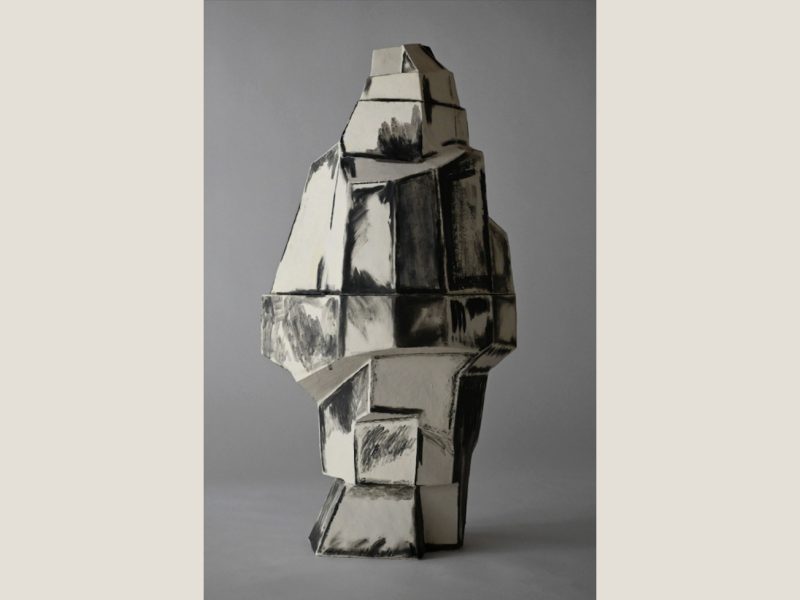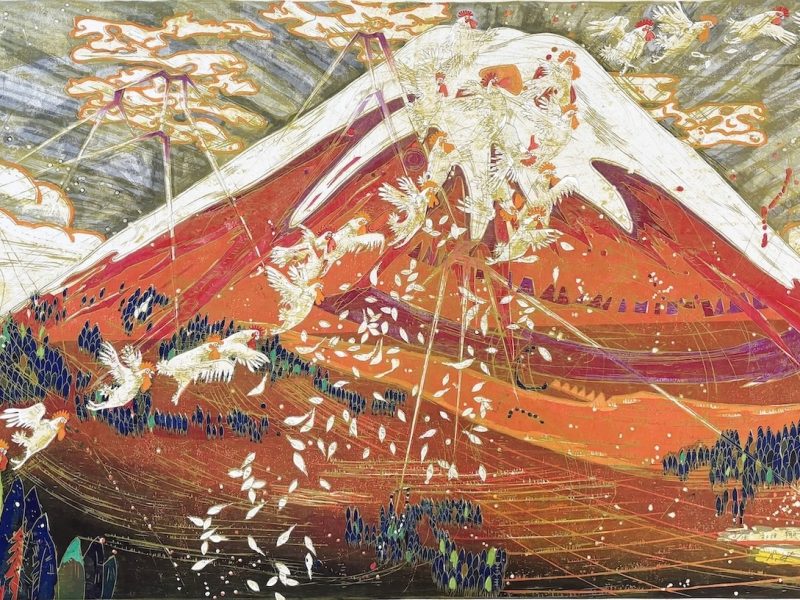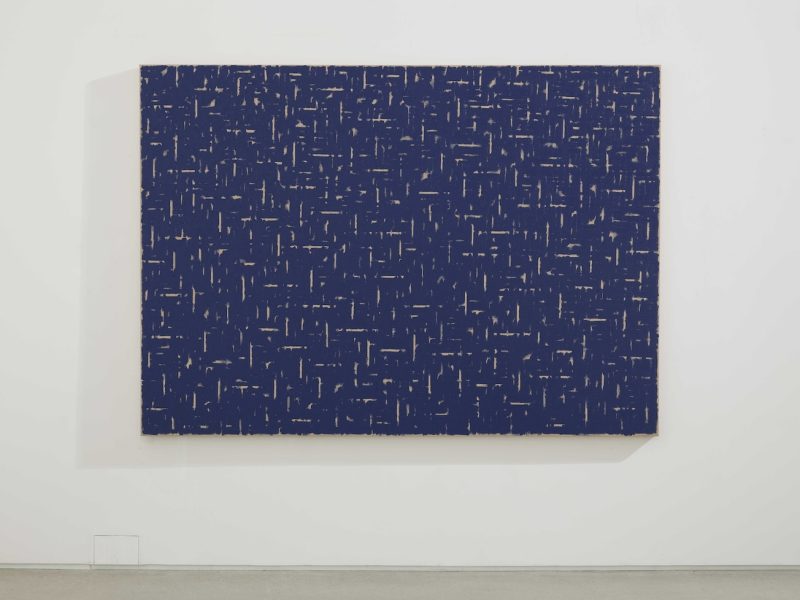

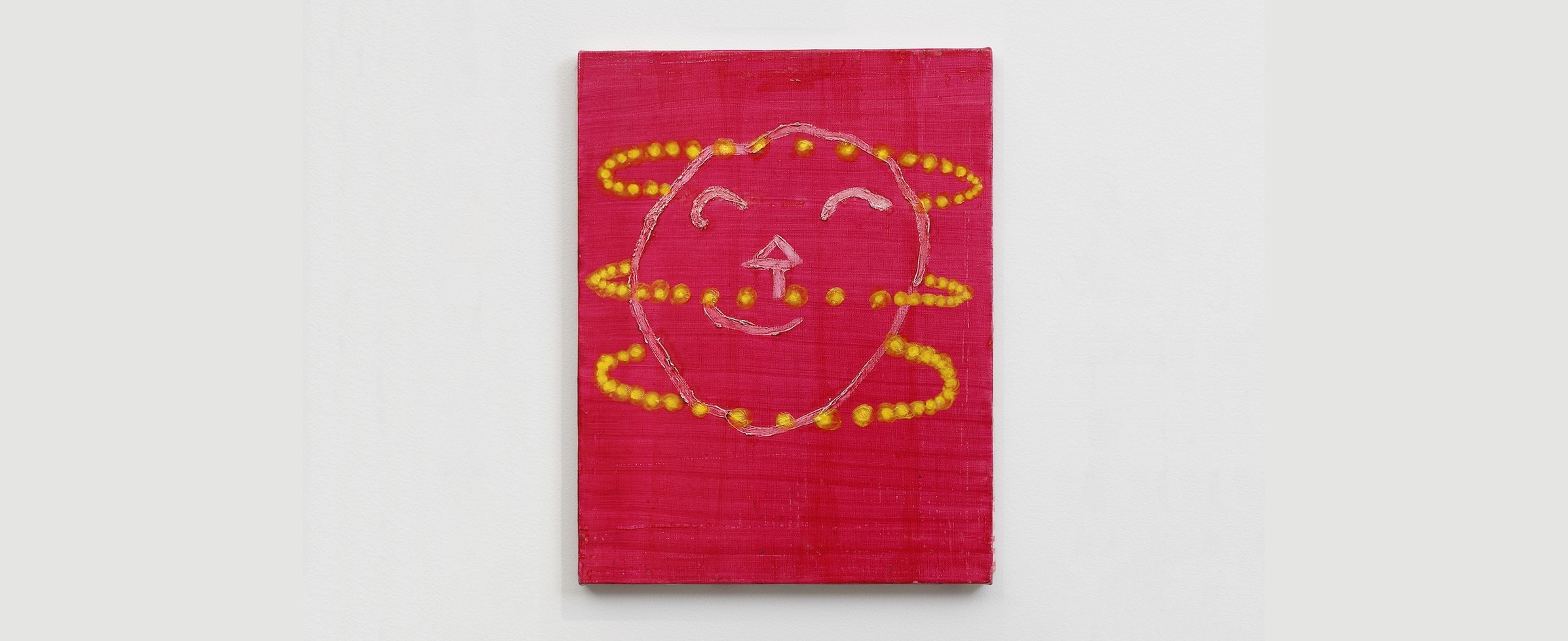
Through familiar objects and everyday materials, Tsuyoshi Ozawa has consistently invited us to reconsider history, society, and the assumptions we take for granted. Works such as Nasubi Gallery, created using milk crates, and his Soy Sauce Paintings combine humor with sharp social critique and have earned him wide recognition both in Japan and internationally.
At this year’s Tokyo Gendai, visitors will be able to trace the trajectory of his thinking through works spanning from his early practice to his latest creations. Among them is a new work inspired by the supercontinent Pangaea, as well as a group of works that contemplate themes of connection and division, quietly posing questions to all of us living in the present.
In this interview, we spoke with Ozawa about the origins of his artistic practice and the ideas embedded in his work.
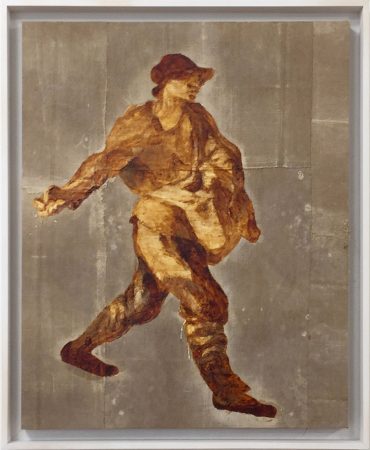
You have continuously created works that lightly transcend existing frameworks, such as Nasubi Gallery, which uses milk crates, and your Soy Sauce Paintings. For those who may be encountering your work for the first time, could you tell us what lies at the core of your artistic practice?
Many of my works begin with things that are familiar and seemingly trivial. Milk crates, soy sauce, vegetables, Jizō statues—objects that everyone already knows. I use these everyday things as points of entry.
My interest in them lies in the possibility of reexamining the histories, social structures, and human relationships embedded within everyday life from a slightly different perspective.
I believe that art is not so much about inventing something entirely new as it is about subtly shifting the way we see the world we think we already know. Through that slight shift, landscapes and relationships that had previously gone unnoticed can suddenly come into view.
The materials and methods change from one work to another, but one thing remains consistent: the desire to look at the world just a little askew. Through the gaps that this perspective creates, something that has not yet been named may begin to emerge.
Perhaps the core of my practice lies in my desire to witness that moment.
You reconstruct history, society, and everyday scenes through a highly distinctive perspective. What kinds of moments or subjects inspire you the most in your practice?
Rather than encountering something extraordinary, inspiration often comes from a moment when I feel a slight sense of discomfort toward something I had always taken for granted.
An ordinary landscape, an old system, a fragment of history, or something that no one pays much attention to—simply shifting one’s perspective can suddenly give these things an entirely different meaning.
Perhaps making art is not about creating something new, but about relocating something that has always existed in the world and placing it somewhere slightly different. When that happens, things that had remained silent sometimes seem to begin speaking all at once.
A sense of playfulness and sharp critique have always coexisted in your work. When addressing social issues that can easily become heavy or serious, what is important to you in transforming them into expressions that retain a certain lightness?
The more I deal with social themes, the more important it becomes for me not to provide answers.
Once a work presents a conclusion, I feel that thinking stops there. Rather than making assertions through my work, I want to create a space in which we can think together.
I believe that art is not something that provides answers; it is a device that allows questions to remain with us for a long time.
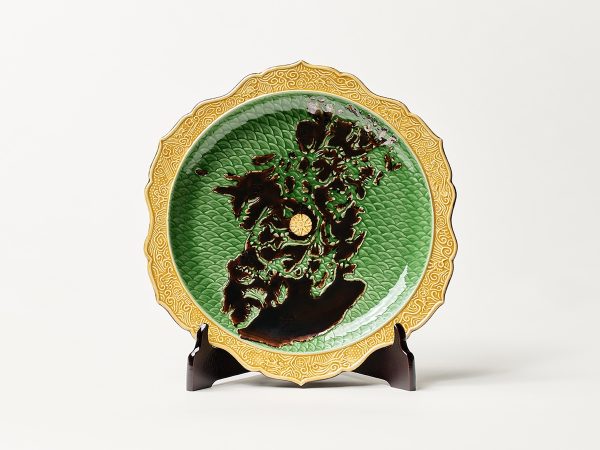
At this year’s Tokyo Gendai, you will present both your latest work inspired by the supercontinent Pangaea and works created in the aftermath of the pandemic. In this era, shaped by experiences of division and change, what kinds of “connections” or questions do you hope these works will bring to light?
Pangaea tells a grand story of time—a time when all the continents were once joined together. But I do not see it merely as an event of the distant past.
Are things that have been divided truly separate? People, histories, and cultures may appear to have been severed, yet perhaps they remain connected somewhere beneath the surface. When I make work, I often have that feeling.
Through the pandemic, we experienced both the need to connect and the need to keep our distance. It is not a matter of one being right and the other wrong. Rather, I want to ask: What is it that binds us together, and what is it that keeps us apart?
Through these works, I hope to gently unsettle that boundary.
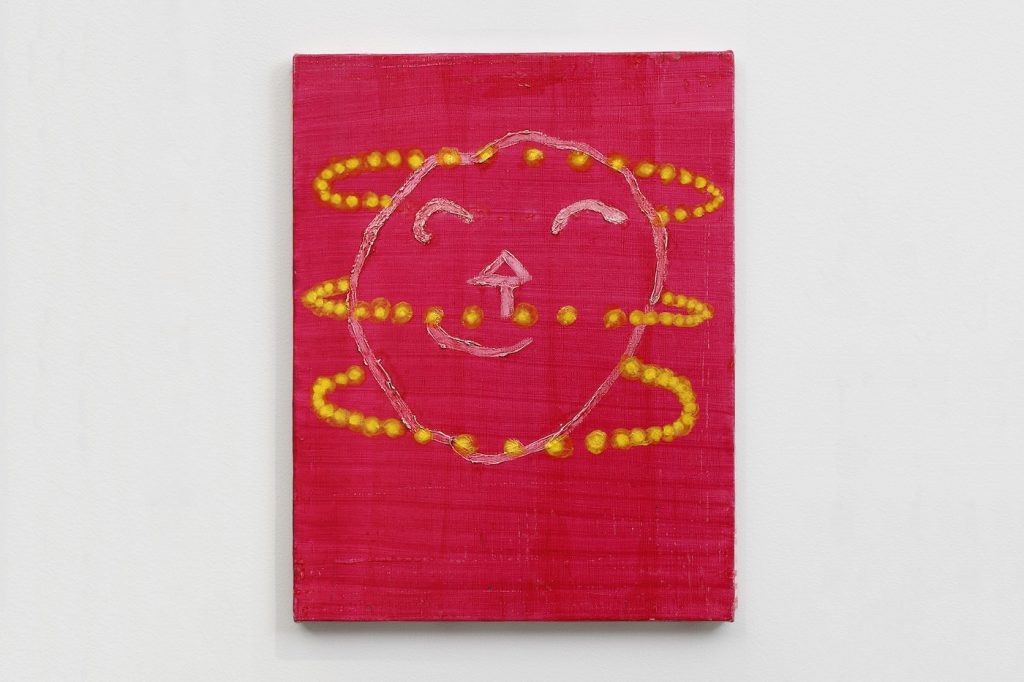
This presentation has been described as a “treasure chest turned upside down,” open to private collectors as well. What expectations or message do you have for the Japanese art scene and for the audiences visiting the fair?
This presentation brings together a wide range of works, from my earliest pieces to my most recent ones, and includes several different series in a single space.
Looking back, it sometimes feels as though I have taken many detours in my practice. Yet, strangely enough, I also feel that all of these works are connected somewhere along the way.
An art fair is, of course, a place where works are purchased, but it is also a place where one can encounter an artist by chance. There is no need to approach the work feeling that you must fully understand its meaning.
If a visitor simply thinks, “What is this?” or “There is something intriguing about it,” then I believe that is already the beginning of an encounter with the work.
I would be delighted if, even after leaving the venue, people suddenly find themselves wondering, “What was that piece?”
Perhaps artworks do not end within the exhibition space itself; perhaps they continue to grow gradually in the time that follows.
Thank you very much! We look forward to seeing your work in September.
See the world from a slightly different angle. Experience Tsuyoshi Ozawa’s work in person.
Dates:
11-13 September 2026 (Fri-Sun) *Vernissage: 10 September (Thu)
Venue:
Pacifico Yokohama
Booth:
MISA SHIN GALLERY
Ticket Purchase:
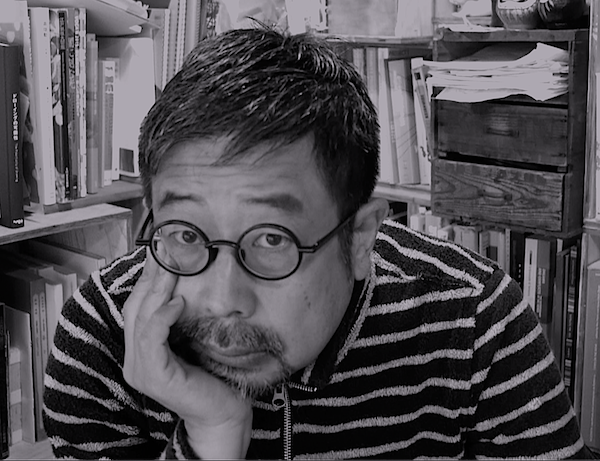
Ozawa Tsuyoshi
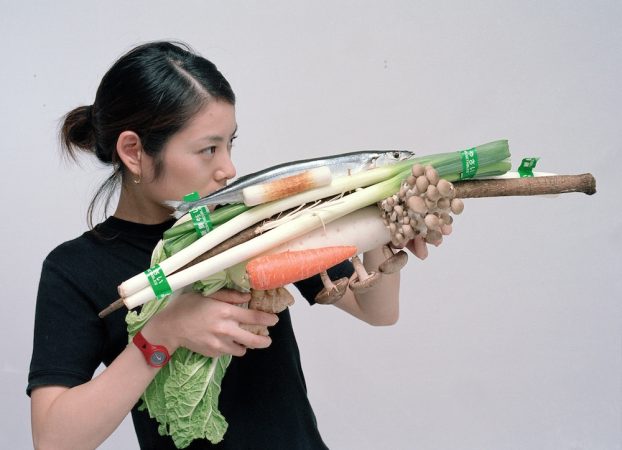
Born in Tokyo in 1965. Earned master’s degree from the Department of Fine Arts of the Graduate School of Tokyo National University of Fine Arts and Music (majoring in mural painting) in 1991. Ozawa is renowned for his diverse body of work, including painting, photography, video, and installation, which critically examine history and society through a humorous lens. Ozawa’s notable works include: his “Jizoing” series, in which he photographs statues of homemade Jizo statues situated in different environments; his Nasubi Gallery series of portable micro-galleries made from milk boxes; his “Museum of Soy Sauce Art,” in which he reproduces historical Japanese art masterpieces using soy sauce; and his “Vegetable Weapon” series of photographic portraits of women holding “weapons” made of vegetables.
Selected major solo exhibitions include: “Answer with Yes and No!” at the Mori Art Museum (Tokyo, 2004), “The Invisible Runner Strides On” at the Hiroshima City Museum of Contemporary Art (Hiroshima, 2009), “Tsuyoshi Ozawa : Everyone likes someone, as you like someone” at the Fukushima Prefectural Museum of Art and the Toyota Municipal Museum of Art (Fukushima, Aichi, 2012), “Tsuyoshi Ozawa Imperfection: Parallel Art History” at the Chiba City Museum of Art (Chiba, 2018).” The Seven Wonders Of Sanuki “The Kagawa Museum (Kagawa, 2025). Selected major group exhibitions include: “Saitama Triennale: Envisioning the Future!” (Saitama 2016) and “Yokohama Triennale : Island, Consetellations & Galapagos“ (Kanagawa, 2017), “13th Berlin Biennale for Contemporary Art” (Berlin, 2025), “Prism of the Real: Making Art in Japan 1989-2010” (Tokyo, 2025), and the recently partially modified “Slug Buddha 88” is on permanent display in the Valley Gallery, which opened at Benesse Art Site Naoshima in March 2022. His works are held in museum collections around the world, including M+ in Hong Kong, the National Museum of Art, Osaka, and the Museum of Contemporary Art Tokyo.
Ozawa’s artistic collaboration “The Xijing Men”, explores themes related to breaking communication barriers, with Chinese artist Chen Shaoxiong and Korean artist Gimhongsok, “Xijing Is Not Xijing, Therefore Xijing Is Xijing.” at 21st Century Museum of Contemporary Art, Kanazawa. (2016), “Art and China after 1989: Theater of the World” at Solomon R. Guggenheim Museum and Guggenheim Museum Bilbao (New York, Bilbao 2018).