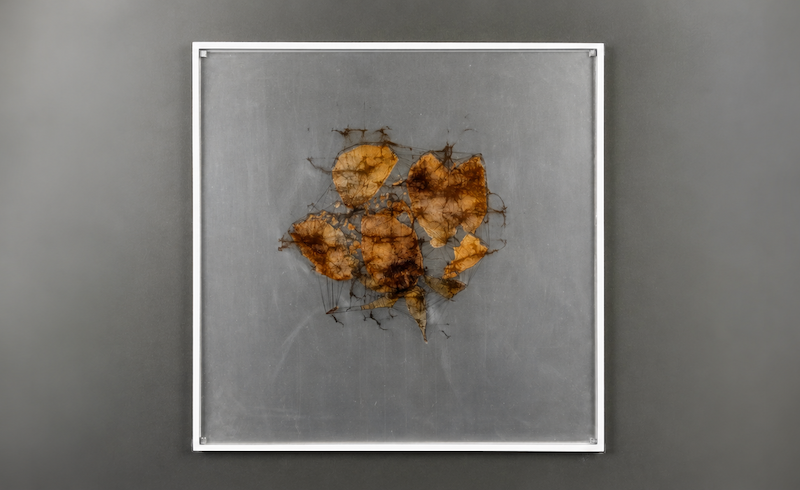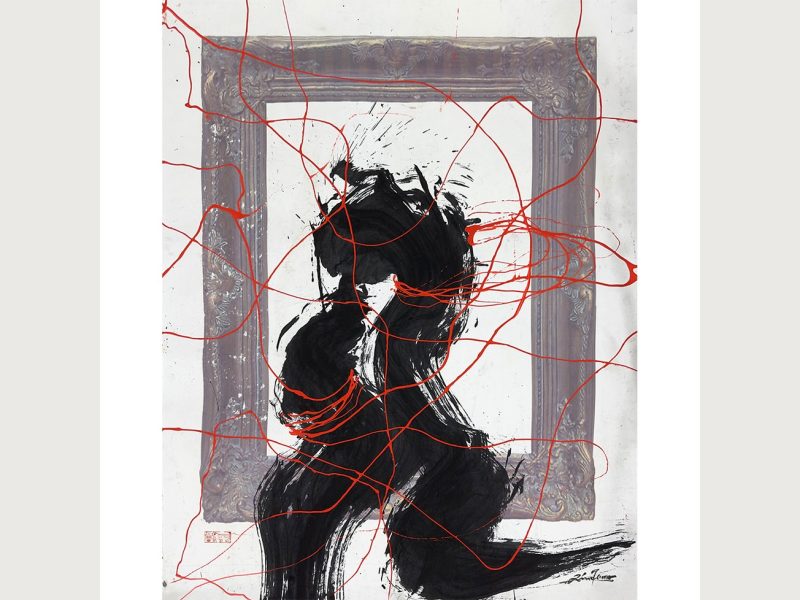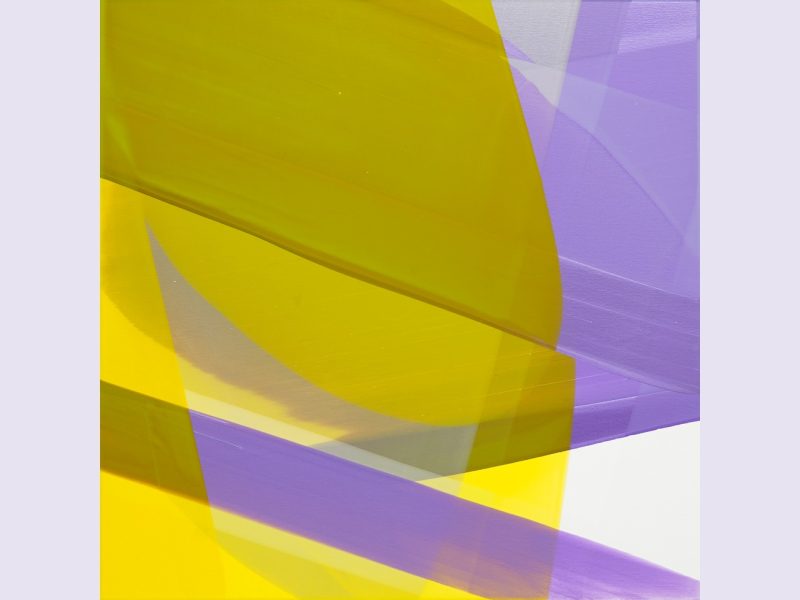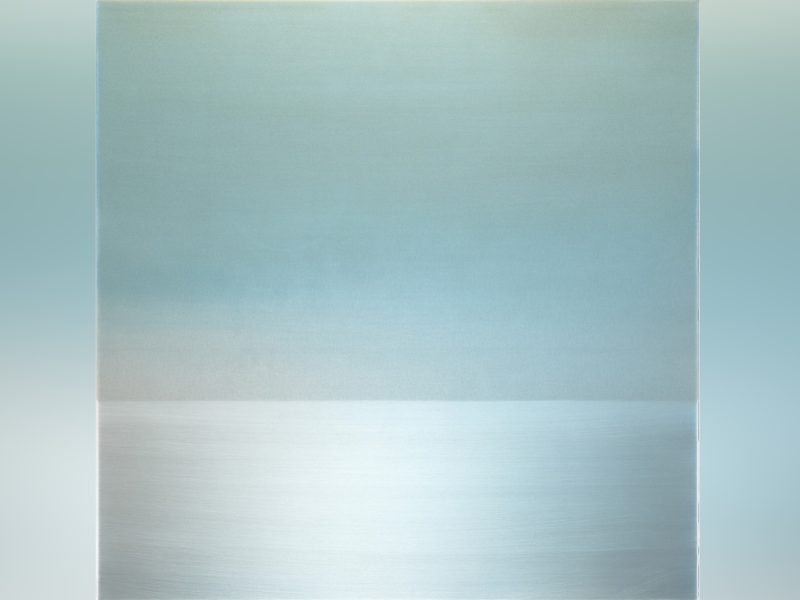

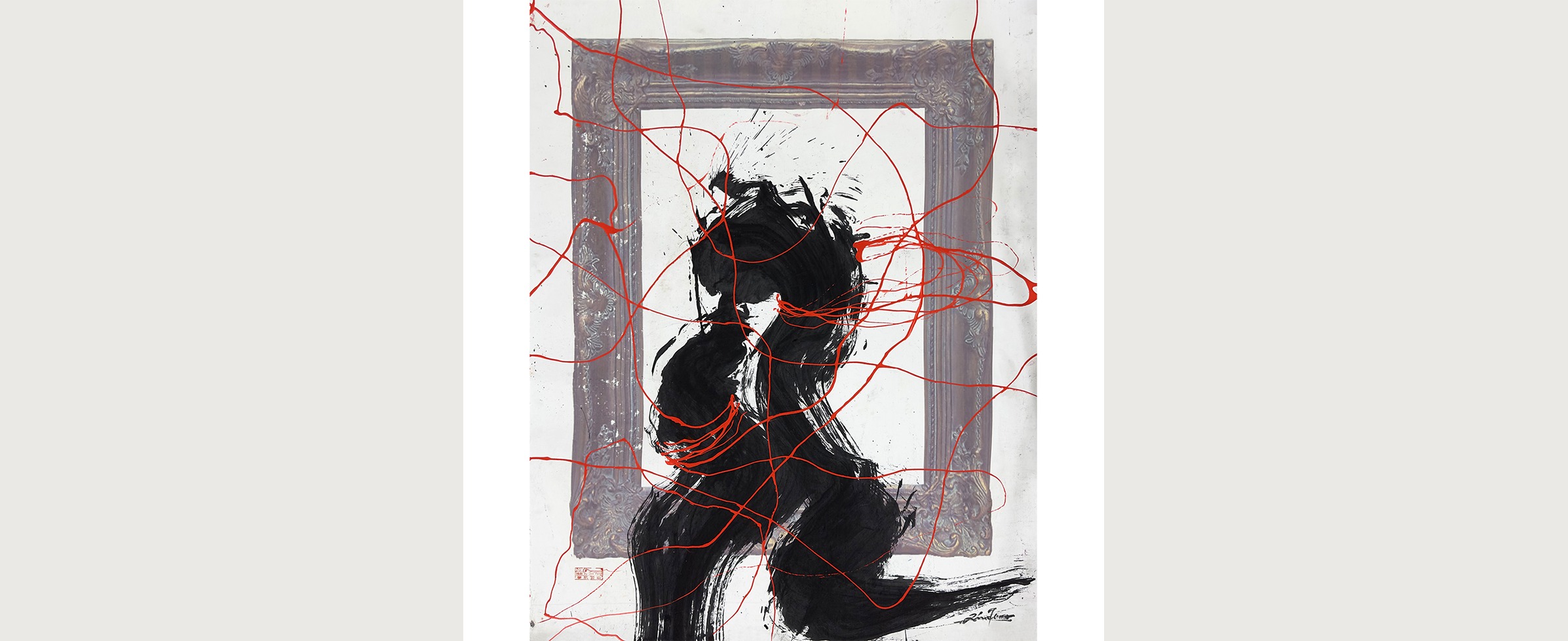
With bold, sweeping brushstrokes that seem to cut through the picture plane and expanses of breathtaking stillness, Qin Feng’s work exists in a dynamic balance of opposing forces. Rooted in the tradition of Chinese calligraphy while continually expanding the language of contemporary abstraction, his practice explores universal themes that transcend time and culture—civilization and its cycles, humanity and nature, chaos and order.
Working with ink, paper, and other traditional materials, Qin Feng creates works that invite viewers beyond interpretation and into direct experience. Each encounter reveals new rhythms, emotions, and perspectives, offering a space where intuition takes precedence over explanation.
In this interview, Qin Feng reflects on the ideas that have shaped his artistic journey, his enduring dialogue with Japanese culture, and the philosophy that continues to guide his practice. We invite you to experience the remarkable energy, scale, and presence of his work firsthand at Tokyo Gendai.
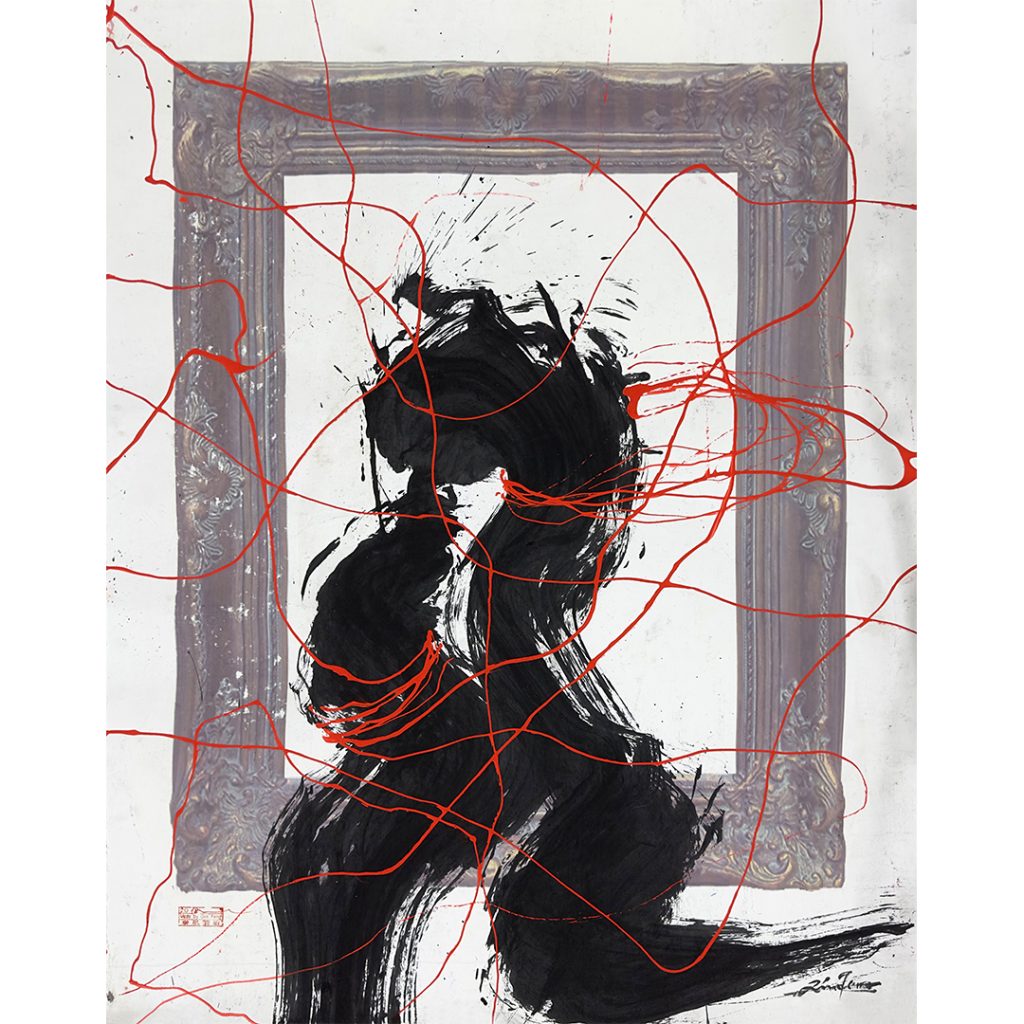
For Japanese viewers encountering your work for the first time, could you share your artistic practice and the worldview and meaning you hope to express through your works?
My artistic practice is, at its core, a visual writing about “Qi” (vital energy) and “Dao” (the Way).
Through various media, I aim to express not specific objects or fixed interpretations, but the primordial state of the universe, chaotic yet ever-renewing. My marks and expressive acts, whether unrestrained splashing or minimalist blank space, are processes and traces of transformation between imagery, Qi, and Dao.
The worldview I hope to convey is a holistic world of unity, rooted in Eastern philosophy. In my multi-media practice, I deliberately create a confrontation between chaos and tranquillity, moving between the primordial and the annihilated, and capturing the overlapping shadows of emptiness and reality. I hope that viewers, through perception and contemplation, may briefly forget the constraints of language and return to a more intuitive, instinctive way of reading. At that moment, we may experience a transformative sense of release and a profound reverence for nature.
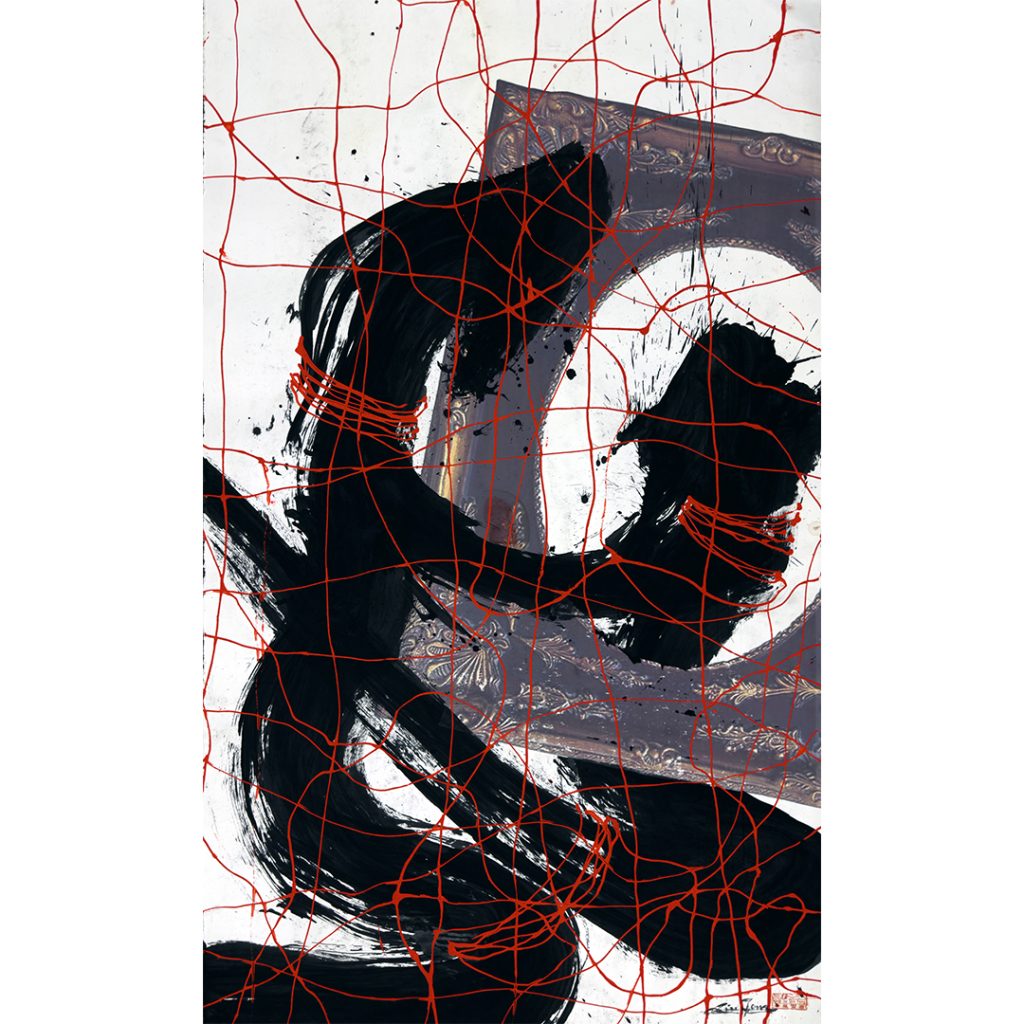
The recurring symbols in your work, such as the “one,” the circle, and the red line, are said to reflect the cycle of human civilisation—birth, decline, and revival. When transforming such a grand historical narrative into abstract brushstrokes, what thought process do you follow, and how do you construct them?
The “one,” the “circle,” and the red line are the core framework and meta-language of my work on “Civilisation Landscape” over the past forty years. They are my mother tongue in dialogue with the history of civilisation.
This creative process across multiple media is, in fact, an abstract process of quantification; structuring the civilisation landscape with abstract logic, and outlining the cultural context and atmosphere of nature through regional civilisational characteristics. In my mother tongue, it carries the spirit and essence of thousands of years of Eastern cultural heritage and traditional writing, as well as the mottled imprints of diverse civilisations along the Silk Road. But in the moment of expression, these vast historical narratives must be internalised and transformed into an instinctive expressive impulse and an intuitive expression of the life journey.
A scientist once said that the ultimate question of science is “one” and “zero.” In my language, that “one,” that “circle,” and that red line symbolise the cycle of life and the recurrence of all things in nature. Those ink marks are like a ray of light piercing this cycle—the continuation of civilisation’s bloodline and the traces of enlightenment left by an individual life within history.
Before writing, I usually cultivate a state of mind and consider the most suitable medium and form of expression through nature, music, and imagery, sometimes even writing specific plans. But once I begin, I strive for a unity of body, breath, and intention; the speed and force of body, mind, and hand on the medium must be precise and just right. This apparent improvisation actually carries decades of reflection on the theme of civilisation’s landscape. It is a process of distilling rationality into sensibility, and then letting that sensibility burst forth as form.
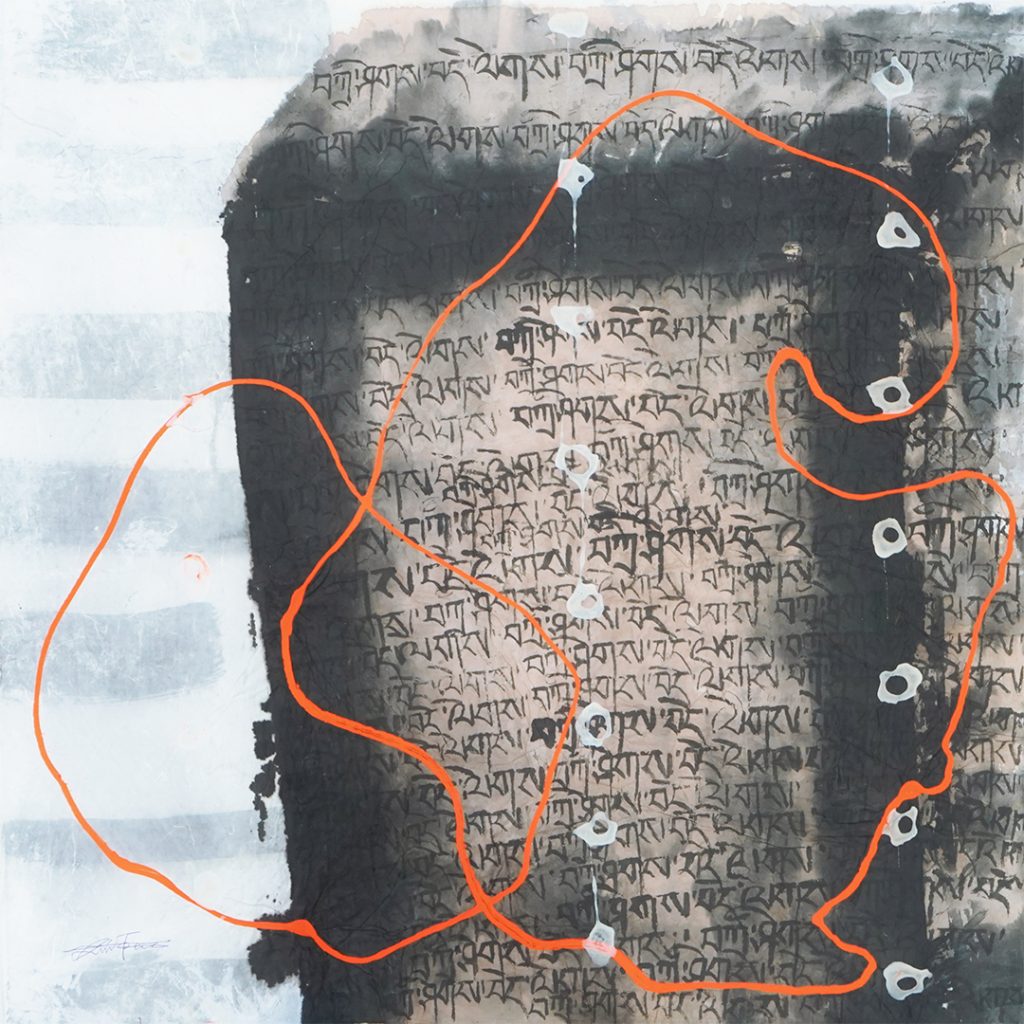
Your work showcases a striking coexistence of contrasting energies—tranquillity (or meditation) and explosive vitality. In your creative process, when do you feel a surge of inspiration, or when do you feel certain, “This is it!”?
That moment of “This is it!” usually does not occur during extreme exuberance, but rather when balance is established.
When creating, I often feel as though I am walking on a knife’s edge. On one side is an extreme outburst, like a storm pouring out primal desires and anger; on the other is profound meditation, like the absolute silence of the cosmic void. If the image has only outburst, it becomes merely emotional catharsis; if it has only silence, it may drift into empty embellishment.
The moment of inspiration often comes at the critical point where these two forces are fiercely pulling and clashing, on the verge of collapse. Suddenly, a wondrous order emerges from the chaos, like the arc in the Tai Chi symbol where Yin transforms into Yang and Yang transforms into Yin.
When I see that dividing line, like a lightning bolt, cleaving the boundary between black and white, heaven and earth, humanity, I know that some mysterious code and pulse have brought all things into harmony. At that moment, the work has come alive. It is no longer “I am painting,” but a state that has found its natural vibrancy.
What are your thoughts and expectations regarding this exhibition at Tokyo Gendai, as well as the Japanese art world and audiences? Furthermore, do you believe there is a resonance between your work and Japanese tradition or spirituality?
This is a reunion I have been eagerly anticipating. For me, Japan is not only an opportunity and space to exhibit my work, but also a place for in-depth dialogue.
I still vividly remember the exhibitions and events I had with Inoue Yuichi, Lee Ufan, and others at PACE in New York many years ago. My expectation for the Japanese art world is a kind of quiet resonance. Japanese audiences have an extremely delicate and unique perspective, and a deeply inherited influence from Confucianism, Buddhism, and Taoism. The Yamato cultural temperament, represented by the Mono-ha school in contemporary art, has also had a profound influence. We share common cultural roots, and it is a great honour for me to engage in this interactive exchange with colleagues in the Japanese art world and the audience. I hope that this exhibition will become a dialogue that transcends language and touches our hearts.
Thank you very much! We look forward to seeing your work in September.
Experience Qin Feng’s Vision of Civilization.
Dates:
11-13 September 2026 (Fri-Sun) *Vernissage: 10 September (Thu)
Venue:
Pacifico Yokohama
Booth:
Art of Nature Contemporary
Ticket Purchase:
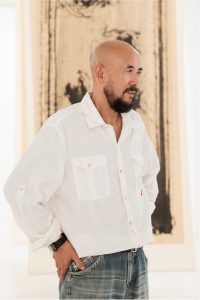
Qin Feng
Qin graduated from the Shandong College of Arts and Crafts in 1985. He has served as a guest professor at the Berlin University of the Arts and the Central Academy of Fine Arts in Beijing. In 1993, he founded the Museum of Contemporary Art Beijing, and in 2020, he established the Qin Han Contemporary Art Research Institute. He is currently a research fellow in contemporary art at Harvard University.
He has received numerous national and international art awards. His works often appeared in Sotheby’s and Christie’s auction, as well as hundreds of domestic and international exhibitions, including the Venice Biennale, the Asia Art Exhibition at the Metropolitan Museum of Art, New York, the British Museum, and Museum of Fine Arts in Boston.
His works are collected by prestigious museums, including the British Museum, the Metropolitan Museum of Art, New York, and the Museum of Fine Arts in Boston. Hundreds of his works have been donated to projects focused on art education, disaster relief, and orphan support.