
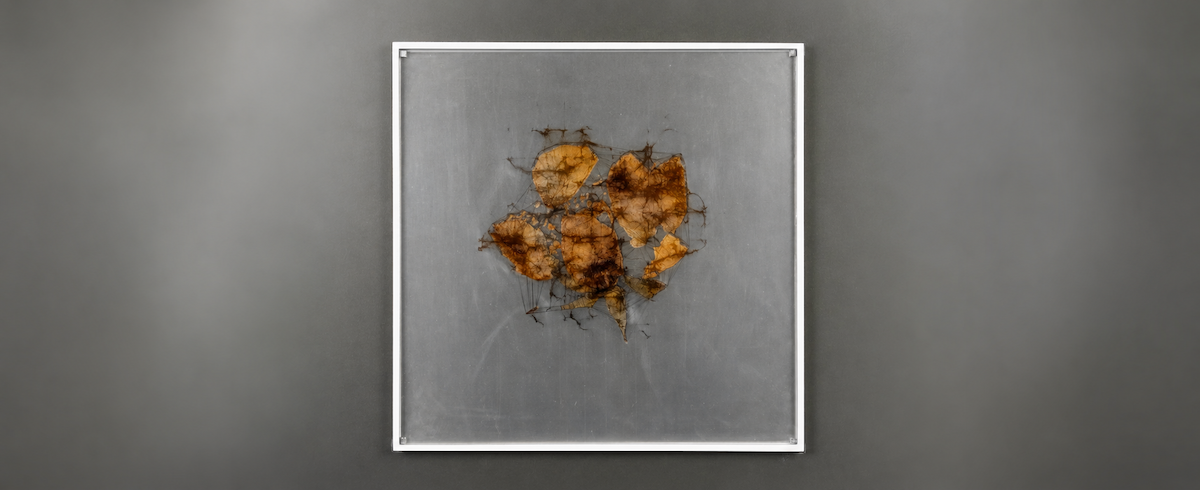
Working with sound, moving image, and light as his primary materials, Ryoichi Kurokawa creates works that deconstruct and reconstruct natural phenomena and data, sculpting time itself. In elementum, pressed flowers intersect with digital graphics, while oscillating continuum weaves together precisely synchronized sound and moving image. Across these works, the boundaries between nature and the digital, matter and information begin to dissolve, inviting viewers to experience perception in new ways. Through cycles of construction and deconstruction, Kurokawa’s practice opens new possibilities for seeing and understanding the world.
In this interview, he discusses the ideas and processes that underpin his work, offering insight into perceptual experiences that can only be fully encountered within the exhibition space.
For those encountering your work for the first time, could you tell us about the central ideas that have guided your artistic practice?
I work across various formats using sound, moving image, and light as my primary materials. My practice revolves around two principal themes: the reconstruction of nature and the design of synesthetic experiences that engage multiple senses simultaneously.
The first involves deconstructing and reconstructing materials and data derived from natural phenomena, forms, and the laws that describe them, revealing new aspects of nature through this process. The second focuses on composing sound and light within space to create experiences that activate multiple senses at once.
Running through both approaches is a long-standing interest in what I describe as “sculpting time.” Rather than communicating a fixed message, I hope my works function as catalysts—prompting new awareness, reflection, and inspiration within each viewer. That has remained the foundation of my practice throughout the years.
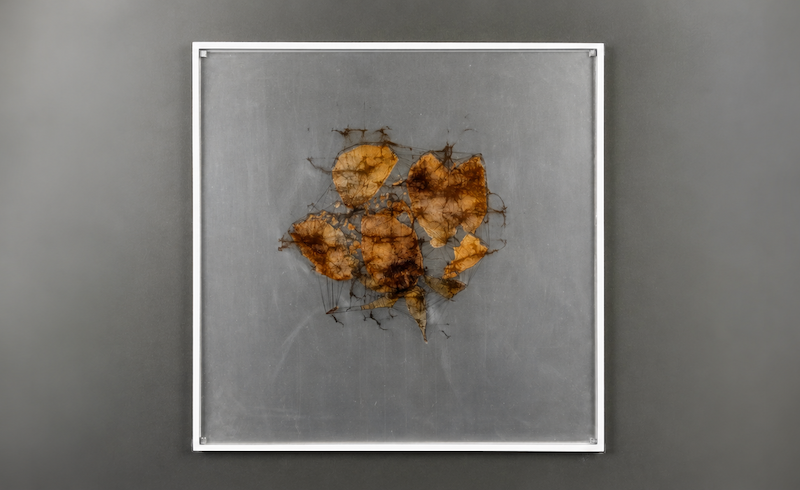
In elementum, pressed flowers are combined with digital graphics, while oscillating continuum intertwines intricate sound and moving image.
By bringing together seemingly opposing elements—natural materials and physicality on one hand, digital data on the other—what kind of perceptual experience are you seeking to create?
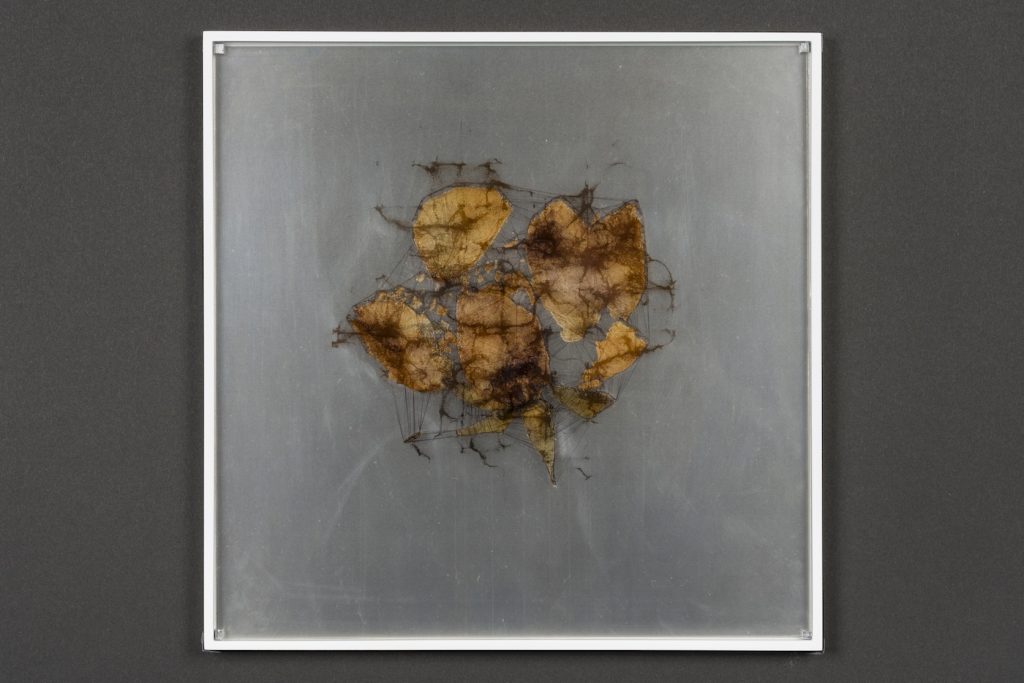
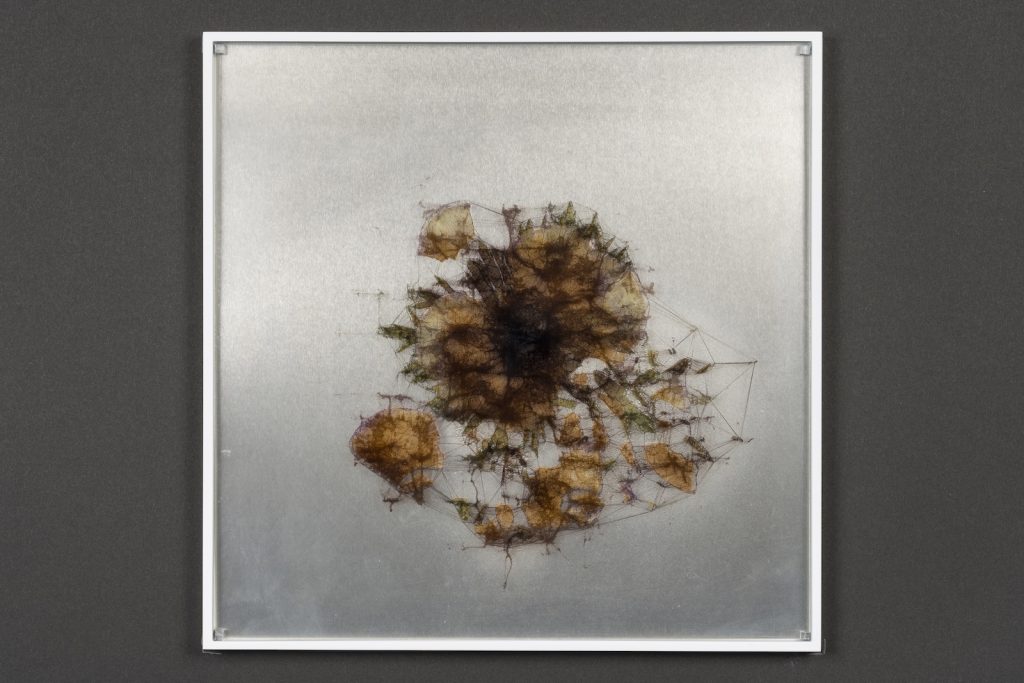
elementum begins with the idea of suspending and preserving the passage of time inherent in nature. By pressing, drying, fragmenting, and rearranging plants, I physically enact the same processes of deconstruction and reconstruction that I had previously explored in digital space.
The reconstructed natural forms are then digitized once again. Their colors and structures are captured, analyzed, and processed, before being layered back onto the original physical compositions. The work invites viewers to perceive these two distinct layers—the natural and the digital—simultaneously.
oscillating continuum, created in 2013, is an audiovisual sculpture that transforms immaterial sound and moving-image data into a tangible sculptural object. It translates ephemeral media into physical form.
In both works, I am interested in blurring the boundaries between opposing concepts: nature and the artificial, analogue and digital, the figurative and the abstract, sound and light. I aim to create a perceptual state that exists between these binaries, or to integrate them in ways that allow each to intensify and complement the other, enriching the viewer’s sensory experience.
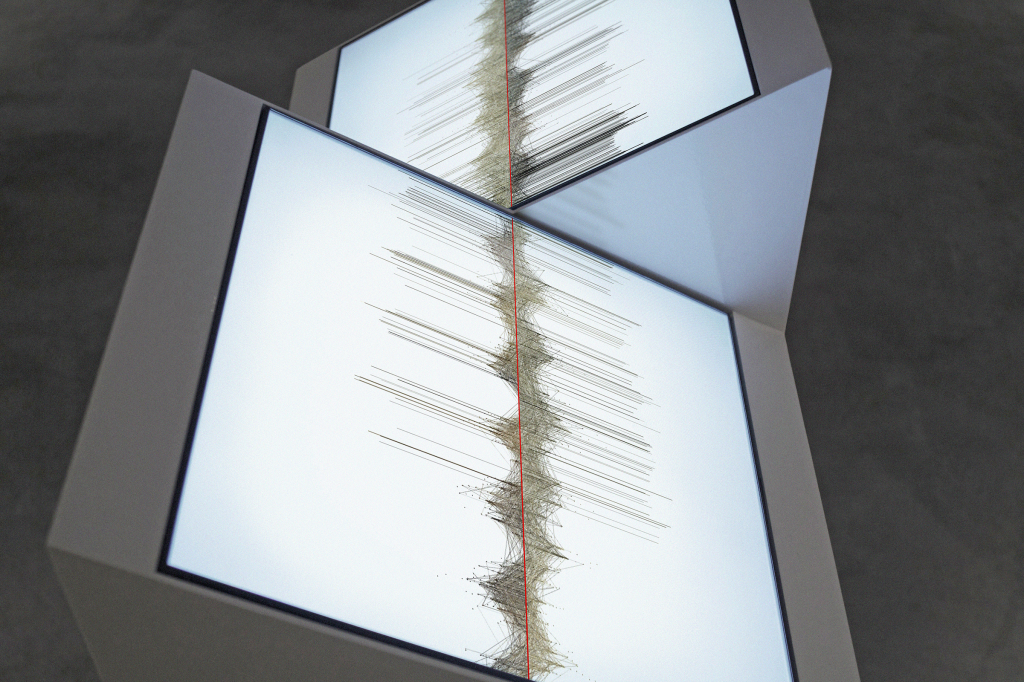
Your works often seem to exist in a continuous process of construction and deconstruction. During your creative process, when do you find inspiration or experience moments when your thinking accelerates?
The relationship between construction and deconstruction is generally something I design intentionally. At the same time, I actively embrace unexpected phenomena that emerge during the process.
Rather than pursuing only complete control, I sometimes deliberately relinquish it, allowing unforeseen developments to become part of the work. I believe these moments can introduce entirely different kinds of value into the final piece.
Inspiration comes from countless sources, including the ordinary and seemingly insignificant aspects of everyday life. However, I would say that nature remains the origin of much of my thinking. Natural phenomena, structures, patterns, textures, the laws that describe them, and data derived from them all provide starting points for exploring how hidden structures can be reconstructed, revealed, and transformed into new forms.
Perhaps the moment when my thinking is most energized is at the earliest stage of a project, when a concept gradually begins to take shape, before the actual making of the work has begun.
As Tokyo Gendai brings together an international audience, what are your hopes for presenting your work in this context, and what do you hope audiences will take away from it?
I believe international art fairs play an important role within Japan’s art scene by introducing diverse perspectives and creating opportunities for dialogue across different cultural contexts.
I’m particularly interested in how viewers perceive elements that I may have embedded unconsciously within the work. Presenting my practice in the diverse environment of an international art fair also means that the work may be interpreted in unexpected ways, and I welcome those new readings.
I hope this becomes an open space where such encounters and feedback can continue to shape the work beyond my original intentions.
Thank you very much! We look forward to seeing your work in September.
Discover Ryoichi Kurokawa’s world of time and perception.
Dates:
11-13 September 2026 (Fri-Sun) *Vernissage: 10 September (Thu)
Venue:
Pacifico Yokohama
Booth:
Takuro Someya Contemporary Art
Ticket Purchase:
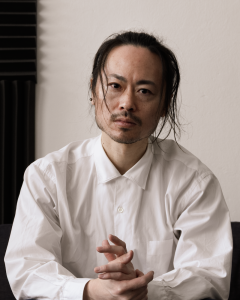
Ryoichi Kurokawa
Born in 1978 in Osaka, Kurokawa began creating video and sound art in Kyoto in 1999. His residency in Paris in 2000 led to active showings of his work across Europe. From 2003, he produced live visuals for Sketch Show, a collaboration between YMO members Haruomi Hosono and Yukihiro Takahashi, and HUMAN AUDIO SPONGE (Sketch Show + Ryuichi Sakamoto), at the Barcelona electronic music festival Sónar and other events. Major exhibitions include GLITCH (Pinakothek der Moderne, Germany, 2023), Coder le monde (Centre Pompidou, France, 2018), The Dream of Forms (Palais de Tokyo, Paris, France, 2017), One of a Thousand Ways to Defeat Entropy – The 54th Venice Biennale (Venice, Italy, 2011), and Synthesis (Tate Modern, London, UK, 2007). In 2010, he won the prestigious Golden Nica Award in the category of Digital Music & Sound Art at Ars Electronica (Austria). In 2025, he received the 5th Richard Mille Art Prize at Louvre Abu Dhabi.