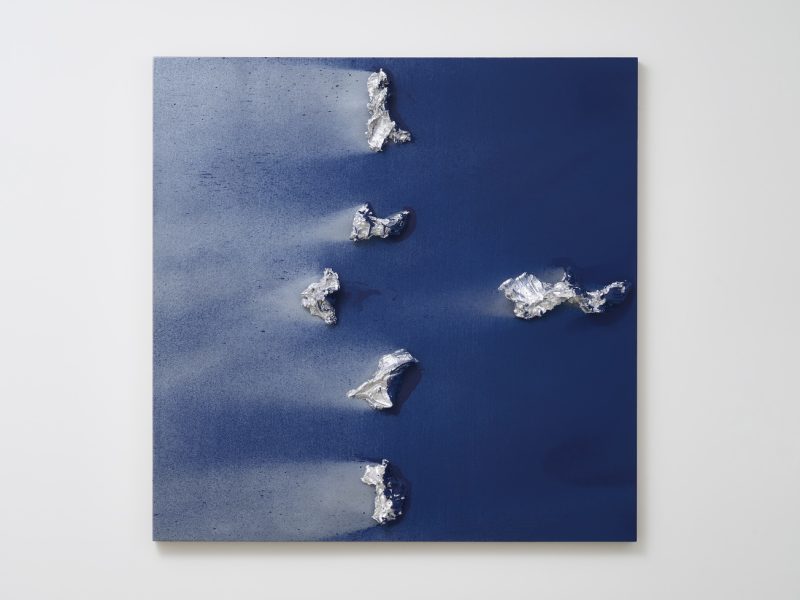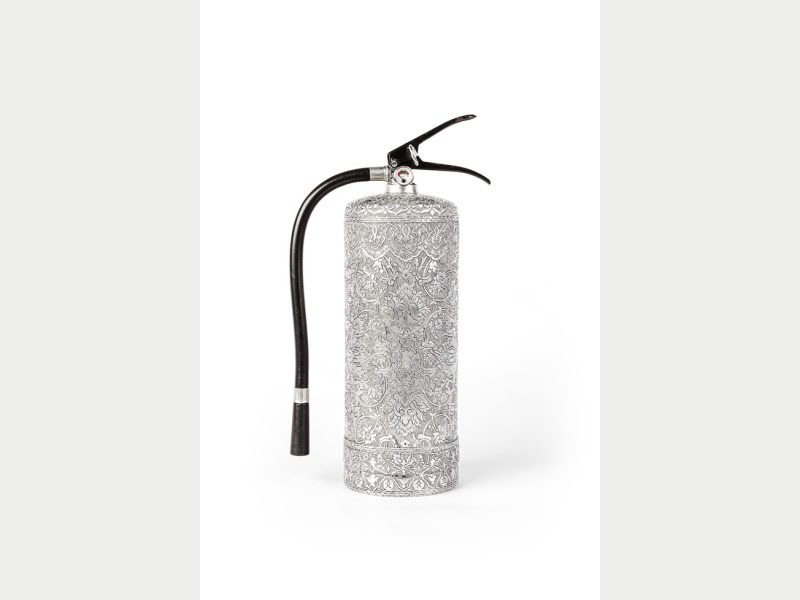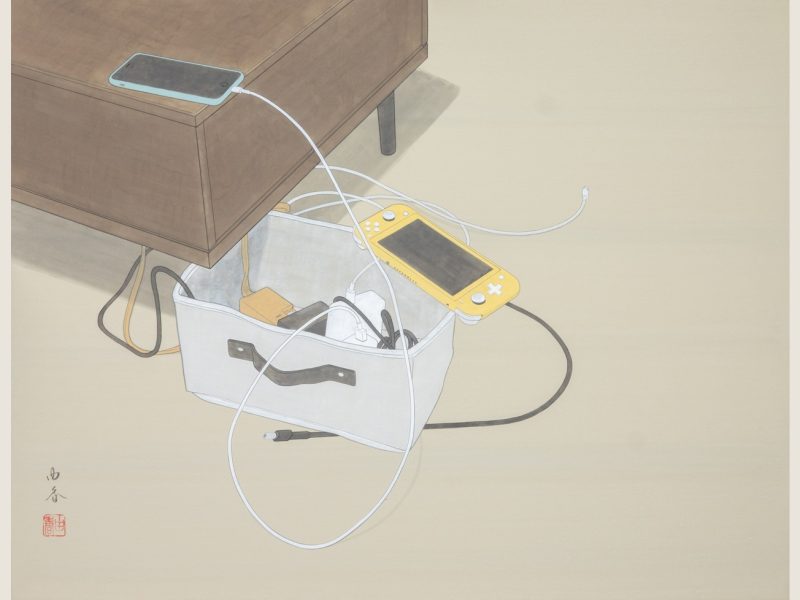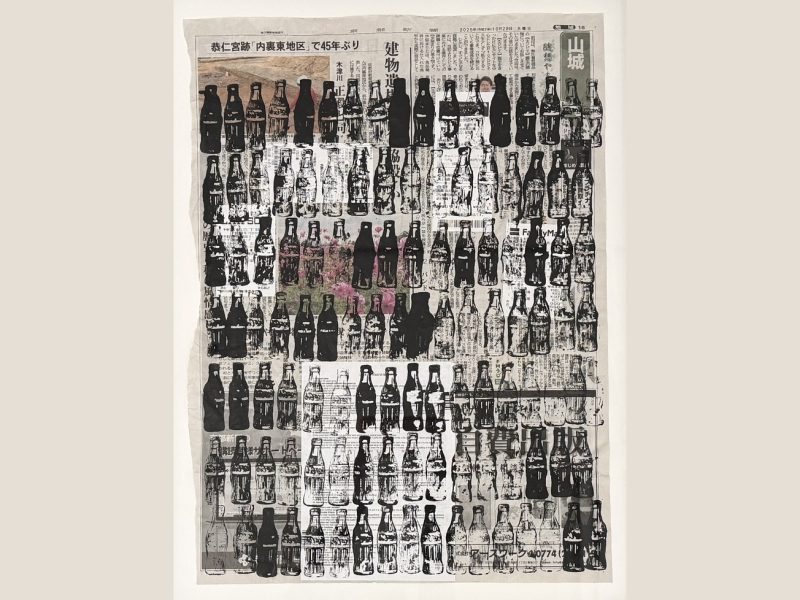


In Eri Asks, Tokyo Gendai Fair Director Eri Takane sits down with leading artists and key figures from around the world to explore the ideas shaping contemporary art.
This edition features Belgian artist Wim Delvoye, whose practice transforms familiar objects such as tyres, architecture, and machinery into intricately crafted sculptures. From his groundbreaking work Cloaca to his exquisitely detailed sculptures, Delvoye has continually challenged audiences to reflect on one of humanity’s most fundamental questions: What does it mean to be human?
In conversation with Eri Takane, Delvoye reflects on his experiences working throughout Asia, his commitment to preserving disappearing artisanal traditions, and his vision for the future of art in an age of technological transformation.
Alongside the new works he presents at Tokyo Gendai, we invite you to discover Wim Delvoye’s perspective on what lies ahead for contemporary art.
Experiences in Asia and a Commitment to Craftsmanship
Eri Takane(Eri): We are very happy to welcome you back to Tokyo Gendai. You have worked across various parts of Asia, including China and Korea. Have these different cultural experiences influenced the way you approach your work?
Wim Delvoye (Wim): Of course. I started working in Asia quite early in my career. In the early 1990s, I travelled to Indonesia, where I met woodcarving artisans. Later, when Indonesia experienced a major political transition in 1997, I wanted to return because I felt I wanted to become part of that history. I went back and worked with the same sculptors I had collaborated with in 1991 and 1992, creating a large-scale, life-size truck sculpture.
China was a similar experience. I began visiting around 2003, started producing work there in 2004, and established my own workshop in 2005. I stepped away for a while around the time of the Olympics, but I have since returned. I have always maintained a strong connection with Asia.
Eri: Many visitors in Japan will encounter your work for the first time at Tokyo Gendai. Could you tell us more about your artistic practice?
Wim: The sculptures I am presenting this time are very much about craftsmanship. Compared to many works we see today in museums and art fairs, I believe my works are extremely well made. I admire the Asian appreciation for “good work” and beautiful craftsmanship. This value is not limited to fine art; it exists in everyday objects and daily life as well.
I am also a very obsessive artist. I pay attention to every single detail and pursue the highest level of precision.
Eri: Your works bring together traditional techniques and contemporary culture. Your experiences of travelling and working around the world seem to play an important role. What lies at the core of your practice?
Wim: I live in Europe, an old continent that is, in some ways, declining. Our greatest inheritance is our traditions and culture. At the same time, I am deeply fascinated by new technologies. That is why I believe doing contemporary art is not an excuse for making something of lower quality than in the past.
When I look at 20th-century art, sometimes I feel that people gave up halfway. In the 15th century, people built incredible cathedrals in France and Belgium. They had no photography and no internet, yet they achieved an extraordinary level of perfection.
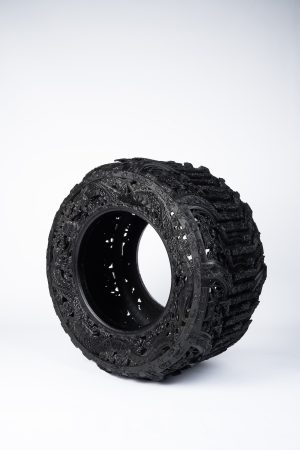
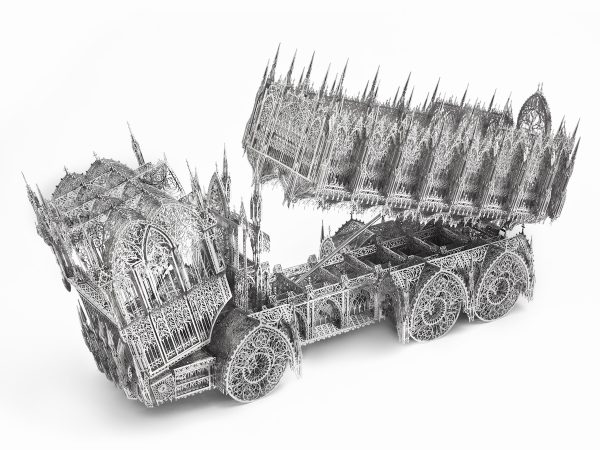
Today, we have computers, photography, and aerial imaging. So why should we only create average things? I want to go the extra mile with ordinary, everyday subjects. Sculpting a tire is one example. By taking something familiar and pushing it to an extreme level of craftsmanship, I believe we can create a completely new way of seeing.
“Doing Contemporary Art Is Not an Excuse to Cut Corners” — On Humanity, Machines, and Craft
Eri: Your works often feature contemporary motifs such as tires, architecture, and machines. What ideas lie behind your choice of these subjects?
Wim: I have always been interested in the question of what it means to be human. The birth of Dolly the sheep, the first cloned mammal, was a major event for me. It influenced many of my works, including my X-ray pieces, Cloaca (the digestive machine), and my tattooed pig projects.
In the 1990s, many discussions focused on how “we are different”—through race, ethnicity, or lifestyle. But I wanted to create a message that addressed humanity as a whole.
Cloaca represents this idea. It isn’t intended to offend anyone, nor does it exclude anyone—whether feminists, religious people, or others. Instead, it encourages us to think about humanity itself.
Eri: So machines are also a way for you to explore ideas about humanity?
Wim: Exactly. During the Renaissance, Michelangelo’s David represented the idea of “the human.” But David was a white European male. He was not Asian or African. Today, our image of humanity should be much broader.
We already live in a post-human society. We modify genes, coexist with AI, and machines have become extensions of our bodies. That is why I do not separate humans and machines. Machines are also part of humanity.
Eri: Does your dedication to craftsmanship connect with this idea as well?
Wim: Absolutely. I love craftsmanship. Many people who dislike contemporary art may feel that there is a lack of handmade quality. That is why I want craftsmanship to remain at the centre of my work.
Tires are a perfect subject for this. Almost everyone has seen and touched them. Cars and trucks are symbols of our time. They are familiar to everyone and, in a sense, very democratic objects.
That is why I love tires. I love cars and trucks. I love contemporary technology. And I want to express that technology through the highest level of craftsmanship.
Eri: Craftsmanship is also highly valued in Japan, but the ageing of artisans has made it increasingly difficult to pass these skills on to future generations.
Wim: This is happening all over the world. But if you possess knowledge and skills, you also have a responsibility to pass them on to the next generation. Living in the contemporary era is not an excuse for saying it is impossible. That is something I always believe.
Preserving Endangered Craftsmanship and the Role of Artists in the Age of AI
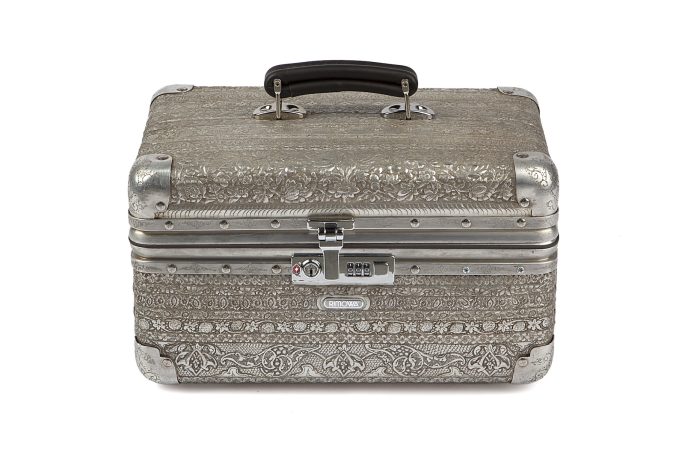
Eri: Some of your works use existing objects, such as suitcases and cars, as materials, transforming their surfaces through intricate sculptural techniques. How do you select your materials, and how do you collaborate with artisans during the production process?
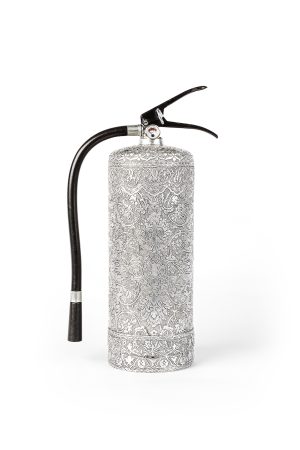
Wim: Throughout my travels, I often visited workshops in the Middle East where traditional artisans were still working with techniques such as hammering and shaping brass and silver. I have used many different methods throughout my career, including wood carving, welding, and casting, but seeing their work made me wonder: how could these skills be brought into the contemporary world?
Many of these workshops were home to some of the last artisans who still possessed these techniques. Their children had moved to cities and pursued different careers, such as web design. They may have inherited their parents’ creativity, but they no longer returned to the workshops. That is why I have always valued these artisans as if they were “the last jewels.” If they stop working, these skills may disappear forever.
Eri: So you are searching for these artisans around the world?
Wim: Exactly. Even if you search globally, I believe there are fewer than ten workshops capable of producing work at a truly exceptional level. That is why I pay them properly and ask them to create the best work they have ever made.
In sports, athletes are always trying to break records. I believe artists should have the same ambition. Today, we have airplanes and the internet, which allow us to collaborate with the best craftsmen anywhere in the world. If you want to communicate a message, you should use the highest level of skill and technique available.
Eri: Does this idea connect to your use of aluminium cars in your sculptures?
Wim: Yes. Artisans traditionally worked with softer metals such as brass and silver, but I began to ask myself: “What is a more contemporary material?” That led me to aluminium.
I work with cars from a very specific period, such as the 1958 Ferrari Testa Rossa and the 1961 Maserati, which feature aluminium bodies. Some works take three or even five years to complete. But I appreciate that slowness. Taking time to push boundaries is also part of the artwork itself.
Eri: The development of AI is also transforming the art world significantly.
Wim: Yes. AI has already surpassed humans in certain areas, such as photography. Technologies like ChatGPT are also evolving at an incredible speed.
However, I believe there is still potential in the three-dimensional world—in things we can touch, materials we can manipulate, and spaces we can create. In these areas, humans can still make a difference.
That is why I value these coming years so much. I do not know how things will change in the future, but precisely because of that uncertainty, I want to do what I can now, and do it at the highest possible level.
“Art Should Be Looking Further into the Future” — New Works at Tokyo Gendai and Expectations for Japan
Eri: You will also present new works in Tokyo and at Tokyo Gendai. Could you tell us about the works visitors will see?
Wim: One of the works I am presenting belongs to a series that is particularly important to me.
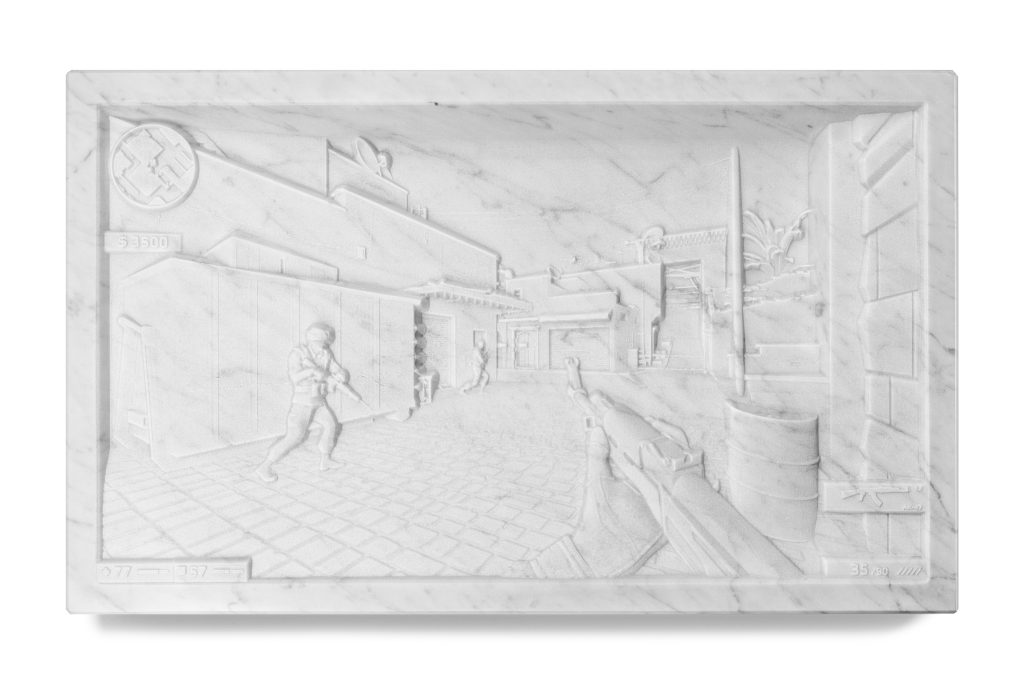
It is inspired by the world of video games. Many people know me through Cloaca or my tire sculptures, but this series is equally significant in my practice.
What is interesting about these works is that there is no direct human hand involved in their creation. I use a mouse to create the forms and transform 3D data from computer games directly into sculptures. I leave the traces created by the machines during the carving process. I do not polish them away or hide the marks of production.
In the future, this technology will become much more precise. But precisely because of that, I want to preserve the “traces of technology” from this particular moment in time.
When we watch old films, we can see the grain and imperfections unique to film. Those qualities tell us something about the era in which they were created. These works function in a similar way.
Eri: Do you see video games themselves as a form of art?
Wim: I do. In the past, the boundary between art and non-art was much clearer. But today, things are different. Video games themselves have already become a form of art.
In the past, artists declared, “This is art.” Today, however, games and technology are often creating new forms of expression before the art world does. In some ways, art seems to be following them.
The same applies to AI and technology companies. They have enormous resources and are beginning to enter areas that were traditionally considered the role of artists. That is why I think we are living in a very exciting time.
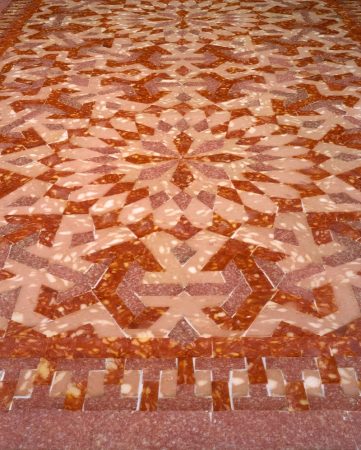
Eri: Finally, what are your hopes and expectations for audiences in Japan and Tokyo?
Wim: Around the time I completed Cloaca in 2000, I visited Tokyo for the first time. I attended an invitation-only event organized by Sony, where Japanese companies were presenting new technologies one after another. I was truly amazed by the speed.
Once a project was decided, a new product could be completed in just eight weeks. It felt as though the future was already right in front of us. I had always wanted to experience that kind of future.
Today, countries across Asia, including China, have also become centres of technological innovation. I once had a very memorable experience at a museum shop in Beijing, where I saw works by Giorgio Morandi transformed into plush toys and bag charms. Men were wearing them casually as well. Classical art had been reborn as a new form of culture.
I love these kinds of transformations. Culture is not something fixed; it changes its appearance with each era.
Eri: I believe Tokyo will also offer encounters with new forms of culture.
Wim: Yes, I am very much looking forward to it. Tokyo always has a way of surprising me.
Eri: Thank you very much for your time today.
Wim: Thank you.
Thank you very much! We look forward to seeing your work in September.
When Tradition Meets Technology, Art Evolves. Discover Wim Delvoye’s New Works at Tokyo Gendai.
Dates:
11-13 September 2026 (Fri-Sun) *Vernissage: 10 September (Thu)
Venue:
Pacifico Yokohama
Booth:
Ceysson & Bénétière
Ticket Purchase:
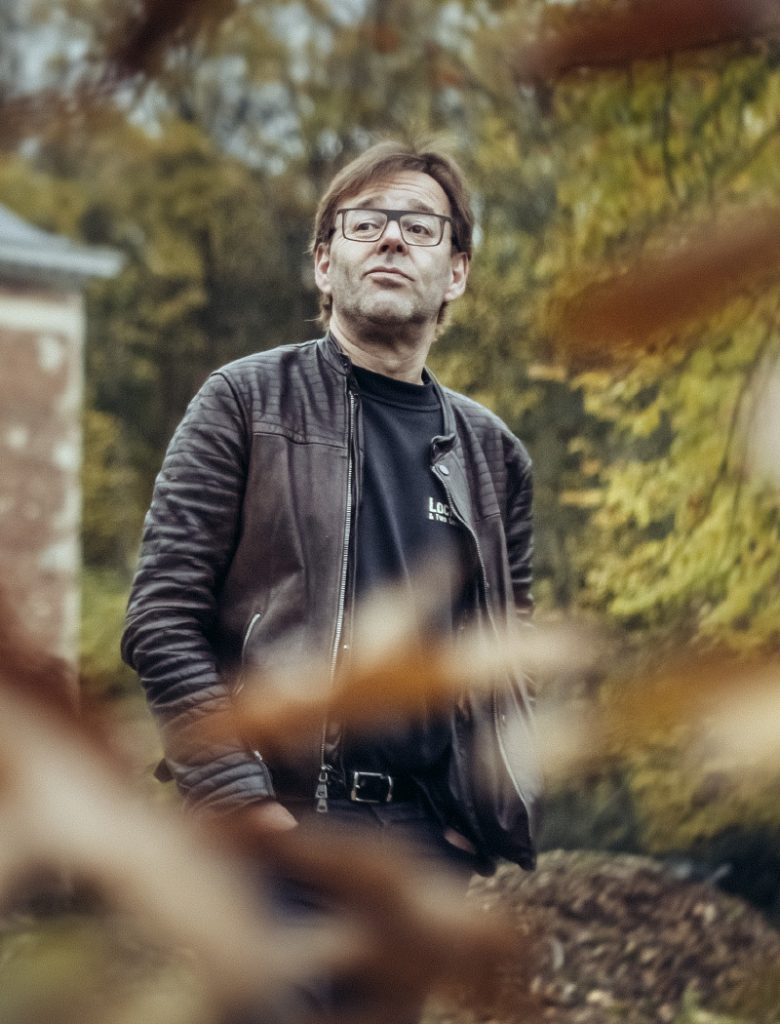
WIM DELVOYE
Born in 1965, in Wervik, Belgium. Lives and works in Belgium and the United Kingdom.
Wim Delvoye, a neo-conceptual artist, appropriates arthistorical styles and motifs and uses them to sublimate trivial yet unconventional objects, cleverly combining philosophical ideas, an intrinsic use of materials, modern techniques, and a love of craftsmanship.
Since the 1980s, his work has evolved from decorating everyday items with heraldic patterns to radicalizing art’s critical function via tattooed live pigs and Cloaca—complex, addressing the futility of human nature while simultaneously probing the ambivalent relationship between art and commerce.
By seamlessly balancing antagonistic realms like the historical and the futuristic, his baroque gestures continuously challenge contemporary architecture and societal myths with a distinctly amused, irreverent gaze.