
Tokyo Gendai Fair Director Eri Takane speaks with artists and key figures from Japan and around the world in the interview series “Eri Asks.”
For this edition, Eri sits down with Jiro Enomoto, a collector based in Fukuoka who has built a collection of contemporary art while also exploring the possibilities of bringing art into public spaces. His journey began with an encounter with Nam June Paik, and his collection has since grown through works that engage with history and society, as well as art that challenges established perspectives. Guided by his own sensibility and ongoing conversations with art advisors, Enomoto has developed a collection that is distinctly his own.
Taking his words, “I want to break down fixed perspectives,” as a starting point, Enomoto speaks about collecting, public art, and the possibilities for art to transform the way we perceive our cities and ourselves. We invite you to enjoy the conversation.
Discovering Art, and the Beginning of a Collection
Eri Takane (Eri): To begin, I’d love to hear about your first encounters with art. You had opportunities to experience art from a young age, but was there a particular moment or experience that sparked your interest in contemporary art?
Jiro Enomoto (Jiro): I had opportunities to see art when I was young, but I wouldn’t say I was particularly immersed in it. As I grew older, I was always drawn to music, novels, and films. Then, as all these different interests gradually matured within me, I naturally found my way toward art. That’s how it feels looking back.
The first artwork I ever bought was when I was probably in the second or third grade of elementary school. I found it at a fairly mainstream gallery—a wooden sculpture of a boy feeding soup to a puppy. For some reason, what really caught my attention was the “soup.”
It was supposed to be liquid, but it had been carved as a solid sculpture, and yet it still conveyed the feeling of something liquid. I found that fascinating, and I remember touching the soup part of the sculpture over and over again. Later, whenever we had art class at school, I would always end up drawing water. Perhaps that was my first real encounter with art.
Eri: That’s fascinating. Do you still have the work?
Jiro: I think I probably do. It was the kind of mass-produced piece that didn’t even have the artist’s name on it.
Eri: And later, as an adult, was there a particular work that made you feel, “This is when I really started collecting”?
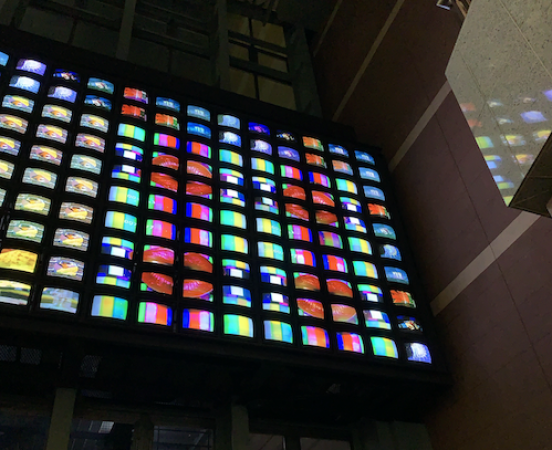
Jiro: My family also had a significant influence. When I was in middle school, I saw a work by Nam June Paik on display at Canal City Hakata in Fukuoka. The impact of that encounter stayed with me, and I think I bought a Nam June Paik lithograph when I was in my twenties.
I already had this feeling of, “Oh, I know this person,” as well as the sense that “This person is the real thing.” At the time, I was really into rock music, so the first work I seriously bought was a piece by Paik featuring a guitar as its motif. I think that was the true beginning of my collection.
From Collecting Alone to Building a Collection as a Team
Eri: When did you begin building your collection together with art advisors, as you do today?
Jiro: Until then, I had mostly been buying works on my own. But there was one experience that had a major impact on me. I knew a very passionate art collector, and when I was in my late twenties to early thirties, I would often visit and spend time looking at his collection.
He was trying to establish a museum, but the value of what he was doing wasn’t fully understood by those around him. During periods such as the global financial crisis, his collection was eventually dismantled. Many of the works were sold and scattered in different directions.
That experience left a very strong impression on me. It made me think that perhaps building a serious collection of my own could be something meaningful. It’s not that I wanted to simply inherit his collection, but I think I was left with a sense of sadness and frustration at seeing such a significant collection being dismantled.
From there, I gradually began to feel that if I continued to collect truly important works, perhaps the collection itself could eventually acquire a certain power.
That was also around the time I learned about the role of art advisors. I started to think that if I was going to build a serious collection, perhaps it would be better to have a proper team rather than relying solely on my own intuition. In a sense, seeing that major collection dismantled became a kind of trauma for me, and I learned that if I was truly serious about collecting, I would need a team of my own.
Eri: I see. So, basically, does it usually start with a work that you personally like, and then you consult with your advisors? Or do you tend to discuss things together before making a purchase?
Jiro: These days, we discuss things together much more often. I didn’t really consult anyone in the past.
I used to simply buy whatever I liked, and looking back, apparently about one in every three works I bought was a little strange. But my advisors found some of those works interesting and would say, “This is really interesting. Maybe it would be more exciting to develop this direction further.” That encouraged me to start buying works through those conversations with them.

What Draws You In
Eri: So, when you look at a work, what is it that makes you think, “I like this”?
Jiro: My ability to judge art definitely fluctuates depending on whether I’m in a period when I’m seeing a lot of art or not. But I think there’s an unconscious standard of quality within me that I use to determine whether I like something.
At the same time, my feelings at a particular moment have a pretty significant influence on what draws me to a work.
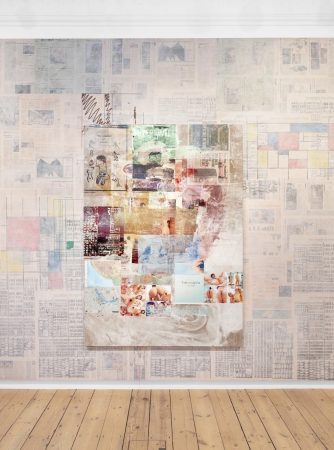
For example, I once bought a work by Titus Kaphar. His work deals with slavery and historical oppression, and I happened to encounter it during a period when I was going through a major change in my own life and was feeling quite dark.
But when I looked at the work, I was reminded that beyond my own personal circumstances, there are much more profound and devastating issues—issues rooted in the history and experiences of entire peoples. I thought that by keeping a work like that close to me, perhaps I could gain some perspective on my own emotions.
Eri: I see. So what inspires you can also change depending on the times we live in and on your own state of mind at a particular moment.
What I Gained from New York
Eri: I also lived in New York for about 13 years, so I think our time there probably overlapped.
Jiro: It sounds like it did. Looking back, I think New York had a profound influence on me. While I was there, I had the opportunity to revisit the collection of the collector I mentioned earlier. Being in the city, I began to intuitively understand things like, “This is where he encountered artists,” and “This is where he was buying works.” I could sense the context through the atmosphere of the city itself.
When you’re in Japan, a work of art can sometimes simply be presented on its own, and it can be difficult to understand the circumstances or context in which it was acquired. In New York, those stories and connections felt much more present in the atmosphere around the work. I also used to visit galleries quite often at the time.
Eri: I also spent a lot of time visiting galleries when I was a student. I was fortunate to intern at places like Andrea Rosen Gallery and the Richard Avedon Foundation. Were there any galleries or artists that particularly left an impression on you at the time?
Jiro: I was probably influenced more by the artists themselves than by the galleries. Of course, I went to major galleries like Pace and Gagosian, and I think I visited almost every gallery in Chelsea. But when I was a student, I also went to a lot of openings just to have a drink.
Eri: (laughs)
Jiro: Among the artists I met there, some influenced me not so much through their work itself, but through the way they lived and their presence as individuals.
In New York, there were people living perfectly ordinary lives who, from a Japanese perspective, might seem like people who would have difficulty finding a place in society. There was a sense that there was room to accept all kinds of people and ways of living—that people were allowed to exist as they were.
I remember thinking, “Even someone like this is allowed to live this way.” That made me realize what an incredible city New York was.
The Meaning of Bringing Art into Public Spaces
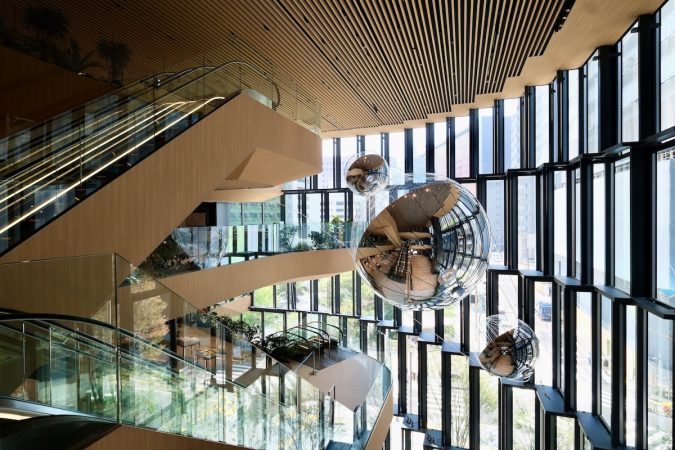
Eri: Since returning to Japan, you’ve been actively placing art not only in your home, but also in offices and public facilities. What meaning do you find in bringing art into public spaces?
Jiro: For me, Nam June Paik has always been a major influence. When I was in middle school, I didn’t really understand the meaning behind his work, but I remember feeling as though a certain visual image had suddenly been installed in my mind.
That experience made me realize that art has the power to imprint itself on our memory visually, even before we fully understand what it means.
So perhaps I do have a desire to use the power of art to push back, even in a small way, against fixed perspectives and the kind of unconscious pressure to conform that exists in society.
Eri: I see. But would you also say that, at the root of that desire to change things, there is a sense of “love”?
Jiro: Maybe there is.
And places like Naoshima have clearly demonstrated how much attention this kind of approach can attract from overseas. I think it could be interesting to try something similar in Fukuoka, which is a much larger urban environment.
Naoshima has its own communities and economic sphere, but Fukuoka is a larger city, and I think there’s a possibility for art to gradually shift the values of the city itself. I’d love to see a different set of values emerge—something distinct from Tokyo.
What I Look for in an Art Fair
Eri: You’ve probably visited quite a few art fairs. What do you look for in a fair? Unlike visiting galleries individually, what do you think an art fair can offer precisely because it is a fair?
Jiro: For me, a fair is also a place to learn. You can see an enormous amount of art all at once, so you get a sense of what’s emerging, what’s becoming mainstream, and what kinds of works are actually selling.
You can also observe who is responding to those works and get a sense of the kinds of people and communities they appeal to. So I think a fair is a treasure trove of information—not just about the artworks themselves, but also about everything happening around them.
Eri: At Tokyo Gendai, around 60 percent of the participating galleries are international and 40 percent are from Japan, so compared with many overseas fairs, there is a relatively strong presence of Japanese galleries. At the same time, I imagine that visitors from Japan may feel that there are a lot of international galleries. What are your hopes for holding an international art fair in Japan?
Jiro: I absolutely think there is value in doing it. But if you’re going to do it, I’d like to see you really go for it.
To put it in extreme terms, I think it would be interesting if people started saying, “The parties are incredible,” rather than just talking about the fair itself.
Imagine an outrageous party that incorporates things like Japanese cosplay, and where Tokyo Gendai at night sends a message that says, “We’re going to tear down all the existing values.” If you did something like that, I’d definitely be there.
Collecting and Public Art
Eri: When introducing contemporary art to audiences in Japan, I think it’s important not only to present the work itself, but also to communicate the context and ideas behind it—why the artist is doing what they do.
Jiro: In my case, perhaps what lies behind my approach is the desire to “break down fixed perspectives.” That said, my public art activities and my personal collection are quite different. There are certainly connections between the two, but I think my personal collection is much more radical.
Eri: What kinds of artists have you been collecting recently?
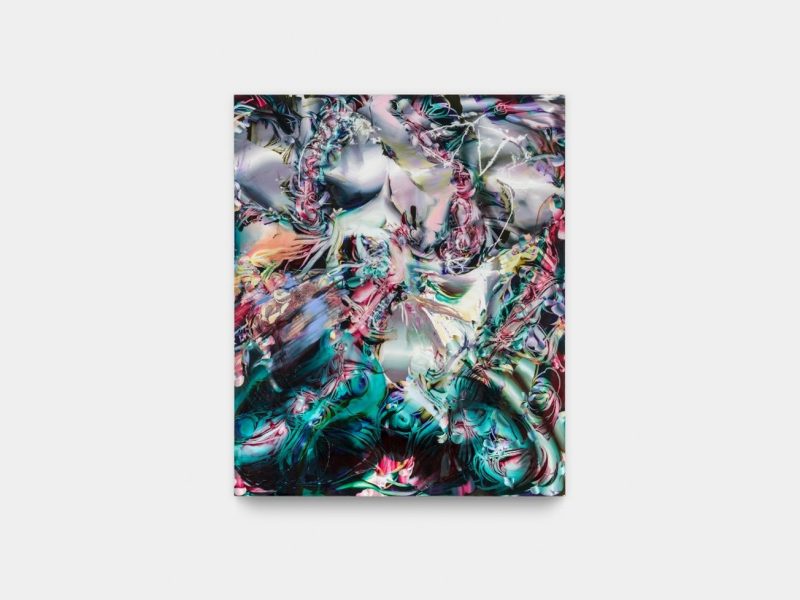
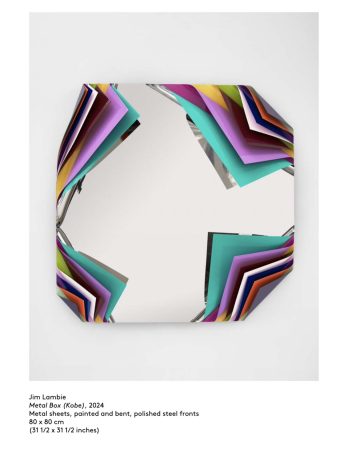
Jiro: More recently, I’ve been particularly drawn to artists such as Mandy El-Sayegh and Nate Lowman. I’m also interested in Todd Grey, whose work can be seen as part of a lineage that includes artists such as Titus Kaphar. I’m especially drawn to artists who revisit and re-examine things that have been overlooked within history and society.
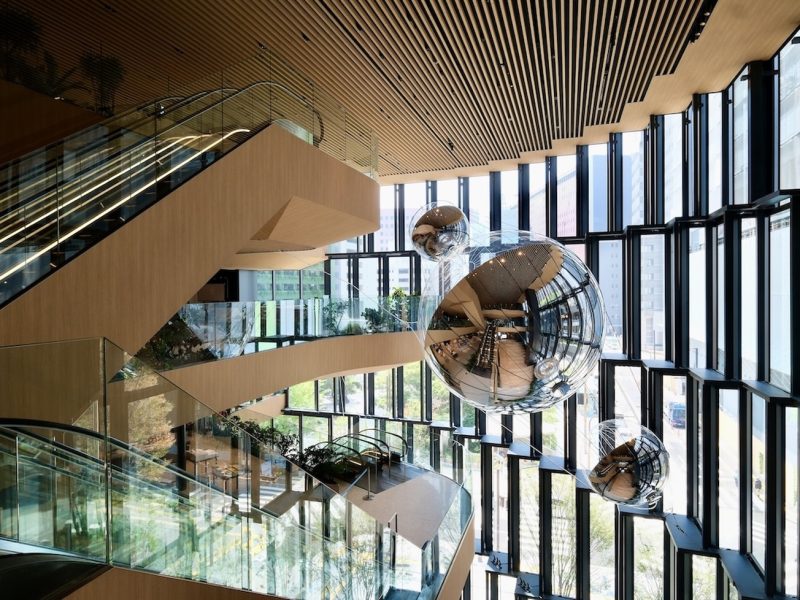
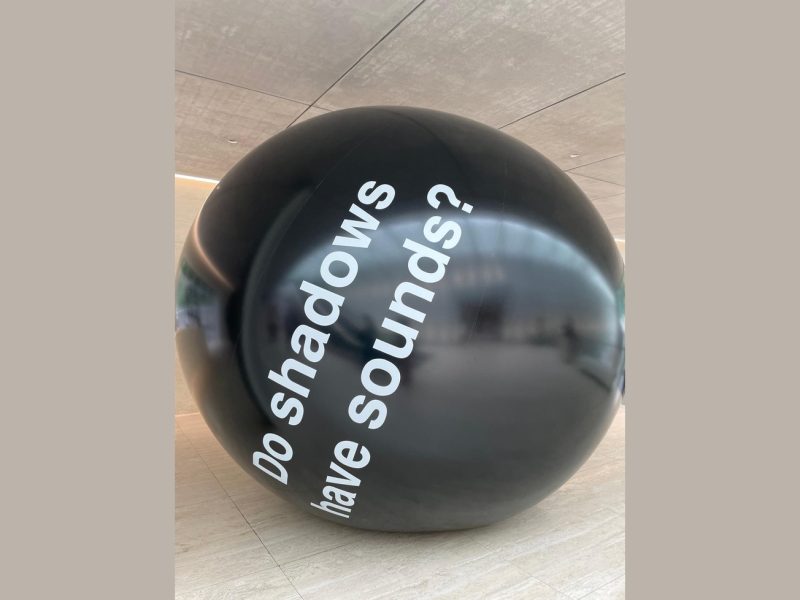
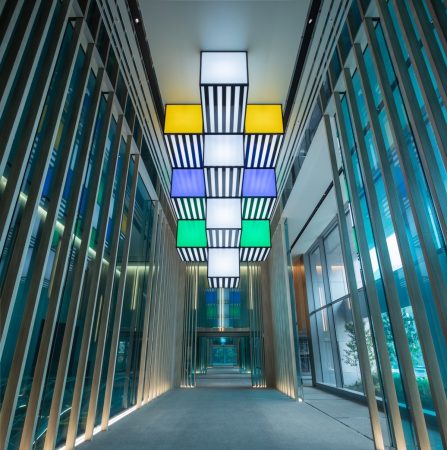
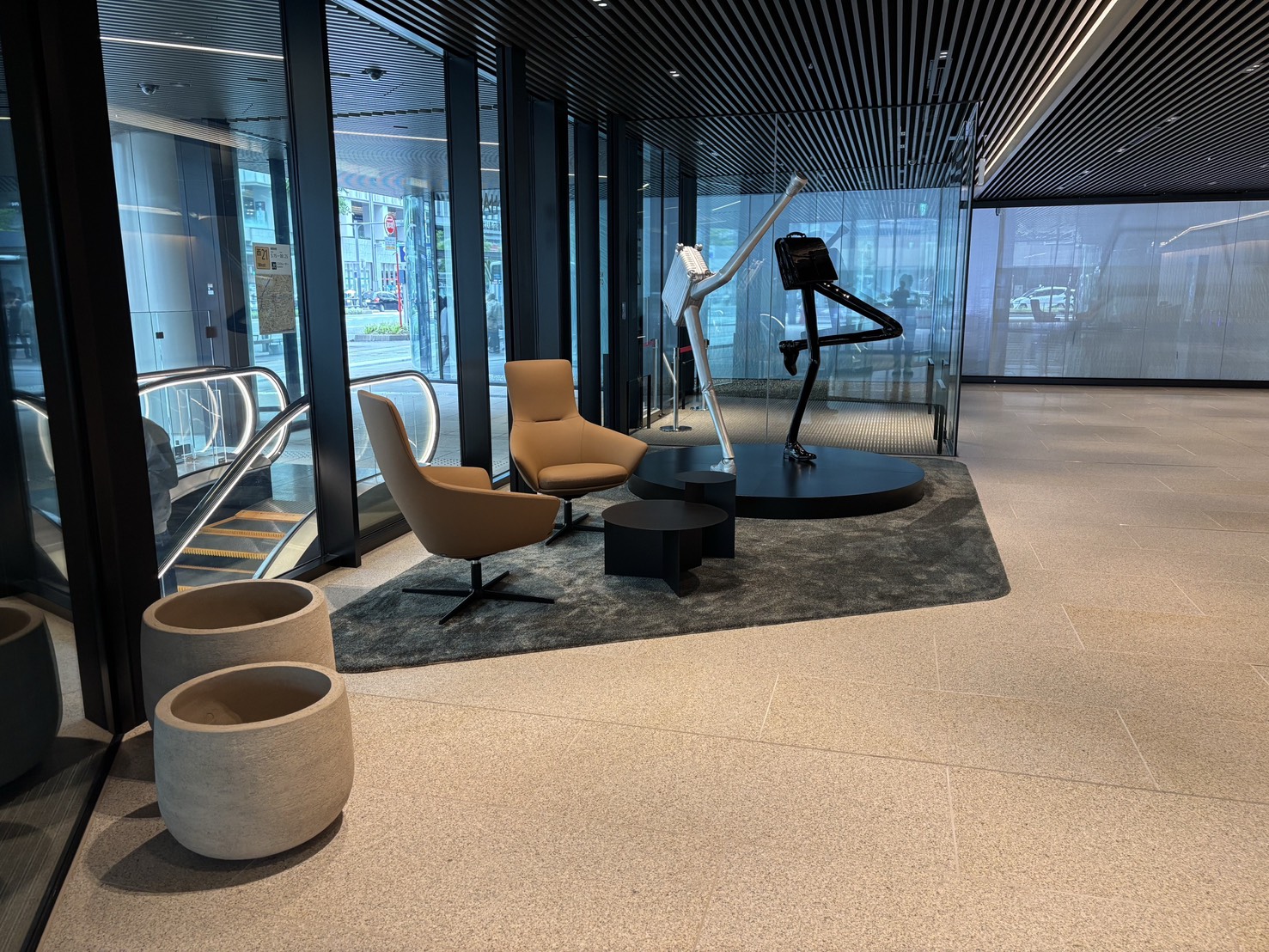
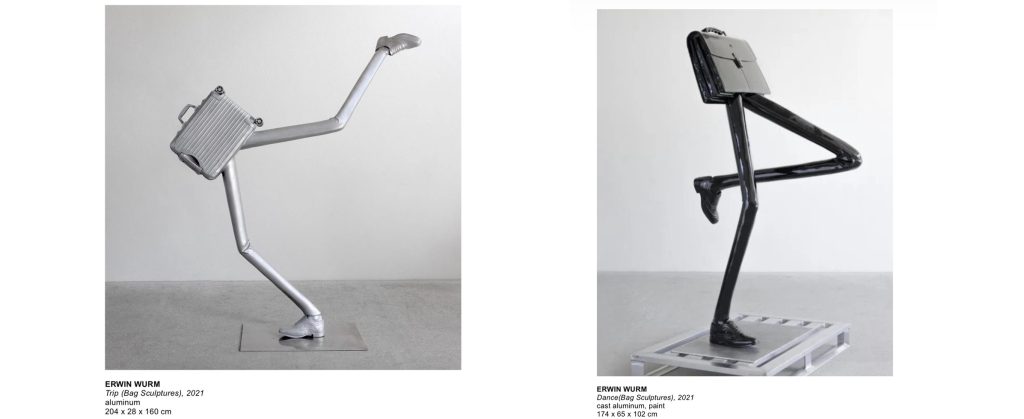
In terms of public art, artists whose works I have collected include Daniel Buren, Tomás Saraceno, Nam June Paik, and Erwin Wurm.
The Future of the Collection and Tokyo Gendai
Jiro: We’ve gotten quite philosophical today.
Eri: But I think that’s exactly what’s important. It’s not only about the works themselves, but also about why you choose certain works and why you bring art into the city. I believe it’s the ideas and intentions behind those decisions that give meaning to both a collection and public art.
Jiro: For me, I want to break down fixed perspectives. And I want to do that not through politics, but through art, culture, and aesthetics.
Eri: I hope Tokyo Gendai can also be a platform where those kinds of open and diverse perspectives can intersect. Thank you very much for your time today.
Jiro: Thank you.
Thank you very much!
Tokyo Gendai
Dates:
11-13 September 2026 (Fri-Sun) *Vernissage: 10 September (Thu)
Venue:
Pacifico Yokohama
Ticket Purchase:
Jiro Enomoto
CEO, Zero-Ten
CEO, Zero-Ten Park
CCO, FJ Entertainment Works
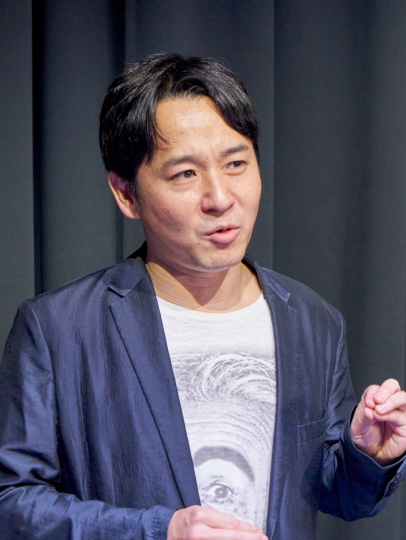
Born in 1978 in Fukuoka, Japan. After entering the Faculty of Science and Engineering at Waseda University, he transferred to and graduated from New York Institute of Technology in 2002. In 2011, he founded Zero-Ten, a company specializing in video production, event planning, and management.
Since then, he has produced a wide range of projects both in Japan and internationally, based in Fukuoka. He has spearheaded innovative initiatives in urban development and cultural creation, while developing diverse businesses that unlock the potential of cities.