
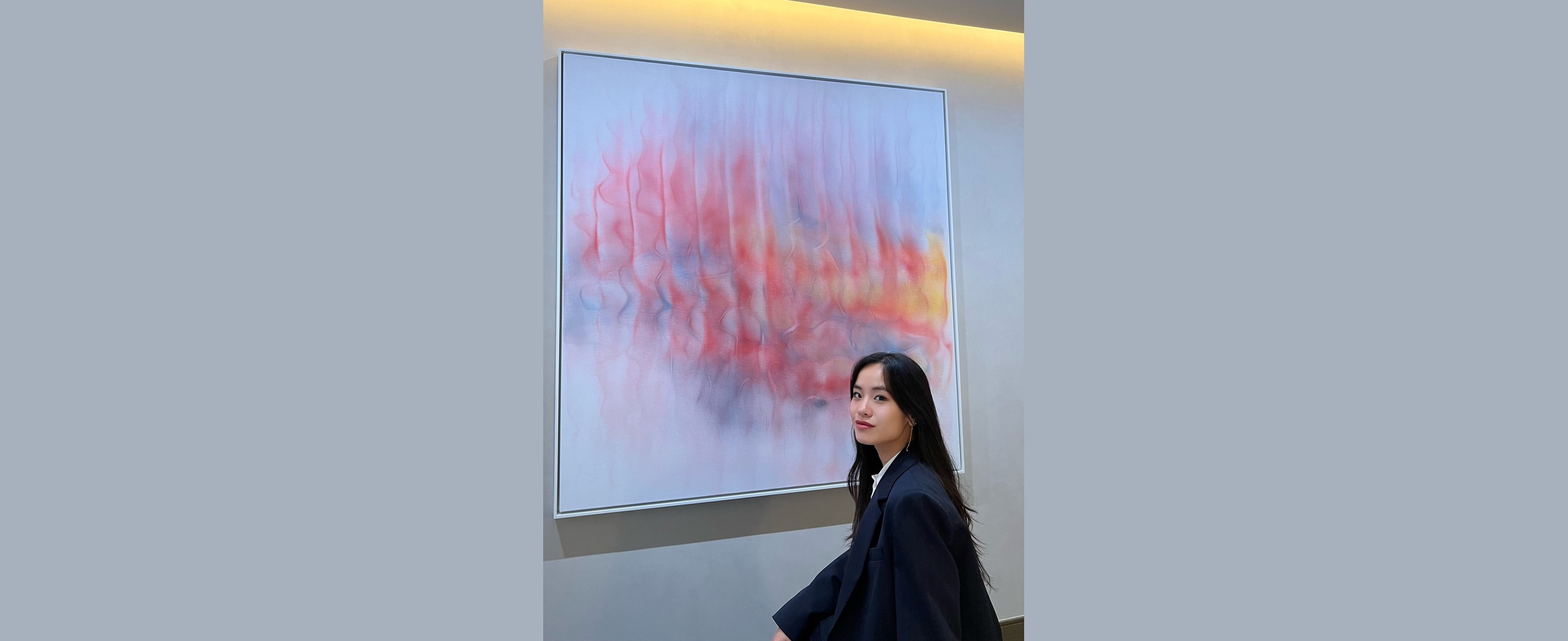
Tokyo Gendai speaks with collectors and leading figures in the art world about the works that inspire them, the stories behind their collections, and what it means to live with art.
This time, we meet Monique Leong, a London-based collector working at the intersection of contemporary art, culture, and technology. Born in Macau and raised between the UK and Hong Kong, she collects alongside her family while engaging with the art world in a number of capacities, including as a member of the International Board of the Palais de Tokyo in Paris and as an Asia-Pacific Patron of the Delfina Foundation.
For Monique, collecting is as much about discovery and relationships as it is about the works themselves. She follows the development of emerging artists, balances instinct with research, and sees each acquisition as part of a shared journey—one shaped by family, learning, memory, and sometimes friendship.
As a juror for this year’s Tokyo Gendai Hana Artist Award, Monique shares what makes her stop and look, what she finds compelling in emerging practices, and what she sees in the evolving Japanese art scene.
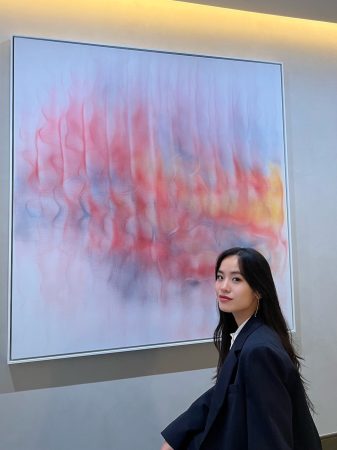
Leong Family Collection
You were born in Macau, grew up between the UK and Hong Kong, and studied at the University of Pennsylvania. We understand that you have built your collection together with your mother. Do you usually select artworks as a family? Could you also tell us about your own approach to collecting and what makes your collection unique?
Collecting has always been something my mother and I do together. When we genuinely cannot agree, we call a family vote – though more often than not, by the time we get there, we already know in our hearts what we want – the vote is really just a confirmation.
We are not building towards a defined collection with a thesis. What makes it ours is that it reflects our art journey together – each work carries something of the moment we found it. Some remind me of lessons we learned along the way, which I think is just as valuable as the works themselves. That is not something you can manufacture with a collecting strategy.
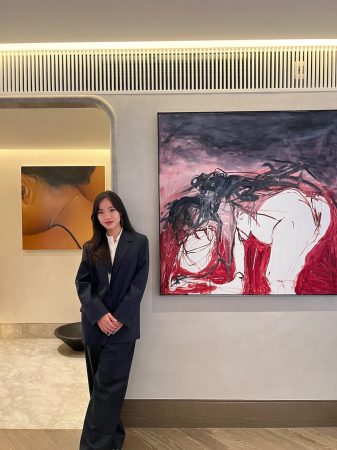
Tracey Emin, The Nightmare, 2023.
Leong Family Collection
Your collection includes many emerging artists. What draws you to collecting works by younger artists?
There is something I find genuinely exciting about watching a practice develop over time – being able to look back and see how far an artist has come.
Being based in London helps. I try to get to degree shows when I can – there is an honesty to them that later exhibitions sometimes lose, and they are a decent indicator of where someone might go. Emerging art fairs have a similar energy – there is more to discover, more genuine surprise.
Young artists also have more to draw on now than any previous generation – more tools, more access, more to say about a world that is changing faster than any of us can keep up with. That shows up in the work in ways I find exciting. The challenge is that many emerging artists are derivative – but when they are unique, that tends to be immediately obvious.
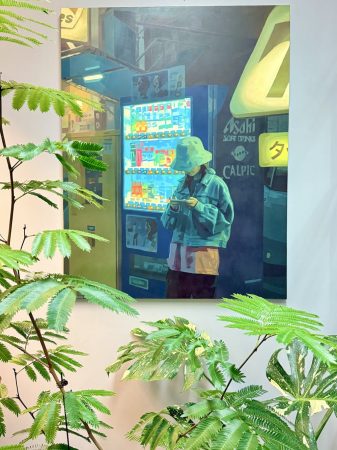
Leong Family Collection
When acquiring a work of art, do you tend to rely more on your first instinct and emotional response, or do you prefer to take time to reflect before making a decision?
Both, and I think they work together. Something either stops me or it doesn’t – and if it doesn’t, I move on. Before acquiring a work I like to look at an artist’s full exhibition history, their early works, how their practice has shifted and why. I want some sense of where they might be going, not just where they are now. But instinct and research alone have both got us into trouble. We have left works too long as a family, going back and forth, and eventually realised that if none of us fought for it, then we probably have the answer. We also learned the hard way that moving quickly for the wrong reasons leaves you with works you appreciate but do not truly love. Both are useful lessons.
Is there an artist whose practice you are particularly excited about or following closely at the moment? We’d love to hear why.
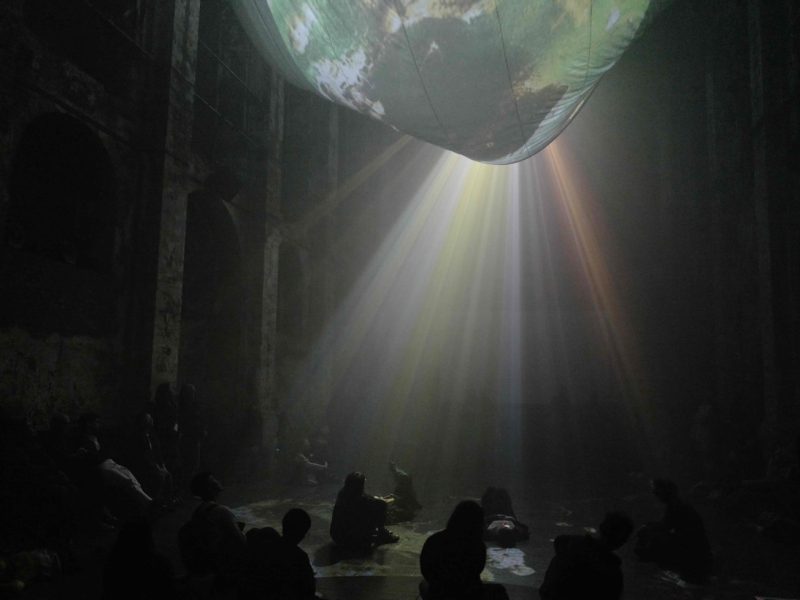
Trevor Paglen. I believe the art world has not fully caught up with what he is doing. He asks questions that most people are not yet ready to face – problems that feel enormous precisely because we sense they matter – and then finds a way to make those questions felt, not just intellectually but physically, emotionally.
His recent work Voyager (2026) at Palazzo Diedo was one of the most affecting experiences I have had with contemporary art in years. The hypnosis piece is difficult to describe without flattening it. What I can say is that people who experienced it came away changed – each person differently, each in a way that was specific to them. That is an increasingly difficult thing to achieve with art. The fact that he achieved it using the viewer’s own mind, with technology serving the experience rather than overwhelming it, is something I keep thinking about.
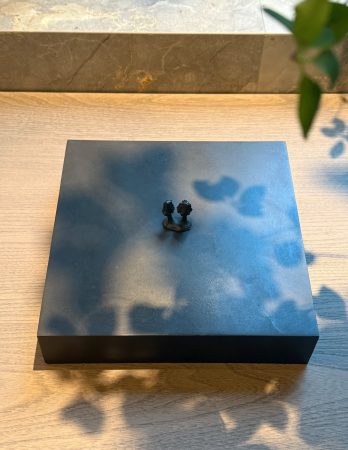
Leong Family Collection
Among all the works in your collection, is there one that holds a particularly special place in your heart? Could you share the story behind it?
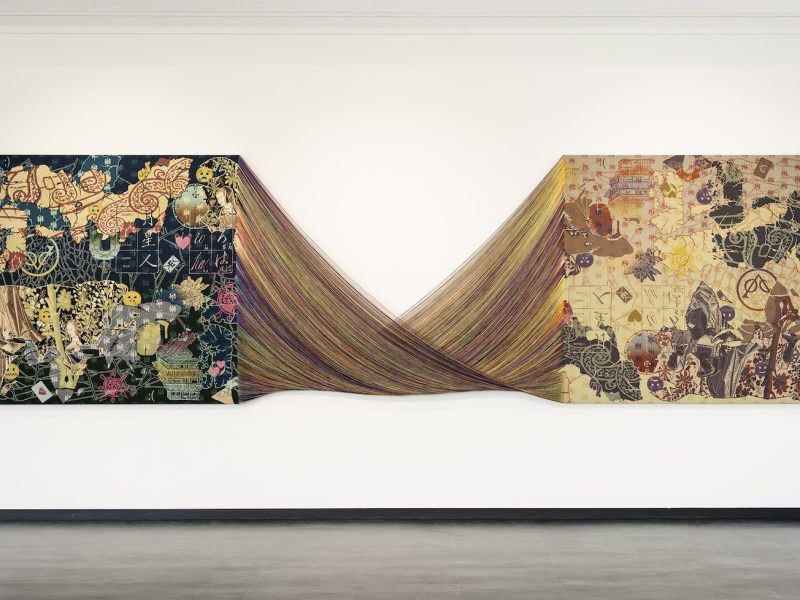
Cary Kwok’s Everytime We Say Goodbye (2022) is probably the work I think about most.
I found it at Art Basel Hong Kong 2023. My family has a habit of doing a final walk-through on the last day of fairs together – low pressure, no agenda, just looking. Cary had a series of works showing with Herald St, and I fell in love with all of them. Before I had said anything to the gallery, the three of us had already landed on the same one. It turned out to be the only work still available.
It is not the piece his more established collectors tend to seek out. Cary is humorous and hides easter eggs in his paintings – a signature hidden in a lipstick mark, tucked onto a button, concealed as a label on toothpaste or a wine bottle or a cigarette, or sometimes, a tiny sweet heart stamped onto a ladybug. This one was quieter than that. But it held something I responded to before I could name it – and a reminder that sometimes a work of art introduces you to a person long before you have actually met them. What I have come to know about Cary since – his sensitivity and warmth – I somehow already sensed in that painting. It marked the beginning of a friendship I am genuinely grateful for.
You are the youngest member of the International Board of the Palais de Tokyo in Paris and are involved in many different aspects of the contemporary art world. How have these experiences influenced your approach to collecting and your commitment to supporting emerging artists?
I’ve had the pleasure of surrounding myself with collectors I have long admired. It has given me something I could not have found elsewhere – the chance to see how people who have been collecting seriously for decades actually think.
What strikes me most is both the foresight and the energy. They speak about artists they supported thirty years ago, exhibitions that seemed quiet at the time and now read as significant moments – and yet the eagerness to see a new show, to discover something unexpected, has not diminished at all. Art has kept them genuinely young, and I find that incredibly inspiring.
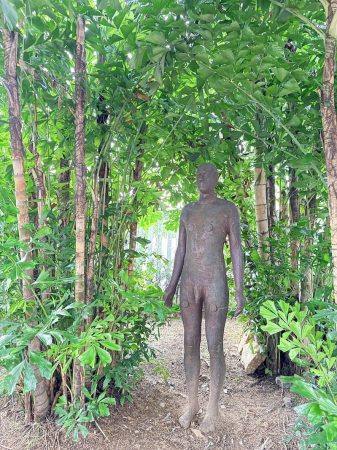
Leong Family Collection
This year, you are serving as a juror for the Hana Artist Award at Tokyo Gendai. What are your thoughts on taking on this role? Are there any emerging Japanese artists whose work you are particularly interested in?
It is an honour – thank you to Tokyo Gendai for the trust that comes with it. A jury has real weight at the right moment in an artist’s career, and I want to bring both care and openness to that process.
It has been a long time since I was last in Japan, and I have not had the chance to explore the art scene here as much as I have always wanted to. I am arriving with a lot of anticipation and an open mind – this feels like a long overdue visit.
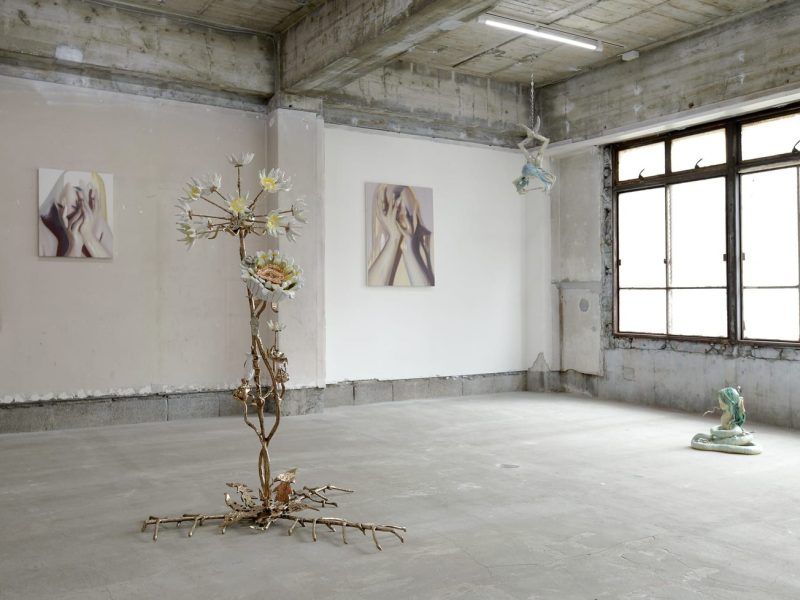
In terms of Japanese artists I have been following: Ulala Imai, Tomona Matsukawa, Keita Morimoto.
Tokyo Gendai brings together a diverse range of contemporary art from around the world, creating a space where different perspectives and energies intersect. What are your hopes or expectations for the Japanese art scene and for the visitors who will experience the fair?
I have long felt there is something singular about Japanese artists – and for years I would come across practices with exhibition histories almost entirely contained within Japan. That always seemed like an imbalance worth correcting, because there is clearly something there that deserves a wider audience.
Part of what draws me here is wanting to understand that more directly. Cultural influence shapes artistic practice in ways that are sometimes subtle and sometimes unmistakable – I have seen artists undergo profound shifts in their work after a residency in Japan. Tokyo Gendai feels like the right kind of space for that exchange to happen in both directions: Japanese artists reaching an international audience, and international collectors arriving with genuine curiosity. I am hoping to be the latter.
Thank you very much!
Tokyo Gendai 2026
Dates:
11-13 September 2026 (Fri-Sun) *Vernissage: 10 September (Thu)
Venue:
Pacifico Yokohama
Ticket Purchase:
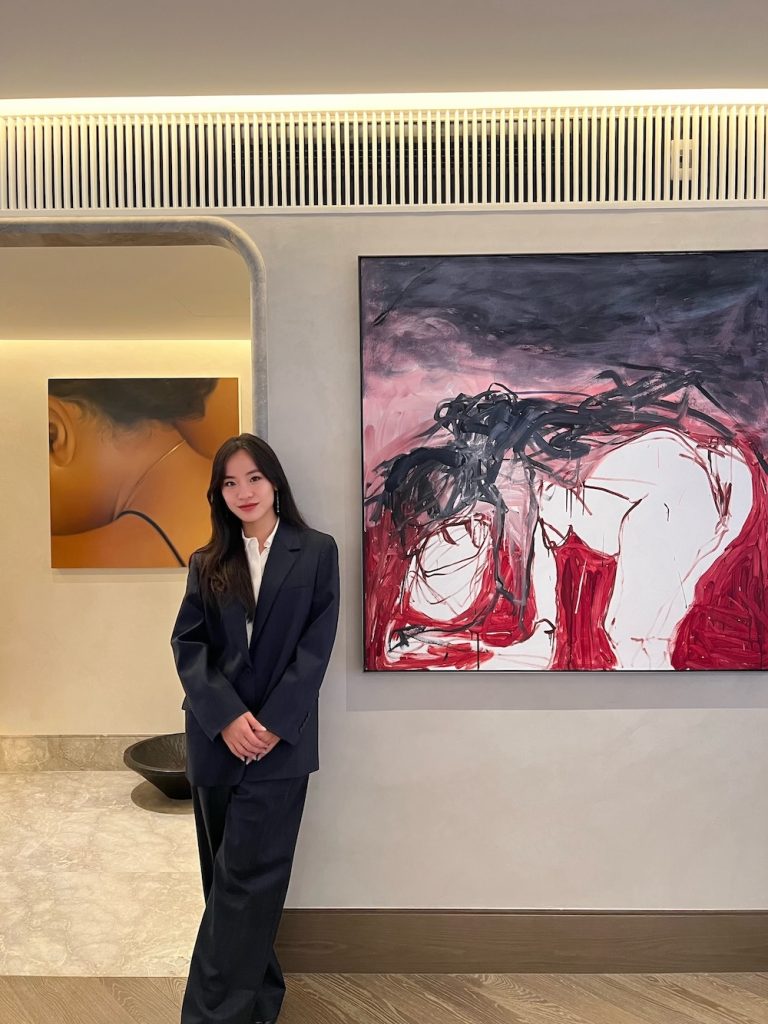
Monique Leong is a London-based art world professional working at the intersection of contemporary art, culture, and technology. A Macau native, she holds a degree in Philosophy, Politics and Economics from the University of Pennsylvania, with minors in Art History and Consumer Psychology.
She currently leads partnerships and business development at MC2, an ArtReview and Nowness art and technology initiative under Meta Media Group. Monique sits on the International Board of the Palais de Tokyo in Paris and serves as a Delfina Foundation Asia-Pacific Patron. She collects alongside her family.