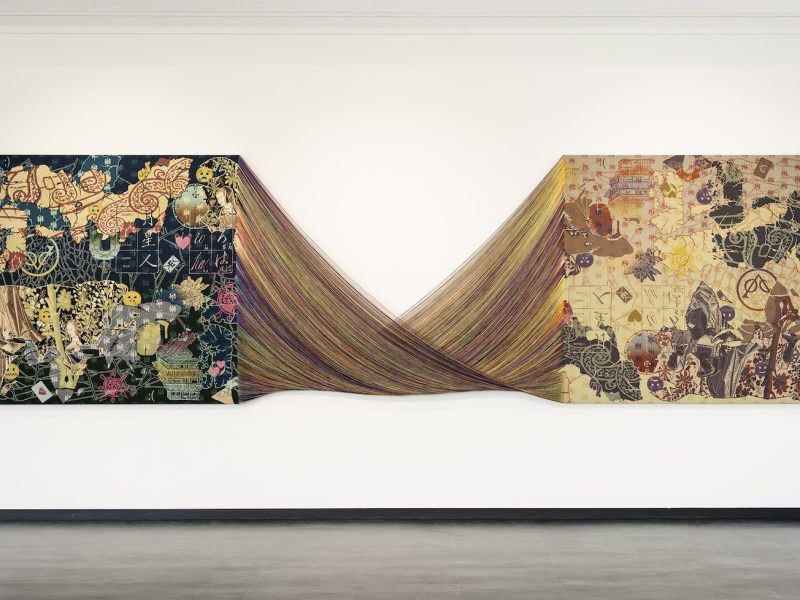

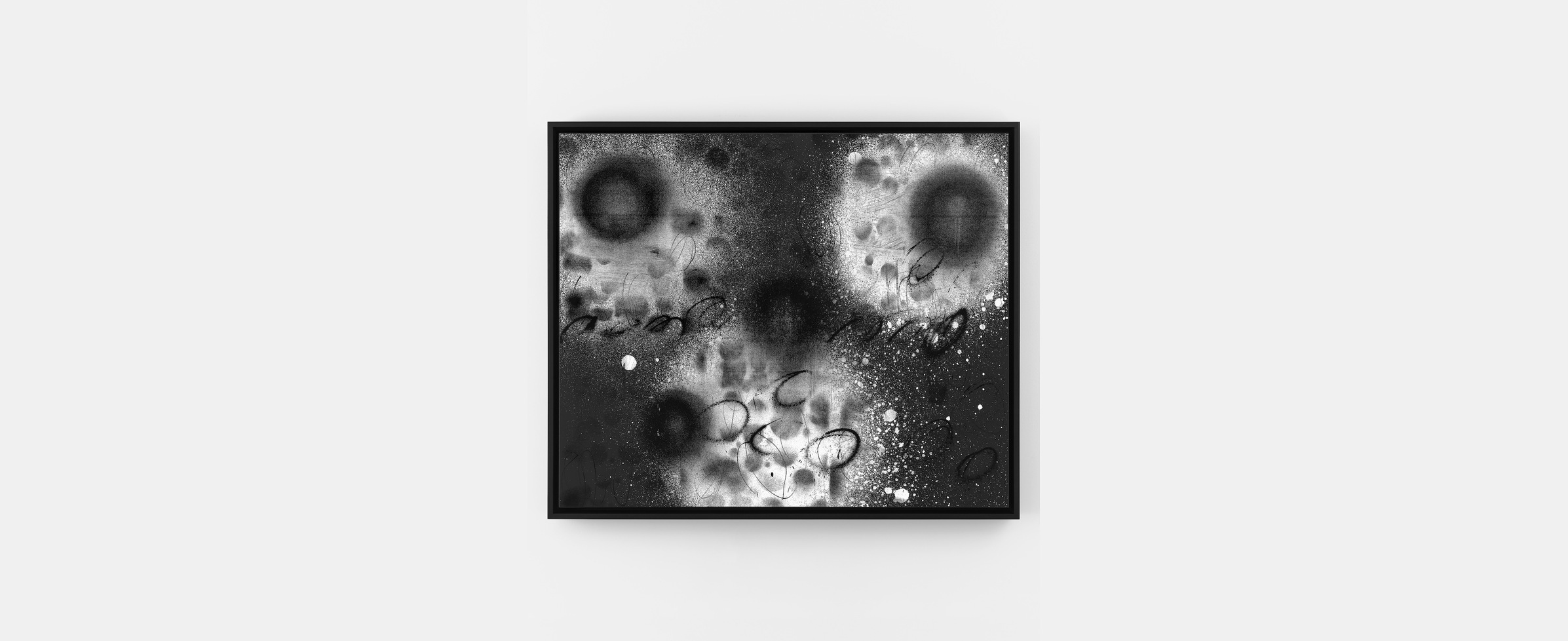
Words, images, history, and abstraction. At first glance, Adam Pendleton’s work may appear simple and quiet, yet within its surfaces, multiple layers of voices, memories, and time unfold. By combining diverse techniques—including silkscreen, spray paint, and Xeroxed images—Pendleton creates a distinctive visual rhythm. The closer we look, the more words, forms, and images emerge, revealing details that may have gone unnoticed at first and awakening the viewer’s own memories and imagination.
Since 2008, Pendleton has developed his ongoing project “Black Dada,” deliberately bringing together two words charged with profound historical and cultural significance: “Black” and “Dada.” By exploring the space between them, he has sought out new possibilities and ways of thinking. Rather than simply reproducing the past, he draws fragments of history into the present, allowing new meanings to emerge within different contexts. This practice also leads to fundamental questions about what painting can be—and what it means for us to “see.”
What do Pendleton’s works reveal to us, and what discoveries might they inspire? We spoke with the artist about his ongoing exploration of abstraction and history, words and images, as well as the works he will present at Tokyo Gendai.
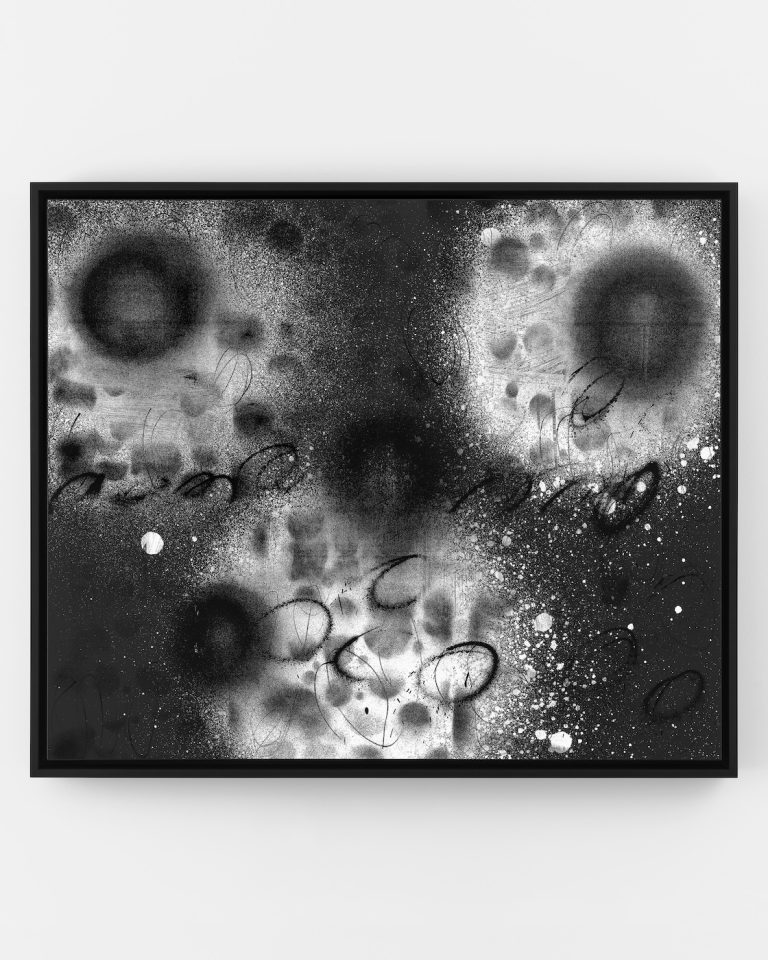
©Adam Pendleton. Courtesy of Taka Ishii Gallery
Photo: Elisabeth Bernstein Photography
Your work creates a unique visual rhythm through dense layers of silkscreened text, spray paint, and Xeroxed textures. In this process of layering, what do you prioritize or focus on the most?
I’m thinking less about layering for its own sake than about relation—what happens when one gesture, fragment, or form encounters another. I want the process to remain visible, but I don’t want the painting to simply become a record of everything that happened.
I’m looking for a condition in which the different elements remain distinct but begin to produce something together that none of them could produce independently.
There is also an important tension between control and accident. I establish structures and procedures, but I want the painting to exceed them. The moment I’m looking for is often when something happens that I couldn’t have completely anticipated.
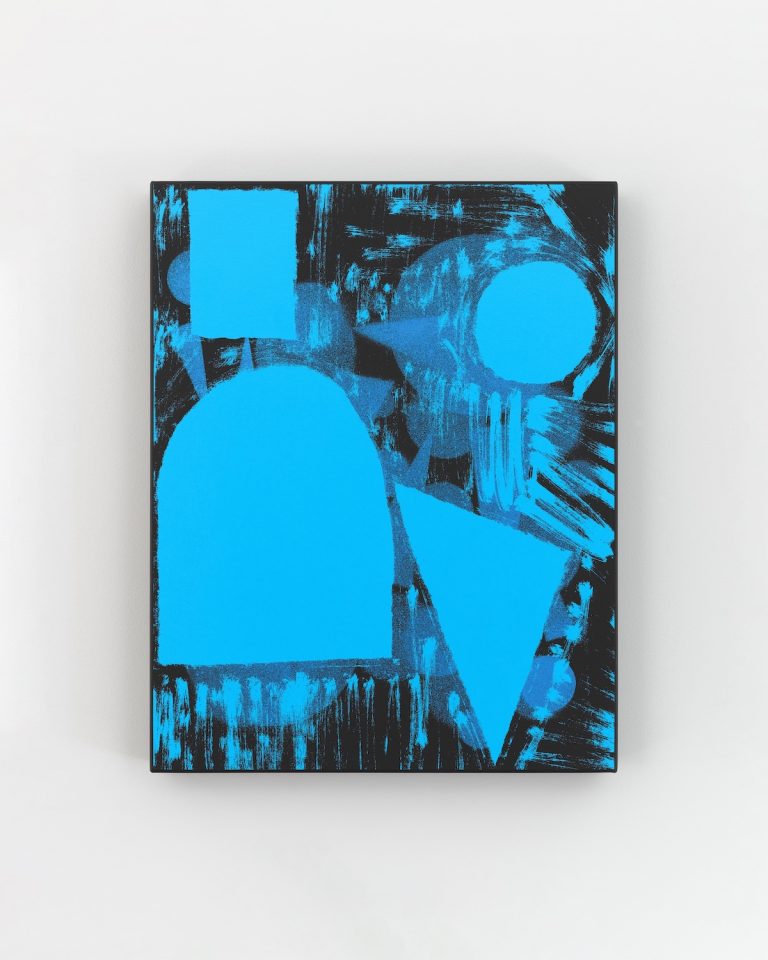
© Adam Pendleton. Courtesy of Taka Ishii Gallery
Photo: Elisabeth Bernstein Photography
Your “Black Dada” framework serves as a conceptual bridge linking avant-garde history with Black radicalism. What is the significance for you in “reconstructing” historical fragments into contemporary art?
Black Dada is a working method I began developing in 2008. It brings together two terms—”Black” and “Dada”—that each carry enormous historical, political, and cultural weight, but it doesn’t attempt to reconcile them or stabilize their meaning. The space between them is important to me.
Black Dada gives me permission to break rules: don’t tell me how a painting should be made, or the limits of abstraction or language. Don’t tell me what a Black artist should or should not do, or what Blackness is supposed to look like. In that sense, Black Dada is both precise and generatively capacious.
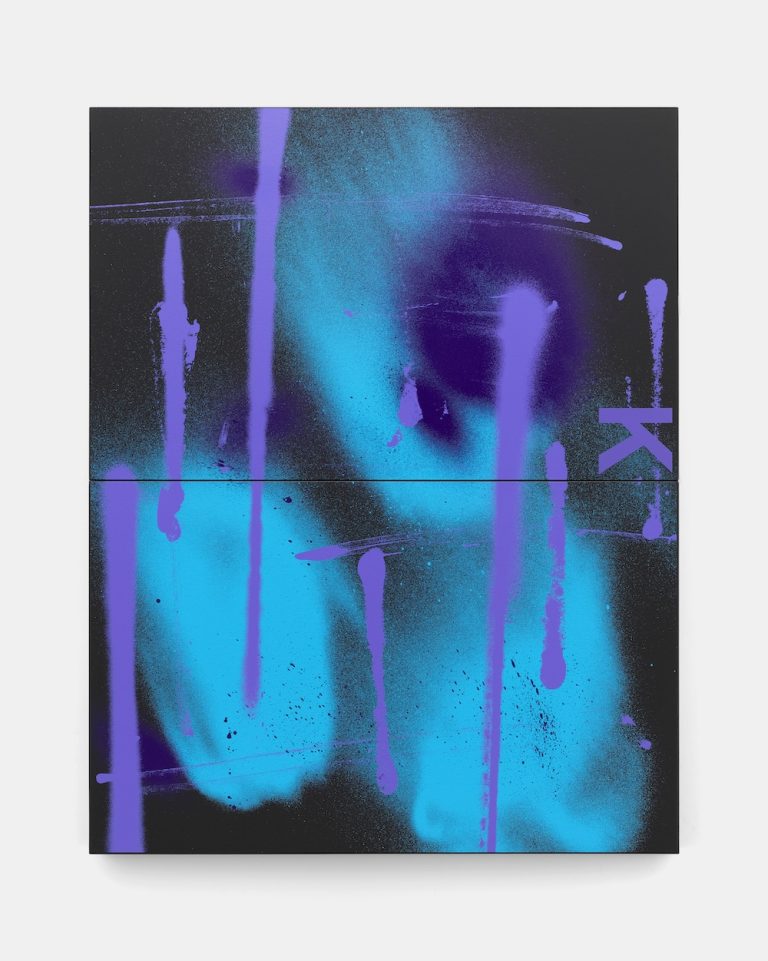
©Adam Pendleton. Courtesy of Taka Ishii Gallery
Photo: Elisabeth Bernstein Photography
What kind of moments provide you with the most inspiration during your creative process?
I’m probably less interested in inspiration than in discovery. I am driven by curiosity—visual curiosity. The most important moments are often when the work does something I didn’t expect—when a gesture, material, or juxtaposition suddenly opens up a possibility I hadn’t anticipated.
That can happen while I’m painting or drawing, while I’m moving elements around, or even when I’m looking at something I’ve been working on for weeks. You suddenly notice something that was there all along but that you hadn’t seen.
That’s one of the reasons I value process so much. I don’t want to know exactly where a painting is going when I begin it. I want the process of making it to produce knowledge—to allow me to arrive somewhere I couldn’t have arrived through intention alone.
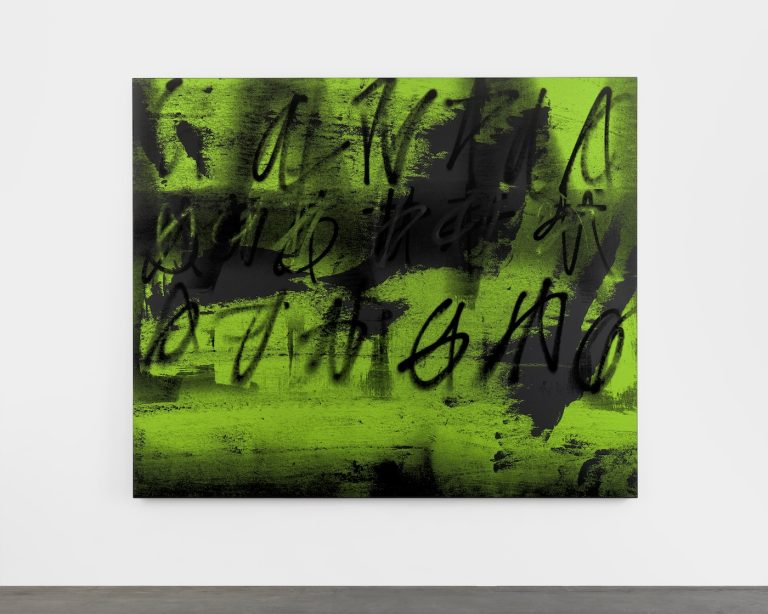
©Adam Pendleton. Courtesy of Taka Ishii Gallery
Photo: Elisabeth Bernstein Photography
What are your expectations or thoughts for the audience from Japan and around the world who will encounter your work at Tokyo Gendai?
I try not to determine in advance what someone should experience when encountering the work. Once a painting enters the world, the viewer brings their own history, knowledge, attention, and intention to it. That encounter completes something that I can’t complete in the studio.
I’m interested in what happens when the work moves between contexts. A painting encountered in Tokyo may produce different associations than the same painting encountered in New York, Amsterdam, or elsewhere. That instability is what allows the work to remain alive.
What I hope for is quite simple: that someone spends time with the work. That they look closely enough for their first impression to change.
Thank you very much! We look forward to seeing your work in September.
Discover what reveals itself with every new encounter. Experience Adam Pendleton’s work at Tokyo Gendai.
Dates:
11-13 September 2026 (Fri-Sun) *Vernissage: 10 September (Thu)
Venue:
Pacifico Yokohama
Booth:
Taka Ishii Gallery
Ticket Purchase:
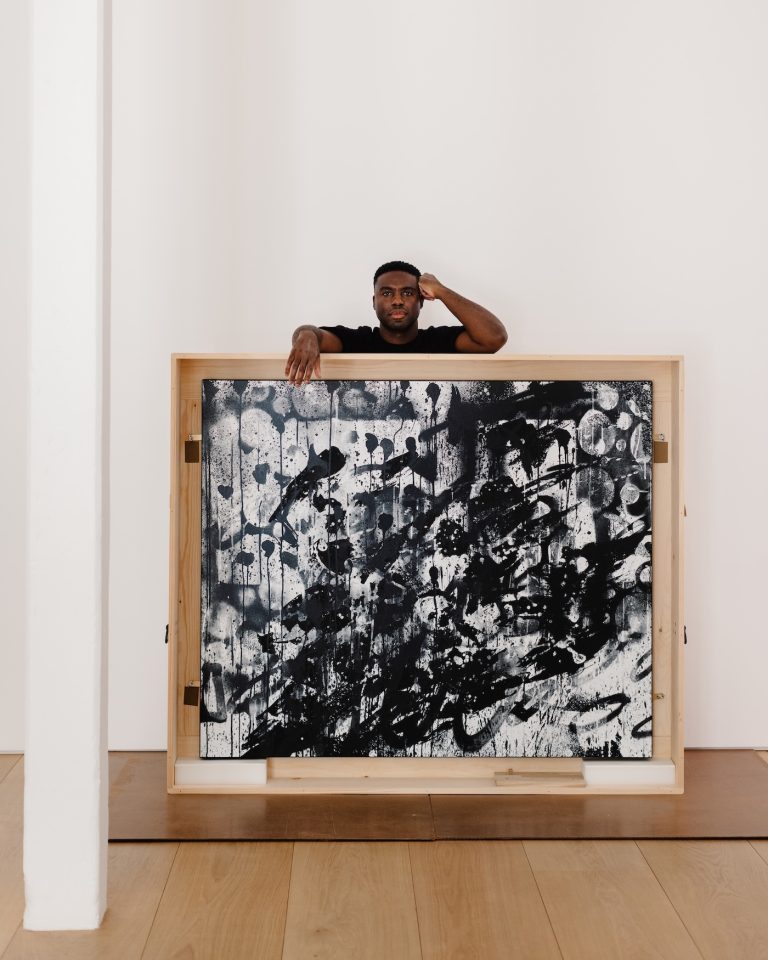
Photo: Anna Pla-Narbona
Adam Pendleton
(b.1984)
Adam Pendleton is a central figure in contemporary art. A celebrated painter, he pushes the boundaries of the medium through a sustained engagement with process, language, and form. His work, a distilled layering of gesture, fragment, and form, is marked by a precision reminiscent of conceptual and minimal art as well as a freely expressionistic, experimental drive. In 2008, he began to define the working method for which he is now widely recognized as Black Dada—a critical framework that explores the relationship between Blackness, abstraction, and the historical avant-gardes.
His solo exhibitions are on view at the Langen Foundation in Neuss and at the Hirshhorn Museum and Sculpture Garden, in Washington, DC. On October 9, 2026, Pendleton will open a major solo exhibition at the Stedelijk Museum Amsterdam. Recent solo exhibitions include mumok—Museum moderner Kunst Stiftung Ludwig Wien, Vienna (2023–2024); Mildred Lane Kemper Art Museum, St. Louis, MO (2023–2024); Montreal Museum of Fine Arts (2022); and the Museum of Modern Art, New York, NY (2021–2022). Pendleton’s work is held in numerous public collections around the world.