
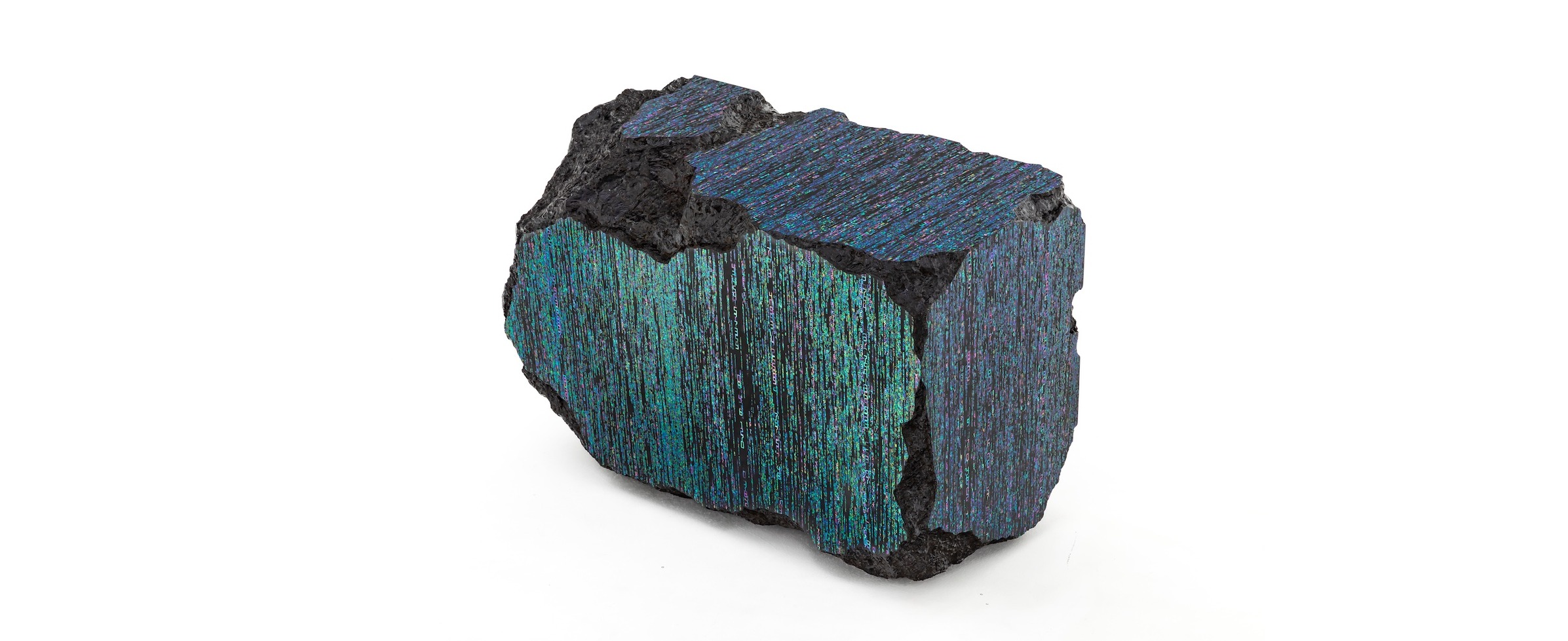
When abstract, impersonal symbols such as numbers are translated into natural materials like shell and lacquer, and gradually given form through an almost unimaginable accumulation of meticulous handwork, an unexpected sense of stillness and intensity emerges. Terumasa Ikeda’s practice can be seen as an attempt to reconsider “material image” in an age saturated with information. Raden (mother-of-pearl inlay) and lacquer, materials that embody deep time, do not function merely as decoration; instead, they gently reveal unseen layers of time and memory. In this interview, Ikeda shares the perspectives and ideas that underpin his practice.
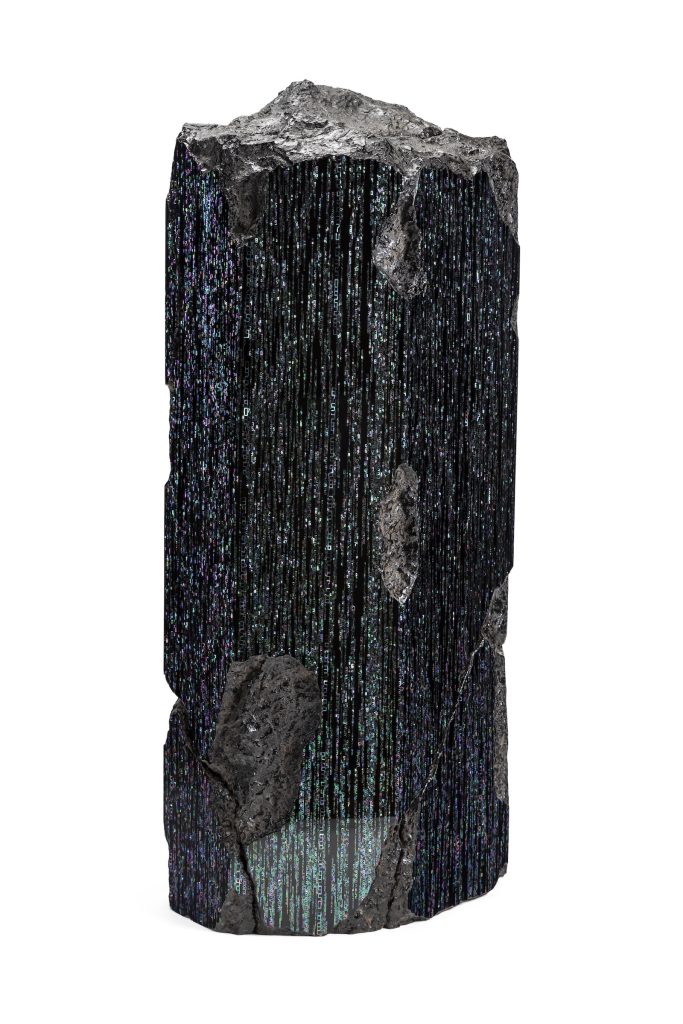
Could you please introduce your artistic practice to those who may not be familiar with your work? I would also like to ask about the central motif of “numbers” in your practice. What intentions lie behind the process of transforming these abstract, information-driven symbols of AI and contemporary society into forms made from natural materials such as shell and lacquer, through such painstaking manual labor?
The starting point of my practice was an experience during high school, when I studied architecture and participated in a volunteer project restoring cultural heritage in Nepal. There, I encountered religious buildings adorned with intricate wood carvings and visited workshops where these were still being produced. That environment felt like a sanctuary untouched by capitalism, where culture continued to live through everyday practice.
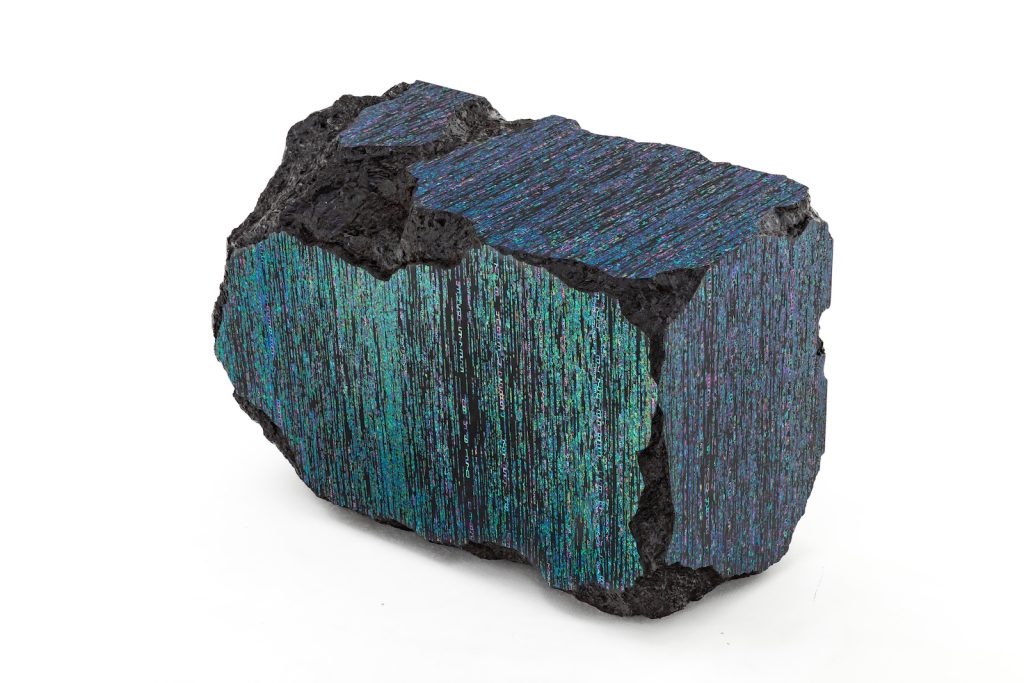
However, we must now find ways to sustain such practices within an increasingly homogenized contemporary world. One way I have considered expressing the “sublime” in our time is by visualizing scales that exceed human perception through ornament. This led me to adopt numbers and digital symbols as motifs. As systems of communication have shifted from earth and stone to paper and light, I use raden to give form to the invisible light embedded within information itself.
Lacquerware is a craft with over 1,200 years of history. I also make a conscious effort to source lacquer, wood, and shell from as close to their place of origin as possible. This is both a lesson drawn from history and a responsibility toward the next thousand years. While the possibilities of materials and time in production are virtually limitless, I continue to face my work through what I consider the most appropriate means available to me today.
One of your works is titled “Monument of the Aura.” In today’s world, where reproduction and circulation of images and information are effortless, what kind of “aura”—a unique, unrepeatable presence—do you aim to convey through your work?
I have continued to explore, throughout my life, the question of where the “sublime” might reside. The reason I continue to work with lacquer and raden is that, in an age of saturated production and information, I feel a stronger sense of “material intensity.”
Many of the artworks that have deeply influenced me possess an overwhelming density of time and an exceptional level of completion. Beyond the accumulation of manual skill and a sincere, meticulous approach, I am drawn to the presence of culture and history embedded within them, and I aspire to create works that remain continuous with human history itself.
Where do you find the greatest inspiration in your practice? Is it during work in the studio, or perhaps in entirely different, more digital environments?
I am myself a digital native, and in the workshop I work alongside younger collaborators. They, too, come from backgrounds rooted in traditional crafts, yet they have grown up immersed in games, manga, and animation. I believe there is something that only this generation can express. I see this not simply as art or craft, but as part of a larger movement opening up new possibilities.
The stimulation I receive from the team is extremely important to me. In addition, I continue to travel abroad to visit cultural heritage sites, as a way of reaffirming my own sensibilities.
What expectations or thoughts do you have regarding the Japanese art scene and the audiences visiting Tokyo Gendai?
Having participated in Tokyo Gendai previously, meeting collectors from Japan and abroad, as well as those who engaged with my work, was an extremely valuable experience for me. There are often discussions suggesting that the Japanese art market is still relatively underdeveloped on a global scale. However, I have also felt a clear and growing interest in art within Japan itself.
Japanese art, and particularly the practice I engage with, is often reduced to the terms “technique” or “tradition.” However, I believe these are not things belonging solely to the past; rather, they can serve as powerful languages through which we re-examine contemporary sensibilities and values. In order to transform this potential into a movement that extends beyond individual expression, it is not enough to simply raise the quality of works. What is increasingly needed are unfiltered perspectives that cross linguistic and cultural boundaries, along with honest and uncompromising critique.
Thank you very much! We look forward to seeing your work in September.
Experience Akimasa Ikeda’s Light of Time at Tokyo Gendai.
Dates:
11-13 September 2026 (Fri-Sun) *Vernissage: 10 September (Thu)
Venue:
Pacifico Yokohama
Booth:
Ippodo gallery Tokyo
Ticket Purchase:
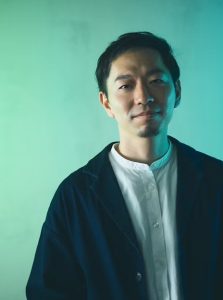
Terumasa Ikeda
Terumasa Ikeda develops an innovative artistic practice that incorporates contemporary scientific technologies such as laser processing and ultrasonic vibration into raden, a decorative technique used in lacquerware that dates back to the Nara period and involves inlaying the iridescent inner layer of shells such as abalone into lacquer surfaces.
One of the most distinctive aspects of his work is his use of numbers as a design motif. In place of traditional decorative patterns, he employs “numbers”—a universally recognizable symbol across cultures—as a central visual element in raden.
Furthermore, Ikeda cuts motifs such as integrated circuits and pixels into extremely small pieces of shell, embedding them into his works. Through this approach, he has established a unique artistic language in which “digital and natural” and “organic and inorganic” intersect. His practice has attracted significant attention in the art world as a pioneering form of contemporary lacquer art.